- More Than Happiness: The purr is a complex survival and communication tool, not solely a sign of animal contentment. Cats purr when stressed, injured, or demanding resources (the manipulative “solicitation purr”).
- Self-Healing Mechanism: The sound originates from rapid, rhythmic muscle contractions in the larynx. Its dominant frequencies (25, 150 Hz) are scientifically proven to promote bone growth, tissue repair, and pain relief (the Feline Self-Healing Hypothesis).
- Low-Energy Maintenance: Since cats sleep up to 70% of the day, purring acts as a built-in physiotherapy routine, maintaining muscle tone and skeletal integrity without expending much energy.
- Mutual Health Benefits: Listening to the rhythmic purr transfers soothing frequencies to humans, helping to lower stress hormones and blood pressure, strengthening the bond between cat and owner.
Table of Contents
- The Complicated Truth: Why Your Cat Purrs
- Decoding the Purring Mechanism: How the Cat’s Larynx Works
- The Complicated Truth: 10 Scientific Facts Explaining the Purr Purpose and Purring Meaning
- The Therapeutic Frequencies: Purring Benefits for Health
- The Complicated Truth: Feline Psychology and Cat Communication
- Frequently Asked Questions About the Cat Purr
The Complicated Truth: Why Your Cat Purrs
You know the sound. It is the ultimate soundtrack to a lazy Sunday, typically heard when your feline overlord decides your cat’s lap is acceptable furniture.
We often assume the cat purr means pure, unadulterated animal contentment. That is the simple story, but it misses the entire complicated truth.
The actual purring meaning is far more complex than simple happiness. As veterinary experts like Gary Weitzman of the San Diego Humane Society can attest, it is a sophisticated form of Cat communication, self-medication, and even boundary setting.
As dedicated Cat owners, you need the full scoop on Cat behavior. Grab your favorite Unisex Soft Cotton Tee, because we are diving deep into feline psychology.
We are breaking down the specific purring mechanism, the astonishing healing power, and the 10 scientific facts you need to understand why cats purr. Scientists like Elizabeth von Muggenthaler have dedicated years to decoding this unique frequency.
Get ready to learn about the incredible purring benefits that extend far beyond just making you feel cozy while petting cats.
Decoding the Purring Mechanism: How the Cat’s Larynx Works
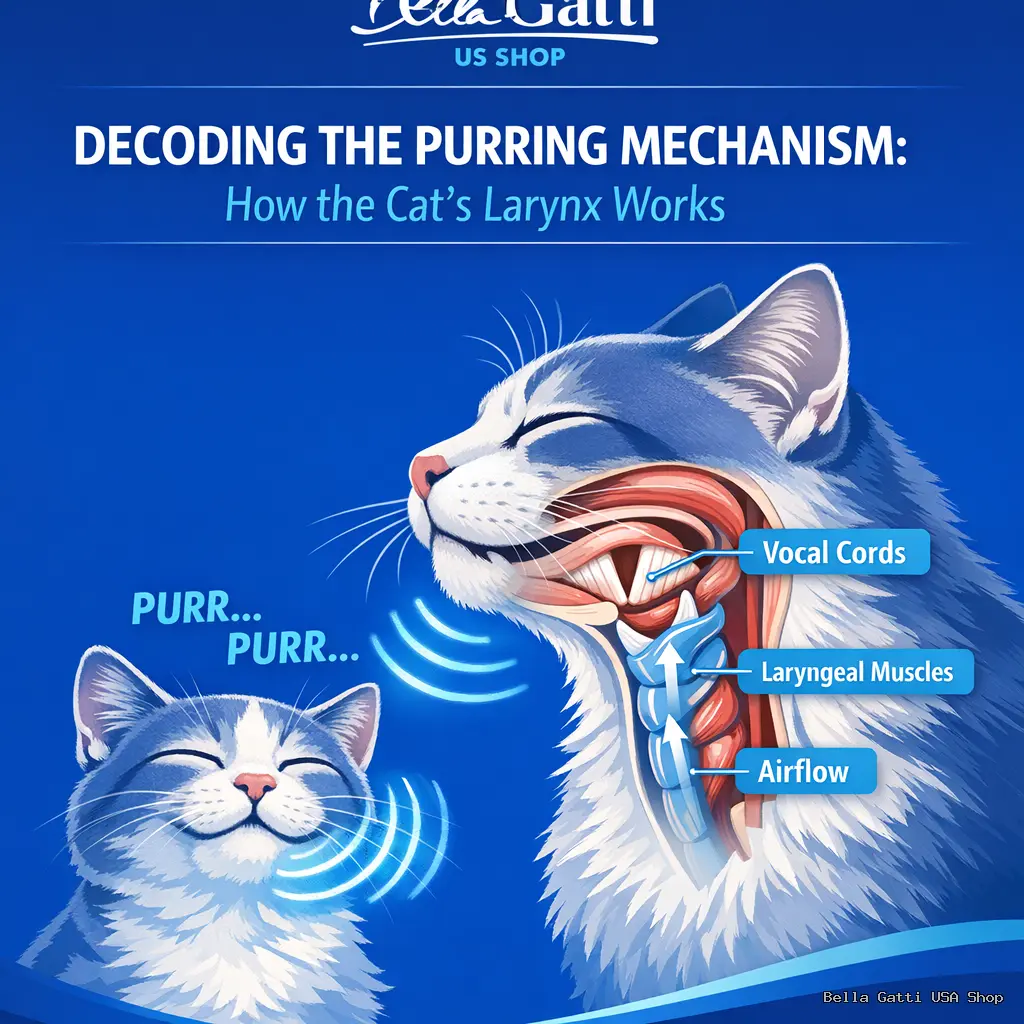
You already know that the Cat purr isn’t just about simple animal contentment. It is a highly sophisticated, low-energy function. For centuries, the actual purring mechanism was a genuine mystery, even for experts in veterinary medicine.
Early theories were pretty wild, including the idea that the sound came from blood rushing through a large vein near the heart. Fortunately, modern science has cleared up that part of the complicated truth.
We now know the sound originates entirely in the Cat’s larynx, or voice box. It’s a highly efficient vocalization produced by rapid muscle movements.
The Silent Engine: How the Vocal Chords Create the Purring Sound
The unmistakable purring sound is generated by rapid, rhythmic contractions of the laryngeal muscles. These muscles control the glottis, the opening surrounding the vocal chords, causing it to dilate and constrict with incredible speed.
This rapid twitching makes the air vibrate as the cat breathes. What is truly remarkable is that this process occurs during both inhalation and exhalation, creating that continuous, steady rhythm we all love when we are petting cats.
The purring happens automatically, often requiring minimal conscious input from the cat’s brain. Scientists at institutions like the University of Vienna have focused heavily on unlocking this specific Cat behavior.
Experts like Gary Weitzman, CEO of the San Diego Humane Society and a noted veterinarian, emphasize that this is a highly evolved function. Cats utilize dense pads within the vocal folds to produce these ultra-low frequencies despite their small size.
The Frequency Factor: Healing Properties for Bone Growth
This is where the complicated truth about the purring meaning gets truly fascinating. The most critical aspect of the purring mechanism is the frequency range itself.
The dominant frequencies in Cats purrs usually hover between 25 and 150 Hertz (Hz).
Why is this important? Because these specific vibrations are not arbitrary. Researchers like Elizabeth von Muggenthaler have shown that these frequencies fall directly into the range used therapeutically in humans for stimulating Bone growth and soft Tissue growth.
This points to the primary Purr purpose being maintenance and self-repair. Your cat isn’t just happy; they are performing internal maintenance, acting as their own tiny, vibrating physical therapist. This is the true Healing power of the purr and one of the major Purring benefits.
The Complicated Truth: 10 Scientific Facts Explaining the Purr Purpose and Purring Meaning
Forget the old adage that the Cat purr is only about simple animal contentment. That is just the tip of the iceberg, or perhaps the tip of the tail.
Understanding Cat Purring: The Hidden Depths
Purring is not just a delightful sound; it’s a complex form of communication that varies among individual cats. Research from experts like Robert Eklund emphasizes that purring serves multiple roles, including expressions of comfort, distress, and requests for interaction.
Interestingly, the purring frequency remains consistent across various feline species, from domestic cats to tigers. This similarity suggests a universal language rooted in evolutionary survival strategies.
In fact, studies published in journals like Current Biology reveal that purring may not only comfort animals but also stimulate healing in their bodies, reinforcing its dual purpose as both a communicative and restorative act.
Beyond communication, purring has a distinct social function. It strengthens the bond between a mother cat and her kittens, serving as a form of reassurance during early development. This phenomenon illustrates that even in simple acts, deeper emotional connections exist.
As you delve into the world of feline purring, it’s essential to recognize that every cat has its own unique purring pattern, reflecting individual health, mood, and personality. Understanding these nuances enriches the connection between you and your furry companion.
The actual purring meaning goes far deeper. Here are the 10 crucial scientific facts about why cats purr, encompassing everything from stress relief to physical repair, proving the true extent of the purring benefits.
Reasons for Cat Purring: Understanding the Depths
Purring is often viewed as a mere expression of happiness, but the reasons behind it are diverse and fascinating. Cats purr to communicate with their owners, expressing a range of emotions from contentment to anxiety.
Interestingly, research shows that the purring frequency remains consistent across various feline species, suggesting that it’s a universal language. This consistency reinforces the notion that purring is an evolutionary trait designed for survival.
It also serves a social purpose, especially for kittens. Mother cats use purring to comfort and guide their young, strengthening their bond and ensuring safety.
Moreover, purring acts as a self-soothing mechanism. Cats often purr in stressful situations as a way to calm themselves, like during vet visits or when feeling threatened.
Researchers have even found that purring frequencies can be therapeutic, promoting healing and bone growth in both cats and humans. This remarkable aspect highlights the deep bond shared between humans and their feline companions, furthering our understanding of why cats purr.
-
- It Starts at Birth for Communication: Kittens are born blind and deaf. The mother cat’s purr acts as a sonic beacon, guiding the newborns to her for warmth and nursing. This early Cat communication establishes the purr as a signal of safety and proximity.
- The Solicitation Purr: This is the highly manipulative purr you hear at 6 AM when they demand breakfast. Researcher Karen Overall identified this specific purr. It blends the normal, low-frequency rumble with a higher-frequency cry, similar to a human baby’s wail. It is pure genius, and most Cat owners admit, it works every single time.
- Self-Soothing and Stress Relief: Cats purr when they are injured, scared, or stressed, such as during a visit to the veterinarian. The vibrations are a form of self-medication, helping the feline calm itself down and manage pain. This highlights the complicated truth that not all Cats purrs are joyful.
- The Purr Promotes Bone Growth: This is where the healing power gets really interesting. The dominant frequencies in a cat’s purr (around 25 Hz) are known in veterinary medicine to promote bone growth and repair. This is vital for maintaining a healthy skeleton, especially since they spend so much time napping.
- It Aids Tissue Growth and Healing: Frequencies around 50 Hz are linked to stimulating tissue growth and promoting soft tissue regeneration. This specific frequency range is a massive purring benefit for cats recovering from injuries.
- A Purr is Low-Energy Maintenance: Since cats spend up to 16 hours a day resting or sleeping, the purr provides a low-energy workout for their muscles and bones. It is like a built-in, passive physiotherapy routine, minimizing atrophy and ensuring skeletal integrity through the natural purring mechanism.
- It’s a Cross-Species Bond Builder: When you are petting cats and they purr on your Cat’s lap, they are strengthening the social bond. This behavior, usually reserved for kittens and their mothers, is extended to trusted humans, like you, the dedicated Cat owner. This intimate connection is central to positive Cat behavior.
- The Purr Lowers Human Blood Pressure: Studies show that listening to the rhythmic purring sound can lower your stress hormones and blood pressure. The Healing properties are mutual, making cat ownership a genuine health benefit for both species.
- It’s Used for Negotiation: When your cat sits next to you, purring intensely, they might be negotiating resources, whether that is food, attention, or just a better spot on the sofa. Cat expert Celia Haddon often discusses how cats use purrs contextually, demonstrating advanced Feline psychology, to manipulate their environment.
- Not All Purrs Are Equal: As noted by Marjan Debevere, a cat shelter photographer and student of Feline psychology in London, no two Cats purrs sound exactly the same. Her famous cats, Archie, Clive, Hula, and Luigi, all have distinct purr signatures, documenting their various needs and moods on Instagram. This individuality confirms the complexity of the purr purpose.
If you still doubt the profound nature of this sound, consider the work of Elizabeth von Muggenthaler, whose research into the vibrational frequencies confirms the therapeutic range utilized by the purr.
The Therapeutic Frequencies: Purring Benefits for Health
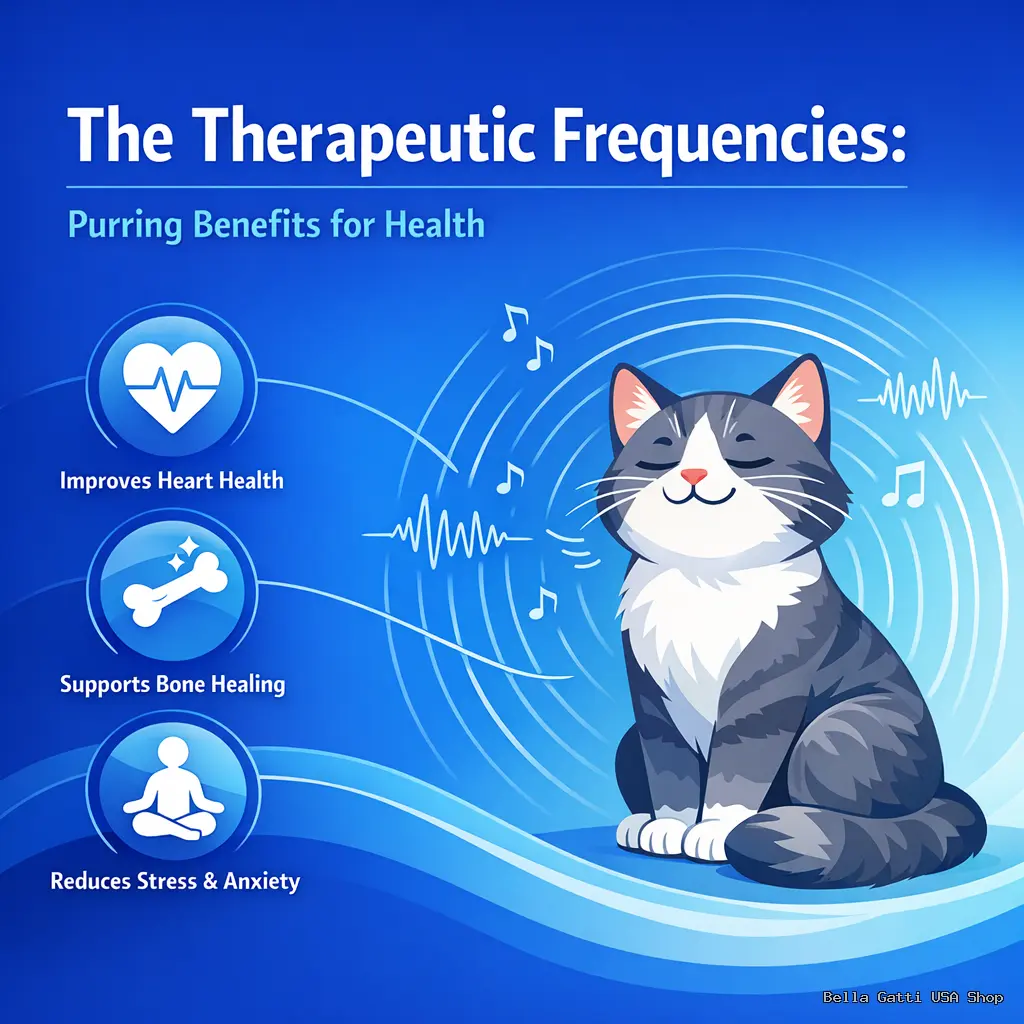
If you thought your cat was just a cute, furry roommate who occasionally judges your life choices, think again. They are also tiny, vibrating healers, and this is a core part of the true Purring meaning.
The incredible Healing power of the Cat purr is centered entirely on specific frequency ranges. This fascinating area of study has been significantly advanced by bioacoustics scientists like Elizabeth von Muggenthaler.
Elizabeth von Muggenthaler discovered that the frequencies that Cats purrs utilize are surprisingly consistent. Crucially, they fall perfectly within the therapeutic range used in human medicine for stimulating Bone growth and muscle repair.
These consistent vibrations stimulate muscles and bones without requiring the cat to engage in high physical activity. Since Cat behavior involves sleeping up to 70% of the day, the primary Purring meaning is often low-energy maintenance and internal conditioning.
This is the Complicated truth about Why cats purr: it is a brilliant evolutionary adaptation for survival and rapid repair. It allows the cat to conserve energy while actively healing itself.
The Feline Self-Healing Hypothesis: Frequency Breakdown
To truly appreciate the sophistication of the Purr purpose, we need to look closer at the specific hertz (Hz) ranges.
These vibrations are the foundation of the Feline Self-Healing Hypothesis. They provide crucial information for modern Veterinary medicine regarding Bone growth and Tissue growth.
Here is a breakdown of the typical Cat purr frequencies and their known therapeutic effects:
| Frequency Range (Hz) | Primary Therapeutic Effect | Target Area | Associated Keyword |
|---|---|---|---|
| 25 Hz | Bone density and strength enhancement | Skeletal System / Bone Growth | Healing properties |
| 50 Hz | Pain relief and muscle stimulation | Soft Tissue / Tissue Growth | Purring benefits |
| 100 Hz | Wound healing and tendon repair | Ligaments and Tendons | Self-Soothing |
| 120 Hz | Anti-inflammatory effects | Joints and Inflammation | Cat behavior |
The Feline Self-Healing Hypothesis is routinely discussed by organizations like the San Diego Humane Society. Experts, including Gary Weitzman, emphasize that the purr is a crucial physiological toolkit for recovery and maintenance.
This explains many Purring benefits beyond simple Animal contentment.
And here is the best part for Cat owners:
When you are Petting cats and you tickle them on your Cat’s lap, those lovely purr vibrations transfer directly to you. You get those same subtle, soothing Healing properties too! It’s truly a win-win for both feline and human.
The Complicated Truth: Feline Psychology and Cat Communication
We established that the purr is a tiny, vibrational healing machine. But understanding the full purring meaning requires dipping into Feline psychology. Why do they activate the mechanism?
Understanding exactly why cats purr requires input from behavioral specialists who study Cat behavior and Cat communication daily.
Take Marjan Debevere, for example. Based in London, she actively pursues advanced studies in this field, observing the nuances of how cats use their vocal chords.
Debevere uses her own feline crew, Archie, Clive, Hula, and Luigi, to demonstrate the astonishing breadth of the Cat purr. She frequently shares her observational work on Instagram.
While we naturally assume the Cat purr signifies total animal contentment, Debevere highlights its profound use as a coping mechanism. This is especially clear in high-stress environments.
This isn’t just about feeling good; it’s about survival and self-preservation, a core concept in veterinary medicine.
“The cat purr is much more than a sign of happiness. It is a low-energy mechanism that helps the cat maintain muscle tone and bone density while recovering or resting,” explains Gary Weitzman of the San Diego Humane Society.
The presence of the purring sound during stressful events confirms its dual nature. It is a signal of peace, but also a specific form of Cat communication known as the Solicitation Purr.
You might notice your cat purring intensely if they are injured or frightened. They are not happy; they are actively trying to soothe themselves and signal vulnerability to you, their trusted Cat owner.
The purring benefits extend to us, too. Even pop icon Katy Perry, known for her love of cats, has often referenced the profound sense of peace her pets provide when she is petting cats or they are on her Cat’s lap.
In conclusion, the ultimate purr purpose is multifaceted: survival, self-healing, and emotional connection. It is the complicated truth behind the simple purring sound we love so much.
Frequently Asked Questions About the Cat Purr

We know you have questions about this fascinating aspect of Cat communication. Since the Purring meaning is so complex, here are the answers to the most common queries we hear from fellow Cat owners.
Can big cats purr?
Not all of them, sadly. Generally, felines fall into two distinct groups: those built to roar (lions, tigers) and those built to purr (domestic cats, cheetahs). The ability to purr is dictated by the structure of the hyoid bone in the throat.
Roaring cats have a flexible hyoid bone, while champion purrers, like your house cat, have a fully hardened hyoid bone. This rigid structure is essential for the rapid, continuous vibration needed for the Purring mechanism.
Is a purr always a sign of animal contentment?
Absolutely not. This is the central piece of the Complicated truth that Feline psychology continues to explore. While a purr often signals profound Animal contentment when you are Petting cats, it is also a powerful self-soothing mechanism.
Cats purr when stressed, hungry (the famous “solicitation purr”), or even in pain to stabilize themselves and signal a crucial need for care. Experts like Karen Overall have spent years documenting this specific Cat behavior.
How loud can a cat purr be?
Most domestic cats purr at a comfortable 25 decibels, soft background noise, perfect for a nap on your Cat’s lap. However, some cats are acoustic marvels!
The loudest purr ever recorded reached nearly 68 decibels, comparable to a vacuum cleaner. That is some serious Purring sound, often reflecting the intensity or urgency of the communication, especially if they are requesting food or attention.
Do the healing properties of the purr really affect humans?
Yes, indirectly, and this is where the science gets truly fascinating. The Healing properties of the purr are tied directly to the specific low frequencies (25, 50, 100 Hz) generated by the Purring mechanism in the Cat’s larynx.
These frequencies are scientifically proven to promote Bone growth and Tissue growth in mammals. While your cat will not cure a broken leg, the calming, rhythmic vibration provides measurable Purring benefits by decreasing human stress hormones. Elizabeth von Muggenthaler‘s research into these therapeutic frequencies is key to understanding this Healing power.
What is the difference between a purr and a meow?
Think of it this way: the meow is a negotiation tactic, an intentional, learned vocalization directed almost exclusively at Cat owners. The purr, however, is pure physiology.
The Purring mechanism is a continuous, low-frequency sound produced during both the inhalation and exhalation cycle, starting deep in the Cat’s larynx using specialized Vocal chords. The meow is a request; the purr is survival.
The Cat purr truly is one of nature’s marvels. It serves as a tool for survival, a sophisticated request for food, and the universal sign of profound Animal contentment, all wrapped up in one rhythmic, vibrational package.
Next time your feline friend is curled up on your Cat’s lap, remember the incredible Healing power they possess just by activating that internal engine. They are much more than just soft, furry friends; they are tiny, vibrating healers.
If you love celebrating the complex and slightly ridiculous nature of your feline overlords, check out our collection of witty Cat T-shirts.
They are printed on the softest Unisex Soft Cotton Tee material, perfect for those long sessions of Petting cats that inevitably result in a blanket of cat hair.
We promise our shirts are as comfortable as the deepest, most satisfied Purring sound.
Differences in Purring Among Individual Cats
Not all purrs are created equal. Each cat has a unique purring pattern that reflects its health, mood, and personality. Factors such as breed and environment can influence these variations significantly.
Research shows that kittens develop their purring patterns early in life, as they respond to their mother’s purrs. This practice helps them learn how to communicate effectively with humans and other animals as they grow.
Interestingly, studies have found that distinct breeds may produce varied purring sounds. For instance, some breeds, like the Siamese, are renowned for their chatty nature, often interspersing brief purring with meowing, while others maintain a steady purr.
Furthermore, experts like Robert Eklund point out that the emotional context also plays a crucial role. A cat may purr loudly when content and softy when anxious or wounded, showing that subtle changes in purring can signal different needs.
Ultimately, this individuality in purring adds depth to our understanding of feline behavior, highlighting the intricate ways cats communicate with their human companions. Recognizing these differences can deepen the bond between cat and owner, enriching the human-animal relationship.