Table of Contents
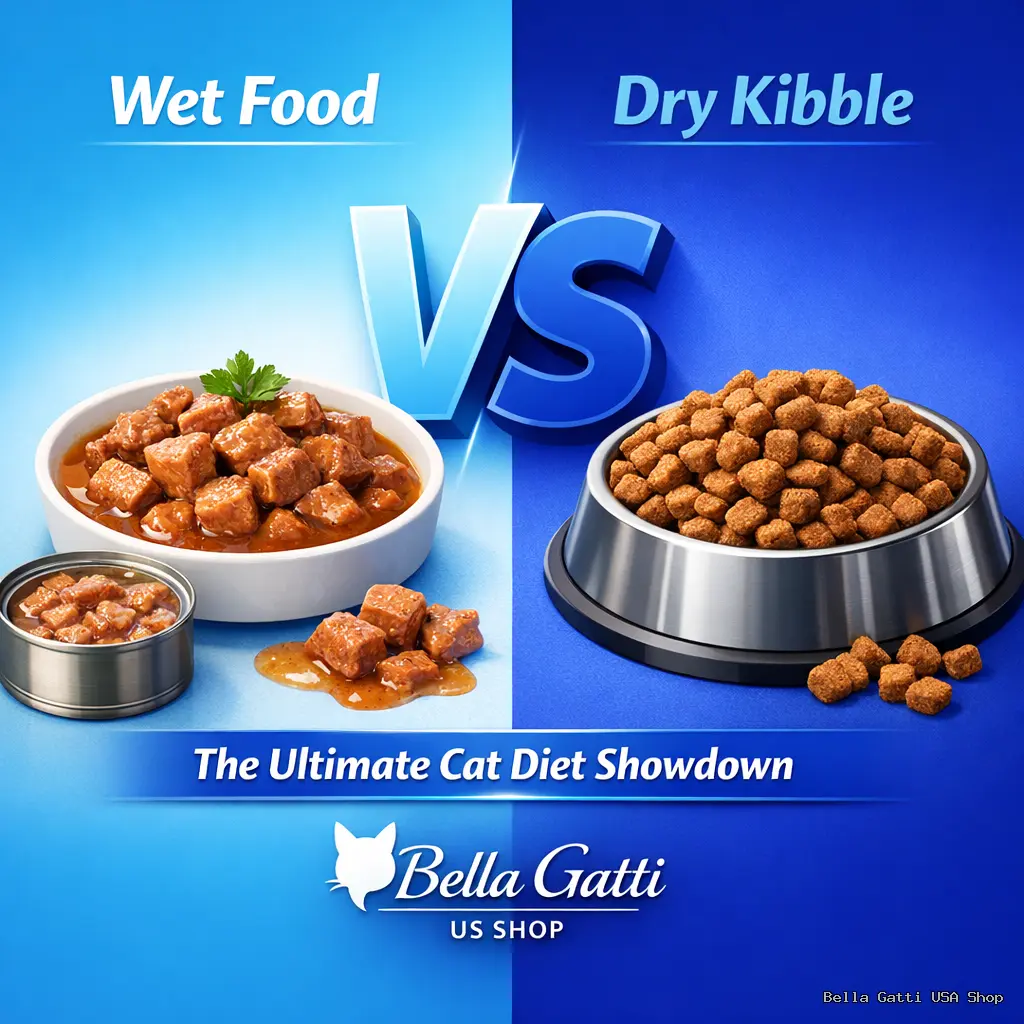
Welcome, devoted cat parent, to the arena of eternal debate: Wet Food versus Dry Kibble. This isn’t just a choice in the pet food aisle; it’s the ultimate cat diet showdown.
We know you’ve spent countless hours staring down the endless cat food options, feeling the intense pressure to choose the absolute best cat food for your beloved feline friend.
Should your cat receive the meaty moisture of premium wet cat food, or the crunchy convenience of dry kibble? This high-stakes culinary battle concerns feline nutrition, longevity, and the delicate balance of cat hydration.
You might have searched Google, maybe even found the excellent research compiled by Milly Brown over at The Kitty Kiosk. But now, you need the definitive, no-nonsense review and a clear food comparison guide.
We are here to settle the score. We will break down every angle of feline care, examining both the wet food benefits and the dry food benefits, ensuring you make the most informed choice for your cat health goals.
Let the games begin!
Expert Insight
“Whether to feed dry, canned, or a mixture of both is a decision that you and your veterinarian can make together, as cats with health conditions requiring higher water intake, such as kidney disease or diabetes, will significantly benefit from the 70% moisture found in wet diets.”, Veterinary Consensus
The Opening Bell: A Battle for the Bowl
Welcome to the ultimate cat diet showdown. This isn’t simply a choice between wet food vs kibble; it’s a high-stakes culinary battle for optimal feline nutrition.
You stand at the edge of the pet food aisle, faced with two formidable contestants. On one side, the convenient, crunchy practicality of dry kibble. On the other, the moisture-rich, savory indulgence of premium wet cat food.
As experts in the feline universe, we understand that finding the best cat food is critical to cat care. We’ve designed this definitive food comparison to be your complete cat food guide.
We’ve structured this review using clear Structured Content Navigation to ensure you get the full picture without the fluff.
The core dilemma boils down to meeting the fundamental needs of your feline friend, specifically focusing on Feline Hydration Management and fulfilling the strict Obligate Carnivore Dietary Requirements.
We will examine the claims: Can dry food benefits truly outweigh the essential moisture provided by Wet Food? Is the convenience of cat kibble worth the potential impact on cat health?
In the following sections, we pit the two contestants against each other, analyzing protein content, cost, convenience, and what Veterinarians actually recommend. Let the Showdown begin!
Expert Insight
“Given their naturally limited thirst drive inherited from desert-dwelling ancestors, high-moisture diets (containing 70 to 80% water) are crucial for domestic cats to maintain proper hydration, supporting vital functions like urinary tract health and preventing dehydration.”, Dr. Danielle Bernal, Global Veterinarian
Wet Food Wins: The Gourmet Advantage and Feline Hydration Management
If this culinary battle had a secret weapon, it would be water. And this is precisely where Wet Food claims its undisputed title: The Essential Moisture Delivery System. Ask any of the Veterinarians we consulted, and they consistently recommend prioritizing hydration.
Unlike dogs or humans, Cats are notoriously poor drinkers. Their ancestors evolved obtaining nearly all necessary moisture directly from their prey, making supplemental hydration crucial for modern feline nutrition.
The Critical Role of Feline Hydration Management
The single biggest benefit of wet cat food is its superior water content. Studies confirm that high-quality wet food contains about 70 to 80% water, a massive boost compared to the typical 10% found in dry kibble.
This massive hydration is the key to maintaining long-term cat health, especially supporting the urinary tract and kidney function. When considering cat care, proper hydration is non-negotiable.
Cats relying primarily on this moisture-rich diet are significantly less prone to dehydration-related issues, which often become serious problems for the fragile senior cat.
Wet food is not just a tasty indulgence; it is preventative medicine. Its high moisture content is critical for supporting optimal urinary and kidney health, especially in our desert-descended companions.
Superior Protein Content for Obligate Carnivore Dietary Requirements
Your feline friend is, by definition, an obligate carnivore. They are designed to thrive on meat-based diets that are high in animal protein content and low in carbohydrates.
Generally, premium wet cat food tends to have higher animal protein levels and significantly fewer carbohydrates compared to most budget dry kibble for cats.
This nutritional profile much more closely mimics the natural diet of a wild feline, meeting their specific Obligate Carnivore Dietary Requirements and providing the essential amino acids needed to flourish.
Palatability and Weight Management Benefits
Let’s be honest: wet food smells good, even to humans. To a cat, the intense aroma and texture are often irresistible. If you have a picky eater, the increased palatability of wet food benefits ensures your feline friend actually consumes the nutrients they need.
Furthermore, wet food is a great tool for managing a cat’s waistline. Kibble has a high caloric density, meaning a small cup packs many calories. Wet Food, due to its high water content, generally has lower calories per volume, aiding in responsible Weight Management via Caloric Density and making it one of the best cat food options for cats needing to shed a few ounces.
The variety of textures, from smooth pâté to chunky stews, makes it easier to cater to specific cat preferences and allows owners to experiment with different cat food types.
Dry Kibble’s Defense: The Convenience King
While Wet Food seized the hydration title in the previous round, we must now acknowledge the formidable opponent: Dry Kibble. This isn’t the villain of the cat diet world; it is the undisputed champion of practicality and budget.
If you are navigating the overwhelming options in the pet food aisle, dry kibble often presents itself as the most straightforward, convenient choice for your busy life.
Logistical Supremacy: Cost and Shelf Life
In the high-stakes cat food comparison, dry kibble wins hands-down on logistics. It is generally far more cost-effective than wet cat food, especially when purchased in bulk.
Since its moisture content is typically below 20%, it boasts a fantastic, long shelf life and requires no refrigeration after opening. This is a massive plus for busy households or for those using automatic feeders to manage their feline friend’s daily intake.
The stability of cat kibble makes it the pragmatic choice for storage, directly contrasting the high cost and refrigeration requirements associated with Wet Food.
The Promise of Dental Benefits
One of the longest-running arguments for relying on dry kibble for cats is its potential to aid in Dental Plaque Reduction through Diet. The crunchy texture is intended to provide a mechanical cleaning action.
The theory suggests that as the cat chews, the hard texture scrapes away some plaque and tartar buildup, contributing positively to overall cat health.
However, Veterinarians caution that this effectiveness is highly variable. Many Cats swallow their kibble whole, entirely negating the intended brushing effect.
If dental health is a primary concern, we need to view dry food as the practical snack, but not a guaranteed toothbrush. Specialized dental diets or regular brushing are still necessary for comprehensive cat care.
Caloric Density and Carbohydrate Content
Because dry kibble lacks the high water content of wet food, it has a much higher caloric density per serving. This is a crucial factor in feline nutrition.
While the convenience is unmatched, this high density means that portion control is absolutely critical for effective Weight Management via Caloric Density.
Kibble also tends to have a higher overall carbohydrate content compared to the moisture-rich wet food benefits. If overfed, this can contribute quickly to weight gain and obesity in your feline friend.
Managing the exact portions of your cat kibble is essential to ensure you are meeting, but not exceeding, the specific nutritional needs of your cat.
Dry Kibble Summary: The Practical Trade-Off
Dry Kibble offers convenience and cost savings that Wet Food simply cannot match. It’s the perfect solution for free-feeding or for owners needing long-term storage.
However, the trade-off is the inherent lack of cat hydration and the potential for higher carbohydrate intake, which requires careful monitoring by the devoted cat parent.
Expert Insight
“The suitability of high-carbohydrate dry diets for obligate carnivores remains controversial; while they offer proven benefits for oral health, their association with increased risk of obesity and diabetes requires careful veterinary consideration.”, Feline Nutrition Expert
Structured Content Navigation: The Wet Food vs. Kibble Scorecard
Before we deliver the final verdict in this epic culinary showdown, let’s pause for a crucial moment of data digestion. Choosing the absolute best cat food for your feline friend requires a clear, side-by-side analysis, which is why we’ve prepared this definitive food comparison.
We know you need instant clarity when navigating the overwhelming options in the pet food aisle. This quick reference guide is designed for optimal viewing, crucial for high-quality Search Result Summary Description and instant clarity on the core differences between Wet Food and Dry Kibble. Pay close attention to the details on Moisture Content and Caloric Density, which are key for effective Weight Management via Caloric Density.
Wet Food vs. Dry Kibble Comparison: Essential Data
| Feature |
Wet Cat Food (The Gourmet Advantage) |
Dry Kibble (The Practical King) |
| Moisture Content |
High (typically 70% to 80%) |
Low (typically 6% to 10%) |
| Cat Hydration Benefit |
Excellent. Supports kidney and urinary tract health (Feline Hydration Management) |
Minimal. Relies heavily on external water intake. |
| Protein Content & Source |
Typically higher in animal protein, mimicking Obligate Carnivore Dietary Requirements. |
Variable. Often contains higher carbohydrate and plant fillers. |
| Cost |
Higher per serving. |
Lower, more budget-friendly. |
| Shelf Life (Opened) |
Short. Requires refrigeration and should not be left out for more than 30 to 60 minutes. |
Long. Stable for free feeding or grazing. |
| Caloric Density |
Lower calories per volume (aids in Weight Management via Caloric Density). |
Higher calories per volume, requiring careful portioning to avoid weight gain. |
| Dental Health Benefits |
Minimal mechanical cleaning. |
Potential for Dental Plaque Reduction through Diet, though results vary based on formulation. |
This comparison table provides the foundational data needed to move toward our verdict. Now that we have the facts about both the convenience of Dry Kibble and the nutritional power of Wet Food, let’s determine the ultimate champion for your cat diet strategy.
The Ultimate Review Verdict: Mixed Feeding is the Masterpiece
So, after analyzing the data in this epic culinary showdown, what is the final word on the best cat food for your beloved feline friend?
The consensus among leading veterinarians and top experts in feline nutrition is clear: a mixed feeding approach, or outright prioritizing wet cat food, provides the most comprehensive cat diet.
This approach harnesses the essential wet food benefits while leveraging the convenience of dry kibble.
We know you crave certainty when navigating the overwhelming cat food options in the pet food aisle. Consider this your definitive guide to achieving dietary balance.
The Undisputed Power of Moisture: Feline Hydration Management
For obligate carnivores, hydration is not a suggestion; it’s a requirement. This is where Wet Food truly shines. It is the essential moisture delivery system that dry food simply cannot replicate.
Fact check: Wet cat food contains approximately 70 to 80% water. This massive boost in cat hydration is crucial for supporting overall cat health, especially the urinary tract and kidneys.
Studies consistently show that cats relying primarily on wet food are less prone to dehydration-related issues, making it a cornerstone of proactive cat care.
Protein vs. Carbs: Obligate Carnivore Dietary Requirements
Beyond moisture, the composition of Wet Food aligns far better with the Obligate Carnivore Dietary Requirements of your cat. Wet formulas tend to boast a superior protein content (specifically, animal protein) and significantly fewer unnecessary carbohydrates compared to most cat kibble.
Kibble, by necessity of its manufacturing process, often contains higher carbohydrate levels and possesses a much higher caloric density. If not carefully managed, relying solely on high-density dry kibble can easily lead to issues with Weight Management via Caloric Density.
Treating Dry Kibble Like a Crunchy Side Dish
We recommend viewing dry kibble as a convenient supplement, not the main course. You can use this ‘practical snack’ for interactive feeders, puzzle toys, or simply to satisfy your cat’s occasional desire for crunching.
This strategy allows you to utilize the practical dry food benefits, such as convenience and ease of storage, without compromising essential hydration or optimal protein intake.
What about Dental Plaque Reduction through Diet? While some specialized cat kibble is formulated to provide mechanical cleaning that may aid in reducing plaque buildup, the effectiveness is highly variable and should never replace professional dental care.
The Practical Trade-Off: Cost and Shelf Life
In this food comparison, Dry Kibble wins the convenience round easily. It is generally more cost-effective, boasts a long shelf life, and requires no refrigeration. This is a significant factor for busy cat parents.
Conversely, wet cat food is typically more expensive and requires refrigeration after opening. When evaluating your cat food options, it’s a trade-off between premium nutrition (wet) and budget/storage ease (dry).
Prioritizing Health Conditions: When Wet Food is Non-Negotiable
For cats with specific health concerns, the choice narrows dramatically. If your senior cat or any feline friend suffers from kidney disease, urinary tract issues, or diabetes, the superior moisture and lower carbohydrate content of Wet Food is medically necessary.
Experts like those cited by The Kitty Kiosk and other leading veterinarians recommend prioritizing moisture and quality ingredients. Even a perfectly healthy cat benefits from the foundational support wet food provides.
Regardless of the type, always choose foods (wet or dry) that emphasize high-quality, recognizable ingredients with meat as the primary component, ensuring optimal nutritional value.
Transitioning Your Feline Friend
If you are switching your cat from a strict cat kibble diet to a mixed feeding approach, remember the golden rule of feline nutrition: go slow. A gradual transition over 7 to 10 days helps prevent digestive upset and respects your cat preferences.
By blending the old and new food types increasingly over time, you ensure a smooth, stress-free move to the dietary masterpiece you’ve created.
The Final Scorecard: Hydration is the Champion
The ultimate conclusion of this high-stakes culinary battle is that cat hydration is the non-negotiable champion. While dry food benefits your wallet and convenience, the wet food benefits your cat’s long-term health in critical ways.
Treat the kibble like the crunchy, occasional reward it is, and ensure the primary caloric intake comes from high-moisture wet cat food.
Congratulations, devoted cat parent! You have absorbed the wisdom of the cat food guide and solved the eternal puzzle. Now go forth and feed with confidence!
The Practicalities of the Plate: Transition and Quality Control
So, you have accepted the verdict: prioritizing high-quality wet cat food or embracing mixed feeding is the optimal strategy for your feline friend. Congratulations on making the best choice for their long-term cat health!
Now comes the practical part. Your cat’s cat diet is not a light switch. Transitioning from a high-carb dry kibble routine to a moisture-rich regimen requires strategy and patience.
The Gentle Art of Transitioning: Avoiding Digestive Drama
Cats are creatures of habit, and their digestive systems are notoriously sensitive. A sudden switch in cat food options, especially moving from crunchy cat kibble to a rich, new pâté, is a fast track to an upset stomach.
Veterinarians recommend a gradual transition over 7 to 10 days. Start by mixing just 10% of the new wet food with the old dry kibble or existing food. Slowly increase that ratio every few days until the switch is complete.
This gentle introduction ensures your feline friend adjusts not only to the new texture but also to the shift in protein content and overall caloric density without digestive distress.
Decoding the Label: High-Quality Ingredients Matter Most
Whether you choose premium Wet Food or specialized Dry Kibble, the core principle of feline nutrition remains the same: quality is paramount. You need to become an expert detective in the pet food aisle.
When selecting the best cat food, always check the ingredient list. The number one ingredient must be a recognizable, named meat source, such as chicken, turkey, or fish. Remember, cats are Obligate Carnivore Dietary Requirements demand real animal protein, not plant fillers.
Look specifically for foods with minimal fillers, by-products, and unnecessary, cheap carbohydrates. This guarantees that your cat is receiving optimal nutritional value and not just empty calories, which helps tremendously with Weight Management via Caloric Density.
As noted by experts in feline nutrition, such as Milly Brown of The Kitty Kiosk, focusing on the quality of the ingredients is far more critical than simply comparing the texture in the great wet food vs kibble debate.
The Hydration Imperative: Wet Food’s Secret Weapon
One of the most compelling arguments for wet cat food lies in Feline Hydration Management. This is where wet food benefits truly shine.
Studies confirm that wet food contains approximately 70% to 80% water. This moisture is essential for cats, who naturally have a low thirst drive because they evolved to get most of their water intake directly from prey.
A diet rich in moisture actively supports cat hydration and is vital for maintaining robust kidney function and preventing urinary tract issues. Cats relying on wet food are significantly less prone to dehydration-related issues compared to those fed exclusively dry kibble.
Addressing Health Concerns: Senior Cats and Urinary Health
The type of cat food you choose can dramatically impact the management of chronic health conditions. For senior cat populations, or those prone to kidney or urinary tract issues, veterinarians recommend prioritizing wet cat food.
The high moisture content is non-negotiable for flushing the urinary system. Conversely, while dry kibble is convenient, its higher caloric density and lower moisture can exacerbate dehydration and make cat care more complex for sick pets.
The Dental Debate: Kibble for Plaque Reduction?
One of the most frequently cited dry food benefits is the claim of mechanical cleaning and Dental Plaque Reduction through Diet. It makes sense: crunching hard food should clean teeth, right?
While crunchy cat kibble can provide some surface scrubbing, studies show this effect is highly variable and often insufficient for preventing serious dental disease. It should never replace routine veterinary dental care.
If you choose to use dry kibble, look for specifically formulated dental diets that are designed to maximize the scrubbing action, rather than relying on standard, small pieces of kibble for cats.
Cost and Convenience: The Dry Food Defense
We must acknowledge the undeniable advantages of dry kibble. It is the reigning Convenience King.
Dry food benefits include being significantly more cost-effective than wet cat food. It has a long, stable shelf life, does not require refrigeration, and is perfect for puzzle feeders or free-feeding setups.
However, this convenience must be balanced against the nutritional reality. Remember that dry kibble has a much higher caloric density. If you are using dry food, careful portion control is mandatory to prevent weight gain.
The Final Whistle: Your Ultimate Cat Food Guide
This epic food comparison ends not with a knockout, but a balanced decision. The key takeaway from this cat diet showdown is simple: hydration and high-quality protein content are the undisputed champions.
If you are still searching the pet food aisle for the perfect solution, remember this guideline: treat dry kibble like crunchy, convenient treats, but make wet cat food the main course.
You now have the definitive knowledge to choose the best cat food and ensure the longevity and happiness of your glorious feline friend. Go forth and conquer the culinary world!
We ensure this comprehensive advice, including data on wet food benefits and dry food benefits, is accurate and optimized using tools like Google Site Kit, contributing to our Search Engine Content Indexing and Tracking for optimal presentation in the Search Result Summary Description and Open Graph Social Sharing Title.
The Scorecard: Caloric Density and Health Imperatives
You’ve mastered the transition process, but let’s dive deeper into the scorecard. Why is this shift from standard dry kibble so crucial for your feline friend? The answer lies in the microscopic difference between the two food contestants: density and moisture.
Weight Management via Caloric Density
One of the biggest differences in this cat diet showdown is the Caloric Density. Dry kibble for cats is engineered to be extremely calorie-dense. Because the moisture has been removed, a small cup of dry kibble packs significantly more calories than the same volume of wet cat food.
This higher caloric density, coupled with high carbohydrate content, is why overfeeding dry kibble can quickly lead to weight gain. If your cat is struggling with Weight Management via Caloric Density, prioritizing wet food vs kibble is a non-negotiable strategy recommended by many Veterinarians.
Remember, cats are Obligate Carnivore Dietary Requirements dictate they thrive on protein and moisture, not heavy carbs found in many budget cat food options.
Feline Hydration Management: The Kidney Lifeline
If there is one undisputed winner in this battle, it is the superior hydration offered by wet cat food. This is the foundation of effective Feline Hydration Management. Wet food contains approximately 70 to 80% water, making it an essential moisture delivery system.
Studies consistently show that cats relying on wet food are less prone to dehydration-related issues, which is critical for long-term cat health. This moisture intake directly supports the kidney and urinary tract.
For senior cat companions or those already diagnosed with urinary tract issues, Veterinarians recommend prioritizing wet food benefits heavily. Dry kibble simply cannot compete with this level of inherent hydration.
Protein Content and the Obligate Carnivore
We’ve established that cats are strict obligate carnivores. This means their bodies are optimized to process animal protein for energy. High-quality wet cat food generally boasts higher animal protein levels and fewer unnecessary carbohydrates than most dry kibble for cats.
Choosing the best cat food means selecting options where meat is the primary, recognizable ingredient. This ensures the protein content is utilized effectively, supporting lean muscle mass and overall feline nutrition.
The Dental Dilemma: Kibble’s Crunchy Claim
We must acknowledge dry kibble’s primary defense: the potential Dental Plaque Reduction through Diet. The crunchy texture of cat kibble provides some mechanical cleaning, which theoretically reduces plaque buildup.
However, the effectiveness of this dental benefit is highly variable. Think of it like a human eating a cracker to clean their teeth, it helps, but it’s no substitute for brushing or professional Dental Plaque Reduction through Diet solutions.
While some specialized dental kibble exists, relying solely on dry kibble for dental benefits while sacrificing crucial cat hydration is usually a poor trade-off for overall cat health.
The Verdict Approaches: Mixed Feeding and Quality Control
So, where does this leave us in the pet food aisle? The overwhelming evidence points toward prioritizing wet food benefits, particularly for sensitive feline friend populations.
If you choose to utilize dry kibble, treat it like a practical, shelf-stable snack, not the main course. Many Veterinarians recommend a mixed feeding approach, offering wet food as the primary meal and using a small, measured amount of dry kibble as a supplement or for puzzle feeders.
Regardless of your final decision regarding wet food vs kibble, always choose foods with high-quality, recognizable ingredients and minimal fillers. The knowledge gained here will truly last a lifetime of cat care.
The Final Whiskers: Essential FAQ for Your Feline Friend
You’ve seen the scorecards and witnessed the high-stakes food comparison. But before you make your definitive choice in the pet food aisle, here are the top questions every devoted cat parent asks when navigating the complex world of cat food options.
Is it okay to mix wet food and dry kibble in the same bowl?
Embrace the “mixed feeding” approach! Veterinarians recommend this strategy because it often delivers the best of both worlds for your feline friend.
Your cat gets the essential moisture and superior protein content from the wet cat food, coupled with the convenience and potential dental benefits of dry kibble.
However, remember the golden rule: due to the Obligate Carnivore Dietary Requirements, wet food spoils fast. Never leave mixed food out for more than 30 to 60 minutes to prevent bacterial growth.
Does dry kibble truly provide Dental Plaque Reduction through Diet?
This is a common question surrounding dry food benefits. While some specialized cat kibble is formulated to provide mechanical cleaning, the overall effect is highly variable.
The mechanical scrubbing action only works if your cat chews thoroughly. Since many Cats swallow kibble whole, relying solely on dry kibble for cats is not a substitute for professional dental care or brushing.
For optimal cat health, treat the dental benefits of dry kibble as a bonus, not a primary defense.
How do I ensure optimal Feline Hydration Management?
If your cat is primarily on a dry kibble diet, they are likely not meeting their hydration needs naturally. The undisputed wet food benefits stem directly from its moisture content.
Wet food contains about 70 to 80% water, making it the essential moisture delivery system. This high moisture supports kidney function and reduces the risk of urinary issues.
If you notice symptoms like lethargy or overly concentrated urine, consult your Veterinarians immediately. Prioritizing high-moisture wet food is the simplest way to manage cat hydration.
Is wet cat food better for senior cats and weight management?
Absolutely. A senior cat relies heavily on kidney function. Since wet food provides 70 to 80% water, it significantly reduces strain on the kidneys and helps prevent chronic issues, making it the best cat food choice for older felines.
Additionally, wet food aids in Weight Management via Caloric Density. Dry kibble has a significantly higher caloric density and carbohydrate content per volume. Wet food generally offers fewer calories per portion, making it easier to manage the cat diet and prevent unnecessary weight gain.
Which option is more cost-effective and easier to store?
Dry kibble wins the convenience crown here. It is generally more cost-effective, has a longer shelf life, and requires minimal storage effort, which is a practical consideration for many cat parents.
Wet cat food, while superior for cat hydration and protein content, is typically more expensive per ounce and requires immediate refrigeration after opening. This trade-off between cost/storage and superior feline nutrition defines the wet food vs kibble debate.
The Final Verdict: Hydration Reigns Supreme
After this epic food comparison, the score is settled. While the convenience of Dry Kibble is undeniable, the ultimate champion in the quest for optimal feline nutrition is the superior moisture delivery system found in Wet Food.
The core message of this wet food vs kibble battle is simple: Feline Hydration Management is the single most critical factor in your cat’s long-term cat health.
Remember that cats are obligate carnivores, and addressing their specific Obligate Carnivore Dietary Requirements means prioritizing protein and moisture. This is why wet cat food, which contains 70 to 80% water, is so highly valued by veterinarians for supporting urinary and kidney health.
If you prefer the cost-effective dry kibble for cats, that’s fine, but you must commit to a rigorous mixed feeding strategy to compensate for the low moisture content. Treat the crunchy kibble like practical, high-calorie snacks, not the main course.
Whether your feline friend is a kitten or a senior cat like the magnificent Milly Brown, ensuring they receive adequate water is non-negotiable. Now that the dietary puzzle is solved, you can relax.
Enjoy the relief of knowing you’ve chosen the best cat food options possible. You’ve mastered the cat diet, and that deserves a reward! Browse our selection of witty Unisex Soft Cotton Tees and wear your expertise proudly.