Summary
- Nutritional Deficit Disaster: Adult cat food is “low-octane fuel” for kittens. It lacks the critical high protein density, fat, and calorie requirements necessary for rapid kitten growth and development, potentially leading to severe nutritional deficiencies if consumed under 12 months.
- Practical and Hydration Issues: Adult kibble is often too large and dense for small kitten jaws. Furthermore, relying heavily on any dry cat food (kibble) contributes to chronic low-level dehydration, increasing the risk of long-term health issues like renal problems.
- Transition Timing is Key: Kittens should remain on specialized kitten food until they are 10–12 months old (or 8 months if fully developed). The Feline Nutritional Transition must be gradual (over 7–10 days) to prevent digestive upset and ensure consistent caloric intake.
Table of Contents
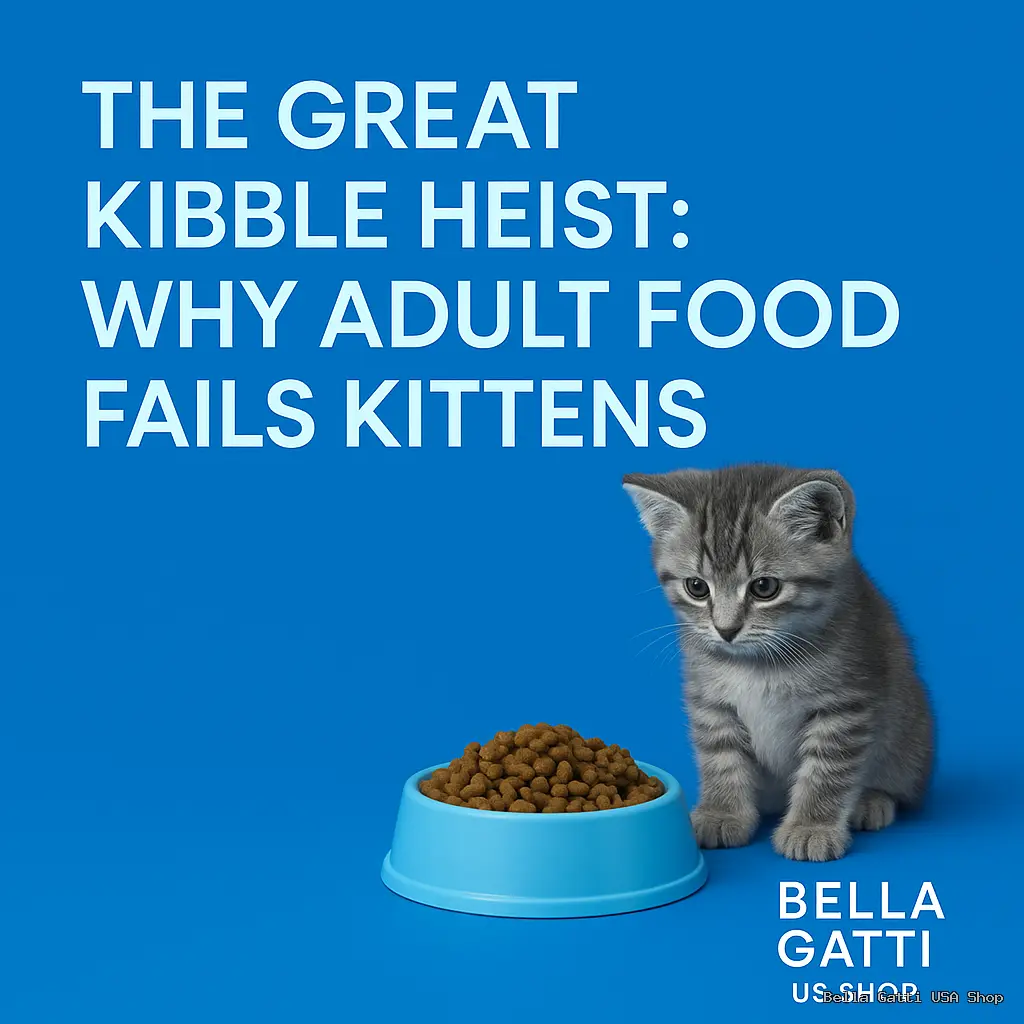
We all know the scene. You are meticulously pouring a bowl of premium kitten food, specifically engineered for maximum zoomie potential and rapid kitten growth.
Then, a tiny, determined fluffball executes a daring, low-crawl operation. Their mission: infiltrate the neighboring adult cat food bowl. The target is the larger, decidedly less exciting adult kibble.
This is the classic, high-stakes operation we call the Cat Kibbles Heist.
The question that plagues every responsible pet parent is simple: Is this occasional adult cat food consumption actually detrimental to my rapidly growing menace, especially if they are an 8-month-old kitten who thinks rules are optional?
The verdict from our nutritional investigation is firm: Yes, it absolutely is.
Today, we are diving deep into the kitten diet to expose the dark truth behind that bland, low-octane fuel known as adult maintenance food. We want thriving kittens, not just tiny bandits.
After all, happy, healthy cats make the best models for our Unisex Soft Cotton Graphic Tees. That journey starts with impeccable pet nutrition, not a failed food raid.
Section 1: The Nutritional Deficit Disaster (The Data)
The Fuel Requirements of a Tiny Racecar
To understand why the Cat Kibbles Heist is so dangerous, you must first understand the fundamental nutritional differences. Imagine your kitten is a tiny, high-performance racecar. Adult food? That is low-octane, standard maintenance fuel.
A kitten is undergoing rapid growth, which requires immense energy. Competitor analysis confirms that adult food generally has significantly fewer cat food calories and less fat than kitten food. This can severely hinder a growing kitten’s development.
The difference is staggering, and it is not just about size. While many owners start thinking about switching cat food around the 8-month kitten mark, the nutritional differences become critical much earlier, often starting around four to five months of age.
Protein Density and Calorie Requirements
The key differences lie in the density of critical nutrients. Kitten formulas are packed with higher levels of protein, fats, and essential vitamins designed specifically for development. This is why we talk about protein density.
For example, a kitten needs roughly double the calorie requirements per pound of body weight compared to an adult cat simply to sustain that explosive growth and the constant ‘zoomies.’ Feeding adult food means expending precious energy to consume a lower-yield product.
Studies have shown that continuous kitten consumption of adult food under 12 months can lead to genuine nutritional deficiencies. This is not just theory, it is a documented issue that impacts long-term health, often leading to feeding problems later on.
While discussing community issues, we often see posts on local forums, like those in the USJ Community or Subang Jaya, where well-meaning owners share their struggles with kitten refusing food. Often, this refusal stems from trying to switch too early or mixing diets incorrectly, leading to a complex pet food mystery.
Section 2: The Practical Problems of the Adult Kibble
Size Matters: The Physical Barrier
Beyond the chemistry, there is the simple physical reality. Adult kibble is often too large and dense for a small kitten’s jaws and developing teeth. This is why specialized kitten kibble is crucial, it is specifically designed for tiny mouths.
When a kitten attempts the Cat Kibbles Heist, they are working harder for less reward. They expend excess energy chewing and processing the larger pieces, which contributes to the energy deficit caused by the lower cat food calories.
This inefficiency results in slow growth and a noticeable lack of those essential ‘zoomies.’ If your kitten is looking less like a blur and more like a sleepy lump, their kitten diet might be deficient.
The Long-Term Health Pitfalls of Dry Food
The reliance on dry cat food, even the high-quality adult kind, presents another challenge for all cats, but especially developing kittens. Industry insiders have long pointed out that kibble was developed more for human convenience and profit than optimal feline biology.
Felines are naturally designed to get most of their moisture from their prey. A diet heavily reliant on dry cat food contributes to chronic low-level dehydration. Over 90% of household cats are fed dry food, a practice linked to increased risks of obesity and serious conditions, including future renal problem diagnoses.
Ensuring a proper Feline Nutritional Transition means not just changing the ingredients, but understanding the hydration and long-term organ health impact of their primary food source.
Section 3: Expert Verdict and The Fix: When to Switch Safely
The verdict is clear: until your feline friend reaches full maturity, typically between 8 and 12 months, they require dedicated kitten food. This ensures they meet their high calorie requirements and receive the necessary protein density for bone and muscle development.
The Art of the Feline Nutritional Transition
So, when is the right time for switching cat food? Most experts agree that 8 to 12 months is the ideal window, though some robust kittens can transition earlier if they are maintaining excellent weight, which requires careful feline weight monitoring.
If you notice your 8-month-old kitten is starting to show signs of maturity, such as slowing growth or difficulty with the small kitten kibble, you can begin the transition. The process should be gradual: mix the old kitten food with the new adult cat food, slowly increasing the adult portion over seven to ten days.
It is important to adjust the volume. Because adult food is less calorie-dense, you might need to feed slightly more volume initially, especially if you use the Free Feeding Method, to ensure they meet their daily needs.
We see countless success stories shared by owners, including advice popularized by figures like Andrew jk white, focusing on optimal kitten feeding schedules and ensuring the switch is smooth. Sometimes, adding supplements like Omega 3 oil supplementation can help palatability and overall coat health during this time.
This dedication to precise nutrition is what separates a thriving cat from a struggling one. Whether you are dealing with a standard kitten diet or specialized needs, like transitioning to Golden Neutered Cats Food, attention to detail is paramount.
A happy, healthy, and high-energy cat is the ultimate reward. Plus, they look fantastic lounging around in a Unisex Soft Cotton Tee from Bella Gatti US Shop, ready for their next photoshoot. Invest in their health now, and enjoy the zoomies for years to come!
The Nutritional Deficit Disaster: Low-Octane Fuel for Tiny Racecars
Your kitten is not just a small version of an adult cat. They are a high-speed construction project operating under intense deadlines.
Think of them as a tiny, highly efficient racecar that needs specialized, high-octane jet fuel, not the low-grade maintenance gas designed for a leisurely commuter.
The difference comes down to crucial calorie requirements and protein density. A growing kitten needs about two to three times the calories per pound of body weight compared to a sedentary adult cat.
When you observe your kitten eating adult food, you are inadvertently introducing a nutritional deficit disaster. This adult cat food consumption provides insufficient energy to power the intense kitten growth needed during their first year.
Why Adult Kibble Fails the Kitten Diet
Adult food is formulated for maintenance, meaning it focuses on preventing weight gain in already mature felines. This low-octane approach means the kitten must expend massive energy trying to digest large, maintenance-level pieces of adult kibble for too little nutritional reward.
This is precisely why kitten kibble is formulated differently. It is packed with higher fat and protein levels, engineered to support rapid development and maximum zoomie potential.
For a kitten under 12 months, consuming adult food can lead to long-term nutritional deficiencies, especially if they are a particularly active 8-month-old kitten.
The Reality of Dry Cat Food and Pet Nutrition
While we focus on the difference between kitten and adult formulas, it is crucial to address the nature of dry cat food itself. This is a pet nutrition reality developed largely for convenience.
Industry experts note that kibble, including kitten kibble, is often higher in carbohydrates and lower in moisture than a cat’s natural diet. Over 90% of domestic cats are fed dry food, but this lack of moisture can contribute to dehydration and, eventually, potential health issues like a renal problem later in life.
This challenge emphasizes why the specific density of kitten food is so critical during the growth phase, the food must maximize every available nutrient.
The Data: Protein Density and Calorie Requirements
To illustrate the stark differences, we compiled standard nutritional profiles often discussed by the USJ Community on platforms like Facebook regarding proper kitten feeding.
The numbers speak for themselves regarding cat food calories and density:
| Nutrient |
Kitten Kibble (Growth Formula) |
Adult Kibble (Maintenance Formula) |
Why It Matters for Kitten Feeding |
| Protein (Min % Dry Matter) |
30% to 35% |
26% to 30% |
Essential for muscle and tissue development. Higher protein density is critical for rapid growth. |
| Fat (Min % Dry Matter) |
18% to 22% |
9% to 15% |
Crucial for energy and brain development. Kittens need high fat for their demanding calorie requirements. |
| Taurine (Min %) |
0.2% |
0.1% |
Essential amino acid for heart and eye health. Kitten diet must contain high levels. |
| Calories (per cup) |
400 to 500 kcal |
300 to 350 kcal |
Lower calorie density means the kitten must eat significantly more, resulting in potential long-term deficiencies and feeding problems. |
If your kitten is constantly sneaking bites of the adult cat food bowl in Subang Jaya, they are not getting the specialized nutritional support their tiny bodies require. Adult food is simply too low-octane for a growing champion.
Case Study Observation: Why The Heist Fails and Growth Stalls
Your kitten is programmed for exponential growth, and feeding adult food to kittens under 12 months is like trying to build a skyscraper using only maintenance supplies. This is not just about a temporary lack of zoomies, it profoundly impacts skeletal structure, immune system development, and overall long-term wellness.
Adult cat food is designed for maintenance, meaning it has a lower calorie requirements density and significantly less fat and protein density than the specialized formula necessary for that intense, non-stop kitten growth process.
The differences start around four to five months of age, when the kitten diet demands peak fuel. If your kitten is consistently engaging in the Cat Kibbles Heist, they are expending massive energy for a minimal nutritional reward.
The Practical Problems: Size, Density, and Essential Nutrients
Beyond the caloric deficit, there are mechanical and biochemical roadblocks. First, the size of the adult kibble is often too large, leading to potential feeding problems and making it harder for tiny mouths to chew and swallow efficiently.
Conversely, specialized kitten kibble is smaller, easier to manage, and, most importantly, fortified. Kitten food contains higher levels of protein, fats, and essential nutrients specifically geared toward rapid development. For instance, it is often fortified with DHA, a crucial Omega 3 oil supplementation, vital for neurological development.
If you are noticing your kitten is smaller than expected, or if their coat lacks that vibrant luster, the kind of healthy sheen we seek in models for our Unisex Soft Cotton Tee designs, the consistent adult cat food consumption might be the silent culprit. We are aiming for a model worthy of a graphic Cat T-shirt, after all.
The Dry Food Dilemma: Hidden Nutritional Traps
While we focus on the difference between kitten food and adult cat food, we must also address the broader pet nutrition context of dry cat food itself. Over 90% of cats are fed kibble, but industry studies show that this format, developed for convenience and profit, often contains high levels of carbohydrates.
Cats are obligate carnivores, and a high-carb kitten diet can set them up for obesity and other long-term health issues. Furthermore, dry food lacks moisture, which contributes significantly to dehydration and increases the risk of serious health issues like a renal problem later in life. This is a crucial factor to consider when providing cat food advice, regardless of age.
The Expert Verdict: When to Initiate the Transition
This is the central pet food mystery for many new owners. We see this question constantly pop up, whether you are in Subang Jaya, engaging with the USJ Community forums, or simply seeking cat advice via Facebook. When is the perfect time to switch from high-octane growth formula to maintenance fuel?
The official recommendation for a complete feline nutritional transition is usually between 10 and 12 months. This ensures they receive the full benefit of that intense growth formula during their most crucial developmental stages.
However, many owners opt to transition their 8-month-old kitten earlier. This is often triggered by kitten food refusal, the tiny rebel decides they prefer the texture or flavor of the adult kibble in the cat food bowl.
Switching Cat Food: Monitoring Weight and Readiness
Experts note that switching is typically safe around 8 months, provided two conditions are met: the kitten is consistently gaining weight and has reached a good percentage of their adult size. This is where careful feline weight monitoring becomes absolutely key.
If your 8-month-old kitten is showing signs of kitten food refusal, like the scenario discussed frequently by users like andrewjkwhite on various pet nutrition forums, you might need to start the transition early. However, you must adjust the volume to compensate for the lower density of adult cat food to meet their high cat food calories needs.
Remember, the goal is always health, energy, and the production of a magnificent, zoomie-fueled companion. Choose the specialized kitten food until your veterinarian confirms they are ready for the switch. A healthy, energetic cat is the perfect model for our playful graphic tees.
Beyond the Heist: The Nutritional Trap of Dry Cat Food
Speaking of the great Cat Kibbles Heist, while we have established that kitten food is vital for growth, we must address the elephant in the cat room: Dry Cat Food in general.
The long-standing pet food mystery is simple: Why do we feed our cats a diet that works against their biology? Over 90% of cats are fed dry kibble, yet industry insiders reveal this heavy reliance contributes significantly to long-term feline health issues.
The truth is, kibble was largely developed for owner convenience and corporate profit, not optimal feline needs. Your cat is an obligate carnivore. Their system is not equipped to handle the starches and complex carbohydrates required to hold a piece of kitten kibble or adult kibble together.
The Moisture Crisis: Why Hydration is Non-Negotiable
This high-carb reality, coupled with the critically low moisture content, is the core problem. Cats naturally have a very low thirst drive and are designed to get most of their hydration from their prey (or, ideally, wet food).
The lack of moisture in dry food contributes directly to dehydration, obesity, and serious long-term renal problems. If you live in a perpetually warm location, such as the Subang Jaya or USJ Community areas, proper hydration is even more critical.
If you use the Free Feeding Method with dry food, you must supplement heavily with wet food. This practice is vital for maintaining urinary tract and kidney health, supporting long-term pet nutrition.
Feline Nutritional Transition: When to End the Kitten Diet
Let’s circle back to the main event: the right time for the Feline Nutritional Transition. We know that kitten growth requires high cat food calories and superior protein density, which is why adult cat food fails them.
Experts caution that feeding adult cat food to kittens under 12 months can lead to nutritional deficiencies. However, many owners begin switching cat food around the 8-month kitten mark.
If your 8-month-old kitten is already hitting developmental goals and maintaining healthy feline weight monitoring, the transition can begin. Sometimes, a kitten develops kitten food refusal after 8 months, making the switch easier on you.
The key to good cat food advice is gradual mixing. Blend the kitten kibble with the new adult kibble over 7 to 10 days. Remember that adult food generally has lower calorie requirements per serving, so volume adjustments may be needed to ensure maintenance.
Even highly specific formulas, such as Golden Neutered Cats Food, can sometimes see minor formulation changes or simply lead to boredom, triggering a sudden kitten refusing food episode. Variety and careful observation are your best tools in managing the kitten diet.
The Great Kibble Switcheroo: Mastering the Feline Nutritional Transition
So, you have won the initial battle against the Cat Kibbles Heist, but now you face a new crisis: the dreaded Kitten Food Refusal. What happens when your tiny tyrant stages a full-scale protest, refusing the specialized kitten kibble and preferring to risk the wrath of the adult cat for a taste of their bland dish?
This refusal scenario often starts around the 8-month kitten mark. Their palate matures, and sometimes, the high palatability of the adult food, or just sheer boredom, makes them seek out the forbidden bowl. While we established that kitten consumption of adult food prematurely can lead to nutritional deficiencies, the period between 8 and 12 months is the designated window for the official switch.
The Science of the Switch: Calorie Requirements and Protein Density
Before you begin switching cat food, remember the fundamental difference: kitten food is engineered for rapid growth, demanding significantly higher cat food calories, fats, and protein density. Studies show that feeding adult food to cats under 12 months can lead to nutritional deficiencies due to lower calorie density.
However, once your kitten has reached about 80% of their adult size, usually 8 to 12 months, they are ready for the Feline Nutritional Transition. This necessary shift moves them from high-octane growth fuel to maintenance fuel, minimizing the risk of obesity later on.
We see this confusion constantly, whether discussing pet nutrition challenges in the USJ Community or sharing cat food advice on local forums in Subang Jaya: the transition must be gentle.
Executing the Gradual Transition Method
The key to successful adult cat food consumption introduction is avoiding shocking the delicate digestive system. A sudden swap can result in upset stomachs, leading to stress and further kitten refusing food problems. This 10-day gradual method is the gold standard:
- Days 1-3: Mix 75% kitten food with 25% adult kibble.
- Days 4-6: Move to a 50/50 mix.
- Days 7-9: Shift to 25% kitten food and 75% adult food.
- Day 10 onwards: Full adult food.
Crucially, remember the volume adjustment based on calorie requirements. Because adult kibble has lower cat food calories than kitten food, you might need to feed slightly more volume of the adult food during the final growth spurt to ensure the kitten meets their high energy needs. Proper kitten growth monitoring is essential during this period.
This careful, gradual approach minimizes digestive upset and ensures your burgeoning feline friend maintains their energy levels, and produces the maximum number of zoomies possible.
Expert Verdict: Fueling the Feline Racecar
The verdict is clear, and we do not need to check Google, Chrome, Firefox, or Edge on our Samsung devices to confirm it. Kittens need kitten food. Period.
Do not sacrifice long-term health for short-term convenience. That small bag of specialized kitten diet is an investment in years of happy, healthy zoomies.
Adult kibble is the nutritional equivalent of low-octane fuel for a tiny, high-performance racecar. Competitor analysis confirms that adult cat food has significantly lower calorie requirements and reduced protein density compared to specialized kitten formulas.
The Nutritional Deficit Disaster: Protein, Fat, and Zoomies
Kitten food is not just smaller dry cat food, it is a powerhouse of growth factors. Studies show that feeding adult cat food to kittens under 12 months can lead to severe nutritional deficiencies, hindering their kitten growth.
Kitten food is specifically engineered to support rapid development, containing much higher levels of essential amino acids, fats, and maximum cat food calories necessary for proper neurological and muscular development.
When performing feline weight monitoring, owners must remember that the specialized kitten diet supports explosive growth that adult cat food consumption simply cannot meet.
Addressing the Multi-Cat Challenge
If you are struggling with a multi-cat household where the kitten keeps performing the Cat Kibbles Heist, consider microchip feeders. These ingenious devices ensure only the intended cat accesses the specialized bowl, saving the adult food for the adults and the kitten food for the kitten.
This simple fix helps manage the cat food stack and prevents the daily pet food mystery of where all the expensive food went.
The Feline Nutritional Transition: Timing is Everything
So, when can your determined little fluffball graduate? While many owners start the transition around 8 months kitten, experts generally recommend waiting until 10 to 12 months, or until feline weight monitoring confirms they have reached about 90% of their adult size.
The Feline Nutritional Transition should always be gradual to prevent Kitten Food Refusal. Start by mixing 25% adult kibble with 75% kitten kibble. Over two weeks, slowly increase the proportion of the adult formula.
Remember, volume adjustments are necessary to prevent overfeeding due to differences in cat food calories between the two types of dry cat food. This is crucial cat food advice.
The Caveat of Dry Cat Food and Long-Term Health
While specialized kitten kibble is necessary for growth, pet nutrition advice often reminds us of the inherent drawbacks of relying solely on dry cat food. Over 90% of cats are fed kibble, but industry insiders note it was developed primarily for human convenience, not optimal feline biology.
Kibble is high in carbohydrates and critically low in moisture. This lack of hydration contributes significantly to potential health issues, including obesity and, eventually, severe dehydration leading to a renal problem.
Even the best kitten diet should be supplemented with wet food or Omega 3 oil supplementation to boost moisture intake. This key cat advice is particularly relevant for the USJ Community and Subang Jaya owners focusing on preventative care.
The Reward: A Fully Fueled Model for Bella Gatti
Invest in the jet fuel. You will be rewarded with a purring, healthy companion who will not be plotting a pet food mystery every night. The goal is a thriving, energetic cat.
A cat so full of life and perfectly muscled, perhaps even following the philosophy of andrewjkwhite’s focus on optimal health, that they look fantastic modeling one of our hilarious, soft cotton graphic T-shirts. That is the ultimate payoff for responsible kitten feeding.
The Expert Debrief: When Can the Kitten Join the Adult Food Stack?
The verdict is in: specialized kitten food is non-negotiable for proper development. But since no investigation is complete without a timeline for the nutritional transition, here is the final debrief on moving your fluffball from tiny terror to sophisticated adult.
When is the Great Nutritional Transition complete?
The official investigation concludes that most kittens are ready for the Feline Nutritional Transition between 8 and 12 months. Owners, especially those sharing tips in the USJ Community Facebook groups or the wider Subang Jaya area, often report Kitten Food Refusal around 8 months, signaling the start of the shift.
Start by mixing tiny amounts of adult kibble with the high-octane kitten kibble. Do this over 7 to 10 days to avoid digestive upset. Be mindful of cat food calories, adult food has lower density, so you might need a slightly larger volume to satisfy those intense calorie requirements initially.
Why is Adult Food a Disaster Fuel for Tiny Racecars?
This is the core finding of our Cat Kibbles Heist investigation. Adult food, while perfectly adequate for a maintenance lifestyle, is designed for the couch, not the construction zone. Studies confirm that adult cat food consumption by kittens under 12 months can lead to serious nutritional deficiencies.
Kitten food boasts significantly higher protein density, fat, and essential nutrients like DHA, specifically engineered to support the rapid kitten growth that occurs before the 1-year mark. If your kitten is consistently eating the adult cat food stack, they are running on low-octane fuel and risking their long-term health and the quality of their future zoomies.
The Dry Food Dilemma: Is Kibble Itself the Problem?
While the difference between kitten and adult dry cat food is vast, we must briefly address the pet food mystery surrounding kibble itself. Industry data reveals that over 90% of domestic cats are fed dry food, largely due to owner convenience and profit margins, not feline biology.
Unfortunately, dry food is often high in carbohydrates and crucially low in moisture. This lack of moisture can lead to chronic, low-level dehydration, potentially exacerbating issues like renal problems later in life. We always recommend incorporating high-quality wet food into the kitten diet to ensure adequate hydration, regardless of the brand.
How Do I Monitor the Switch and Ensure Maximum Zoomies?
Vigilance is key during the switching cat food process. Use regular feline weight monitoring (a simple kitchen scale works wonders) to ensure your kitten continues to gain weight steadily during the transition.
If you notice any signs of feeding problems, such as diarrhea, excessive vomiting, or a halt in weight gain, slow down the shift immediately. Maintaining those high calorie requirements is non-negotiable until they reach full maturity. Always feel free to consult your vet for personalized cat advice.
Wait, What if My Dog is the Real Thief?
Ah, the secondary Cat Kibbles Heist perpetrator: the dog. If your dog performs the “Dog eats cat” maneuver occasionally, it is usually fine. But consistent consumption of food from the cat food bowl is problematic.
Cat food (both dry food and wet food) is formulated with far higher levels of protein and fat than canine maintenance diets. Long-term, this can lead to canine obesity and serious digestive upset. Ensure the cat food bowl is placed strategically high, away from curious canine noses.
Can I add Omega 3 oil supplementation to my kitten’s diet?
Absolutely. Omega 3 oil supplementation, such as high-quality fish oil, is a fantastic boost for coat health, brain development, and reducing inflammation. However, since the kitten diet is already meticulously balanced, you must consult your veterinarian regarding the correct dosage to avoid disrupting the overall nutrient profile.