Save the Sofa: Stop Kitten Scratching Now
Summary
- Scratching is a vital natural instinct (for claw health, stretching, and territory marking); the goal is scratching behavior redirection, not prohibition.
- To redirect successfully, provide irresistible scratching posts, they must be sturdy, tall, offer varied textures (Sisal rope, Corrugated cardboard), and be placed directly next to the furniture your cat targets.
- Protect furniture using a two-pronged approach: positive reinforcement (treats, catnip spray) for post use, and humane deterrents (double-sided tape, citrus sprays) on forbidden areas.
- Minimize damage through regular claw trimming or temporary cat nail caps. Note that declawing (claw surgical amputation) is inhumane, cruel, and should never be considered.
Table of Contents
Welcome to Bella Gatti US Shop, where we understand that your love for cats is rivaled only by your love for un-shredded furniture. You want the cute cat tee, but you also want a pristine couch.
That cute little kitten you brought home? It views your brand new faux leather computer chair as an open invitation to a claw sharpening party.
The good news is that we can achieve peace between feline instincts and home decor. You don’t have to choose between your beloved pet and a pristine couch.
The key to success lies not in stopping the behavior, but in understanding the natural cat instinct and providing irresistible scratching options that redirect their attention.
Understanding the Natural Cat Instinct: Why Scratching is Non-Negotiable
Scratching is a necessary instinct for your feline friend, and understanding cat scratching behavior reveals that it is far more than just sharpening claws; it is a vital part of their physical and emotional health.
When a cat engages in cat scratching behavior on your furniture, they are engaging in three critical activities:
- Physical Maintenance: Scratching helps them remove the dead nail sheath, keeping their claws healthy and sharp.
- Stretching: It allows them to fully stretch the muscles in their back and shoulders, promoting flexibility.
- Communication: Cats use scent glands in their paws for territory marking communication, signaling to other animals that this space is theirs.
Because scratching is a vital part of a cat’s existence, humane solutions must focus on redirecting scratching behavior in cats rather than punishment. We need to teach the kitten where to scratch, emphasizing the importance of providing suitable surfaces and distractions, rather than attempting to suppress their natural instincts.
Studies show that scratching is a fundamental, necessary instinct. Therefore, the goal is to prevent cat scratching of your sofa by making designated scratching posts exponentially more appealing than your upholstery.
Understanding Natural Cat Instinct: Why Your Kitten Needs to Scratch
Scratching behavior is not your kitten plotting the demise of your expensive home furnishings. It is a vital, necessary instinct driven by millions of years of evolution.
Think of it this way: your cat scratches because they absolutely must. This natural cat instinct is a core part of their physical and emotional health, and you cannot, and should not, try to stop cat scratching altogether.
So, why does your tiny predator view your brand new faux leather computer chair as the perfect scratching post? There are three main reasons for this essential cat scratching behavior:
1. Essential Hygiene and Maintenance
The primary physical reason for scratching is maintenance. Cats scratch to remove the dead outer nail sheath, keeping the underlying claw sharp and ready for action. It’s essentially a feline manicure.
If they don’t perform regular claw trimming via scratching, their claws can become overgrown and painful. This is non-negotiable for a healthy cat.
2. Vital Exercise and Stretching
Scratching is also essential exercise. When your cat stretches fully and digs in, they are strengthening and stretching their upper body muscles, shoulders, and back.
This full-body stretch is crucial for maintaining agility and muscle tone, making it a key component of their overall physical health.
3. Territory Marking Communication
Perhaps the most important reason for destructive scratching is communication. Scratching is a powerful form of territory marking communication.
Cats have scent glands located between their toes. When they scratch, they leave a chemical “signature” on the surface, making the mark visible to other passing cats.
This visible damage combined with the invisible scent tells the world, “This spot is mine, and I was here.”
Studies show that accepting and managing this natural cat instinct is essential. Your mission is simply to implement scratching behavior redirection by teaching them to love appropriate scratching options.
You must redirect cat scratching from your favorite sofa to acceptable alternatives like high-quality scratching posts.
Choosing the Purrfect Scratching Posts
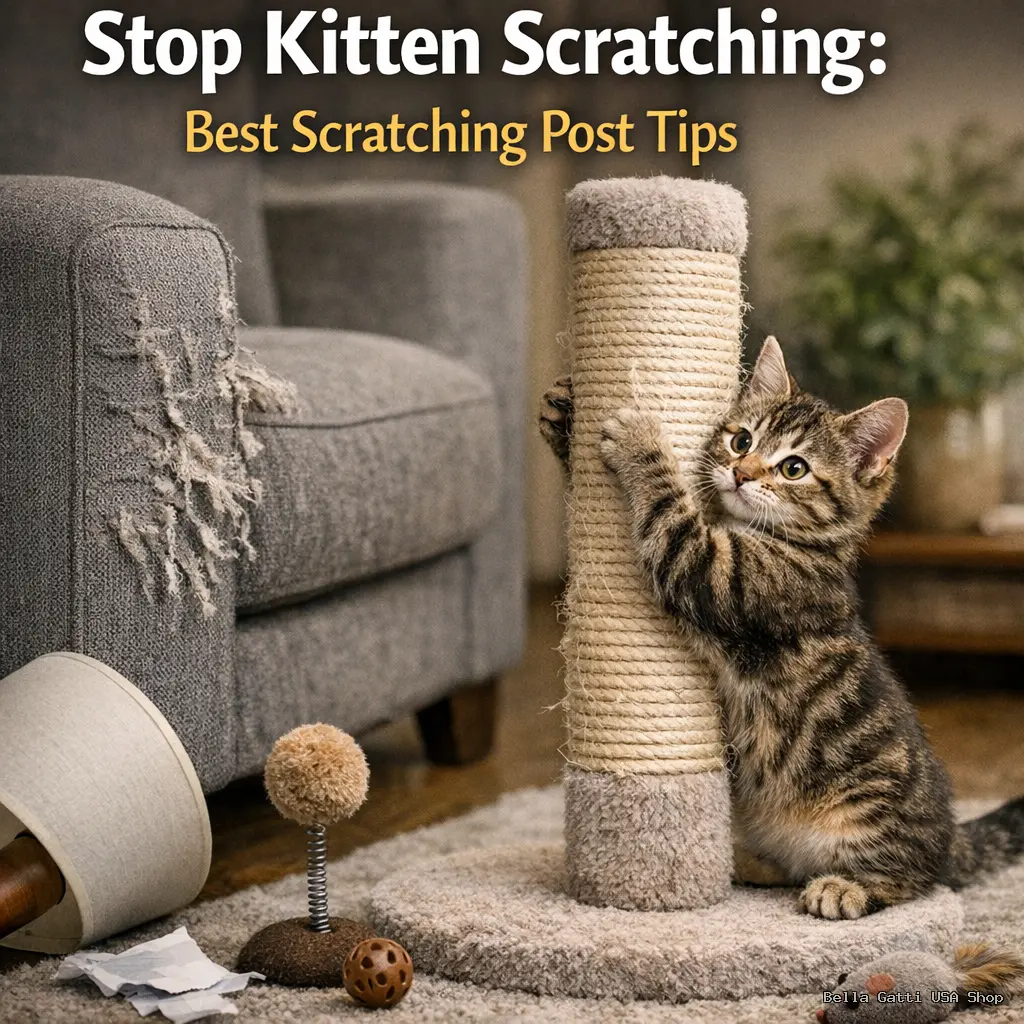
The key to peace is simple: if you want to prevent cat scratching on the sofa, you must offer an alternative that is demonstrably better, taller, and more stable than the sofa itself. We are competing directly with the satisfying stretch of your valuable scratching furniture!
The number one rule, supported by experts like Alley Cat Allies, is strategic placement. You need to put the new scratching posts exactly where the cat already scratches. This is the fastest way to start the process of redirect cat scratching.
If your kitten loves attacking the corner of the rug, place a horizontal scratching pad right there. If they target the arm of your armchair, put a robust vertical scratching post next to it.
Crucially, the post must be sturdy. If it wobbles or falls over when your cat uses it, they will abandon it immediately and return to the reliable stability of your expensive sofa.
Matching Scratching Textures and Orientation
Cats are notoriously picky creatures, particularly about texture. The secret to success often lies in providing a variety of scratching surface textures and orientations.
Remember that scratching fulfills the vital natural cat instinct to stretch muscles, mark territory using scent glands, and facilitate dead nail sheath removal. Different materials provide different levels of satisfaction.
You need to offer multiple scratching options. Does your cat scratch upwards, stretching tall on the door frame? They absolutely need tall vertical scratching posts, preferably made of Sisal rope.
Does your cat attack the carpet or doormat? They likely prefer horizontal scratching pads, often made of affordable Corrugated cardboard. Even Polydactyl cats, those delightful furballs with extra toes, need options sturdy enough to handle their unique paw structure.
For maximum appeal, consider slanted scratching posts, which provide a compromise between vertical and horizontal scratching. Offering this variety is key to successful scratching behavior redirection.
Best Scratching Textures Comparison
| Material |
Preferred Orientation |
Pros |
Cons |
| Sisal Rope |
Vertical, Slanted |
Extremely durable, satisfies the shredding instinct, classic choice. |
Can be expensive, some cats reject the texture initially. |
| Corrugated Cardboard |
Horizontal, Slanted |
Affordable, disposable, high appeal for many cats. |
Messy (sheds pieces), requires frequent replacement. |
| Natural Wood |
Vertical |
Very sturdy, mimics outdoor trees, good for large cats. |
Requires careful sourcing to ensure non-toxic wood, less common. |
| Carpet/Fabric |
Horizontal, Vertical |
Familiar texture, good for transition. |
May encourage scratching of actual carpets or furniture. |
The Magic of Catnip and Positive Reinforcement
Once you have the perfect post, how do you convince your cat to use it? This is where behavioral conditioning and positive reinforcement truly shine. To make the post the most exciting thing in the room, consider using catnip to entice scratching; a sprinkle of this aromatic herb can turn the scratching post into an irresistible playground for your feline friend.
Spraying a high-quality catnip spray or Valerian root extract directly onto the Sisal rope or Corrugated cardboard is a brilliant technique. Studies show that cats are significantly more likely to adopt new scratching habits when they are enticed with scents or rewarded immediately.
Keep in mind the Kitten catnip attraction age. Kittens often do not fully respond to catnip until they are around six months old, so treats and praise are paramount for younger felines during training.
Reward every successful scratch. If you see your cat approach the post, use it, or even sniff it, offer a treat and lavish praise. This positive association is the fastest way to solidify good habits and train a kitten efficiently.
How to Train a Kitten (Or Stubborn Adult)
Training a kitten requires patience and consistency. Remember, you are competing with the satisfying texture of your Faux leather computer chair. We must employ effective scratching behavior redirection immediately.
Start by placing the kitten near the new scratching post. Gently guide them toward the post. You can use your fingers to mimic the scratching motions on the surface. This demonstrates what the post is for and satisfies their need for dead nail sheath removal.
For a particularly stubborn cat, gently hold their front paws and guide them to scratch the post. Do this only if the cat is relaxed, never when they are stressed or resisting. Immediately follow this physical guidance with a treat or praise.
Consistent redirection over a few weeks can solidify scratching post use. If you see them scratching the sofa, pick them up calmly, move them to the post, and reward them for using the correct surface.
Humane Deterrents to Prevent Cat Scratching
While positive reinforcement gets the cat to love the new post, you also need effective humane deterrents for cat scratching to make the old scratching spots utterly unappealing. Utilizing options like double-sided tape or citrus sprays can help in this regard. This two-pronged approach is essential to successfully stop cat scratching on prohibited surfaces.
A highly effective technique is applying thick, sticky double sided tape directly onto the corners of the scratching furniture. Cats hate the sticky feeling on their paws. Similarly, placing aluminum foil on areas like couch cushions can create an unpleasant texture and sound, providing a temporary solution during humane deterrent application.
Other popular methods include using scents. Cats naturally dislike strong citrus deterrents (lemon, orange) or menthol. Spraying a light, non-toxic citrus scent on the prohibited area works wonders. For high-tech intervention, consider motion detectors that emit a harmless burst of air to discourage unwanted cat scratching behavior.
Preventative Maintenance: Regular Claw Trimming
Even with the best scratching posts, managing the length and sharpness of your cat’s claws is a great preventative measure. Nail trimming techniques for cats, such as using specialized clippers or a nail grinder, can help maintain their claws effectively. This reduces the damage they can inflict while you are still training them, making regular claw trimming a necessity.
Implementing regular claw trimming using specialized cat nail trimmers is a simple, effective routine. Trimming the very tip of the claw every few weeks reduces the cat’s ability to grip your expensive furnishings.
Alternatively, you can use vinyl cat nail caps. These small caps are glued over the claw, preventing the sharp tip from causing damage. They must be applied correctly and replaced every 4 to 6 weeks, offering a temporary solution while you solidify the new post habits.
What Not To Do: Why Declawing is Never the Answer
When frustration mounts, some owners consider radical measures. We need to be absolutely clear: declawing, or claw surgical amputation, is not an acceptable solution to cat scratching behavior. It is a major surgery involving the amputation of the last joint of each toe.
This procedure is widely considered cruel and unnecessary by veterinary associations and organizations like Alley Cat Allies. It often leads to long-term physical pain, arthritis, and serious behavioral problems, including aggression and litter box avoidance, necessitating costly feline behavior consultation later on.
The goal is always scratching behavior redirection, not surgical removal of a vital, natural cat instinct. Provide the right outlets, use positive reinforcement, and enjoy your happy, whole cat.
Humane Deterrents and Behavior Redirection
If you want to preserve your cherished furniture, especially that delightful, shreddable faux leather computer chair, you must make the forbidden zones utterly unappealing while simultaneously making the approved scratching posts irresistible.
This is where the tactical, humane deterrent application comes into play. We are not punishing the cat; we are simply making poor choices less fun.
Understanding the Natural Cat Instinct
Before we discuss deterrents, we must acknowledge a fundamental truth: cat scratching behavior is not malicious; it is a critical, natural cat instinct. You cannot stop it, only redirect it.
Scratching serves several important functions for your feline friend.
First, it’s physical maintenance. Scratching helps remove the dead nail sheath, keeping those claws sharp and healthy. Second, it’s a necessary stretch, allowing them to fully extend their muscles and spine.
Finally, scratching is essential territory marking communication. Cats have scent glands in their paws, and when they scratch, they leave both a visual mark and a chemical message for other cats (or just for themselves).
Because this behavior is vital, your strategy must focus entirely on scratching behavior redirection toward approved scratching options like sisal rope or corrugated cardboard.
The Double-Edged Sword: Humane Deterrent Application
While you are training a kitten or an adult cat to love their new scratching posts, you need temporary measures to protect your existing scratching furniture.
The goal is to create a negative sensory experience on the sofa, driving the cat back to their wonderful, catnip-laced vertical scratching or horizontal scratching surfaces.
Tactical Deterrents for Furniture
One classic and incredibly effective deterrent is double sided tape. Cats despise the sticky feeling on their paws. Apply the tape directly to the areas of the sofa or carpet they target. This is usually required for a few weeks until the habit is broken.
Another excellent temporary solution involves covering the targeted area with aluminum foil. The crinkly sound and strange texture are usually enough to deter them immediately.
You can also utilize scent-based deterrents. Cats generally dislike strong smells like citrus deterrents, menthol, or specific commercially available bitter sprays.
Spray a citrus-scented product on the furniture, ensuring it is pet-safe and won’t damage the fabric. Remember that consistency is key; reapply frequently until the cat associates the sofa with a strange, undesirable smell.
For high-traffic areas where you need a consistent barrier, some owners use motion detectors that emit a harmless burst of air when the cat approaches the forbidden zone. This creates a harmless scare, further reinforcing the furniture as a “no-go” area.
Positive Reinforcement and Behavior Conditioning
Deterrents only work if they are combined with powerful, immediate positive reinforcement for the acceptable scratching surface. This two-part approach is the foundation of effective training.
Redirect Cat Scratching Successfully
To encourage the use of the new scratching options (whether it’s sisal rope, natural wood, or corrugated cardboard), you need to make them the most exciting thing in the house.
Use catnip spray or specialized attractant liquids on the new post. Studies show cats are much more likely to adopt new scratching habits when enticed with scents like catnip or Valerian.
When you see your cat approaching the scratching post, reward them immediately with a treat or praise. This behavioral conditioning is highly effective.
For kittens, physical guidance is crucial. Gently guide their paws to the scratching post or mimic the scratching motion yourself. This helps them understand the function of the post. Consistent redirection over a few weeks will solidify the habit.
Preventative Maintenance: Trim Cat Claws
While training is underway, you can minimize damage by implementing regular claw trimming.
Using quality cat nail trimmers to trim cat claws every few weeks reduces the sharpness of the claws, making any accidental scratching less damaging to your furniture.
Another effective measure, especially for polydactyl cats or those struggling with redirection, is the use of nail caps. These are vinyl caps glued onto the nails that prevent damage entirely. They fall off naturally as the dead nail sheath sheds.
The Ethical Line: Why We Avoid Claw Amputation
As experts like Alley Cat Allies consistently emphasize, declawing, or claw surgical amputation, is an outdated and cruel procedure.
Declawing is not merely removing the nail; it is the permanent amputation of the final bone of the cat’s toe. This procedure is linked to long-term physical pain, aggression, and litter box problems because the cat’s natural gait is altered, making walking painful.
Effective, humane deterrents and dedicated training, using tools like double sided tape, catnip, and positive reinforcement, make the decision to declaw completely unnecessary. Feline behavior consultation should always be sought before considering such an extreme, irreversible measure.
Your cat deserves to keep their natural tools for stretching, balance, and removing the dead nail sheath. You deserve un-shredded furniture. With strategic placement and consistent behavior redirection, you can achieve both.
The Critical Importance of Claw Care: Managing the Weapons of Mass Destruction
You’ve invested in the perfect scratching posts, maybe a towering sisal rope monument, but your kitten’s razor-sharp claws still feel like tiny needles of doom. Even with impeccable behavior redirection efforts, regular maintenance is key to minimizing damage to your furniture, especially that delightful, shreddable faux leather computer chair.
Regular Claw Trimming: The Humane Edge
The simplest, most effective measure to prevent cat scratching damage is routine claw maintenance. Think of it as a mandatory manicure for your tiny tyrant. When we trim cat claws, we are merely removing the sharp, needle-like tips that cause the most painful holes and snags.
This process directly assists with your cat’s natural cat instinct. Scratching is necessary because it helps the cat remove the outer layer of the nail, the dead nail sheath. By performing regular claw trimming every two to three weeks, you are proactively managing the sharpness and reducing the cat’s intense need to shred surfaces immediately.
Always use specialized cat nail trimmers designed specifically for feline claws. If the idea of handling those tiny paws makes you nervous, fear not. Ask your veterinarian or groomer for a quick demonstration, they can easily show you how to avoid the quick and keep the experience stress-free for both you and your feline friend.
The Temporary Solution: Nail Caps
If trimming every two weeks feels like too much of a commitment, or if you are currently training a particularly destructive kitten, cat nail caps offer a fantastic temporary solution. These are small, colorful vinyl caps glued securely onto the cat’s claws.
They effectively prevent the cat’s claws from damaging surfaces while still allowing them to perform the natural stretching and scratching behavior. The cat can still go through the motions of territory marking communication without leaving permanent scars on your sofa. Nail caps are a great tool, especially during the crucial period when you train a kitten to properly use scratching posts.
A Note on Cruelty: Avoiding Claw Surgical Amputation
While discussing claw management, it is crucial to address the permanent, inhumane option, declawing. We at Bella Gatti US Shop strongly advocate against this practice. Declawing is not just removing a nail; it is technically a claw surgical amputation of the last joint of the cat’s toes.
This procedure is linked to long-term issues like aggression, pain, and litter box avoidance. Alley Cat Allies and most modern veterinary bodies consider it cruel and unnecessary, especially since humane alternatives like regular claw trimming and nail caps exist. A responsible cat owner manages the claws, they do not remove the cat’s natural defense and stretching mechanism.
Managing a cat’s claws through trimming and nail caps, alongside dedicated scratching posts, addresses the root cause: the vital need to shed the dead nail sheath and achieve a full body stretch. This is the foundation of effective scratching behavior redirection.
Why Declawing is Never the Answer: Protecting Paws and Peace
You’ve seen the damage. That beautiful, shreddable faux leather computer chair is looking less like furniture and more like modern art created by a tiny, furry vandal. While the urge to find an “easy fix” to stop cat scratching is strong, we need to talk about declawing directly.
Declawing, technically known as onychyectomy, is often mistakenly viewed as a simple nail removal. Let us be clear, it is anything but simple or humane.
This procedure is a major surgery involving the claw surgical amputation of the last bone or joint segment of each toe. To grasp the severity, imagine having the tip of each of your fingers amputated at the first knuckle. That is effectively what declawing does to a cat.
The vast majority of veterinary organizations and groups like Alley Cat Allies consider this procedure cruel and medically unnecessary. It is banned in many U.S. cities and states due to its severe long-term consequences.
Cats who undergo this surgery often suffer chronic pain, which can manifest as serious behavioral issues, including increased aggression and painful aversion to using the litter box. If you are struggling with destructive scratching, please pursue a feline behavior consultation instead of considering such a damaging procedure.
The Natural Instinct: Why Cats Must Scratch
Before we can master scratching behavior redirection, we must respect the feline design brief. Scratching is not an act of spite; it is a fundamental, natural cat instinct essential for your kitten’s physical and emotional well-being.
Studies show that cat scratching behavior serves three vital purposes. First, it helps remove the dead nail sheath, keeping their claws sharp and healthy, a necessary maintenance routine for our little predators.
Second, it is a crucial full-body stretch, working muscles from shoulder to tail. Third, and perhaps most importantly, scratching is a form of territory marking communication, utilizing scent glands located in their paws to communicate ownership and security.
Designing the Perfect Scratching Post Arsenal
If scratching is necessary, the solution isn’t removal, it’s excellent interior design. To redirect cat scratching successfully, you must offer irresistible scratching posts that satisfy their need for variety. This means providing a variety of scratching surface textures.
Top-ranking solutions include sturdy options like sisal rope, corrugated cardboard, and even natural wood. Remember that cats have preferences for orientation, too.
You need options for vertical scratching (like tall posts or cat trees) and horizontal scratching (like flat cardboard pads). Some cats even prefer slanted scratching posts. Offering this variety ensures every preference is catered to, making the furniture less appealing by comparison.
Training and Redirecting: Positive Reinforcement Mastery
It is far easier to train a kitten than to break a long-standing habit in an adult cat. Start early! Consistent scratching behavior redirection paired with positive reinforcement is the key to success.
When you see your kitten wake up or stretch, gently guide them to the appropriate scratching posts. You can guide them by softly holding their paws to mimic the scratching motion. This helps them understand the difference between the acceptable post and the forbidden scratching furniture.
Mimicking scratching yourself on the posts reinforces the action. Immediate rewards are crucial: offer praise or treats the instant they use the scratcher. Consistent redirection over a few weeks will solidify the positive habit.
Making the Scratching Post Irresistible
Sometimes, the post needs a little help to compete with your expensive upholstery, especially when using scratching posts effectively. This is where scent enticement comes in. You can greatly increase the likelihood of success by making the designated areas smell amazing to your cat, encouraging them to choose the scratching post over your furniture.
Spraying the scratching posts with catnip spray or Valerian extract can be a powerful motivator. Studies show cats are much more likely to adopt new scratching habits when they are rewarded or enticed with specific scents.
Note that not all kittens respond to catnip until they reach the kitten catnip attraction age (typically around 6 months), but treats and praise work universally.
Humane Deterrents: Drawing the Line
While you are encouraging positive habits, you must simultaneously discourage the negative ones. This requires strategic humane deterrent application to the areas you want to protect, helping you prevent cat scratching on the wrong surfaces.
Physical barriers work best. Applying specialized double sided tape to the scratching furniture creates an unpleasant sticky sensation that cats hate. Aluminum foil is another excellent temporary deterrent due to its texture and noise.
Scent deterrents are also effective. Cats dislike strong odors like citrus deterrents or menthol. Spraying these non-toxic scents on forbidden areas, always combined with positive reinforcement for using the appropriate scratchers, ensures lasting results.
A Note on Maintenance: The Preventative Measure
Even with the best scratching post setup, regular maintenance minimizes potential damage. Remember that trim cat claws is a simple, effective preventative measure.
Consistent regular claw trimming using quality cat nail trimmers keeps the sharpest tips blunted. Alternatively, specialized nail caps can be applied to the claws, providing a temporary, painless solution that protects your furniture while you continue scratching behavior redirection.
Summary of Scratching Success: Achieving Harmony
The tiny tyrant you love so much requires an outlet for its natural cat instinct. Now that we have firmly established that declawing (or claw surgical amputation) is off the table, because we prioritize the well-being of our feline friends, it is time to focus on effective, positive, and proactive solutions. Stopping cat scratching is not about punishment; it is about providing luxurious alternatives.
You can absolutely enjoy a harmonious home life free of shredded furniture. The key is understanding and respecting your cat’s innate need to scratch and implementing immediate scratching behavior redirection.
The Natural Cat Instinct: Why Cats Must Scratch
Scratching is not malicious vandalism; it is a vital necessity. Every time your cat or kitten scratches, they are engaging in several crucial activities essential for their physical and emotional health. This natural cat instinct serves three main purposes.
First, scratching removes the dead nail sheath, keeping their claws sharp and healthy. Second, it is a full-body stretch, allowing them to work those important back and shoulder muscles. Third, and perhaps most importantly, scratching is Territory marking communication. Cats have scent glands in their paws, and scratching deposits their unique scent, signaling ownership and security in their environment.
Mastering the Scratching Post Strategy
A successful strategy involves a combination of attraction, deterrence, and maintenance. You need to make the approved scratching options far more appealing and convenient than your expensive upholstery.
Location, Location, Location: Redirect Cat Scratching
The biggest mistake owners make is hiding the scratching posts. If your cat is currently attacking your beautiful, shreddable faux leather computer chair, the new scratching post must be placed immediately next to or directly in front of that chair. Proximity of scratching posts to preferred scratching areas is critical for success.
Start by placing sturdy, high-quality scratching posts right where the action is. Once the cat consistently uses the post, you can slowly move it a few inches each day toward its permanent location. This immediate placement aids in effective scratching behavior redirection.
Variety is the Spice of Scratching Life
Cats are texture connoisseurs. What one cat adores, another might ignore completely. To successfully prevent cat scratching, you must offer a variety of scratching surface textures and orientations.
Provide materials like thick Sisal rope, Corrugated cardboard, and Natural wood. Ensure you offer both Vertical scratching options (like tall posts for stretching) and Horizontal scratching options (like cardboard pads on the floor). Some cats even prefer Slanted scratching posts. Offering this variety ensures you meet their specific textural preference.
Making the Post Irresistible
Once the post is correctly positioned, you need to make it the most exciting thing in the room. Use attraction methods to encourage use.
A few sprays of high-quality Catnip spray directly onto the post works wonders, especially when training a kitten. While most cats respond to catnip by six months, even younger kittens show interest in the scent. This behavioral conditioning, combined with rewarding the cat immediately with a treat or praise when they use it, significantly increases the likelihood they will adopt the new habit.
Training a Kitten: Positive Reinforcement
Training a kitten to use a new post requires patience and positive reinforcement. If you see your kitten scratching the sofa, gently pick them up and place them on the scratching post.
You can help establish the habit by mimicking scratching on the post yourself, or by gently guiding their paws to the Sisal rope. Never force them, but make the experience positive. Consistent redirection over a few weeks, coupled with praise and treats, will solidify the positive behavior. If you run into complex issues, a Feline behavior consultation can provide tailored guidance.
Humane Deterrents for Furniture
While you are positively encouraging the use of the scratching posts, you must simultaneously make the forbidden areas absolutely repulsive. These temporary measures are crucial for the Humane deterrent application phase.
Use physical barriers like sticky, Double sided tape applied directly to the corners of the couch or the arms of the Faux leather computer chair. Many cats also hate the sound and texture of Aluminum foil, so draping this over the areas you are protecting works well. Scents like Citrus deterrents (citrus or menthol sprays) can also be used, as cats generally dislike these odors. Remember, these deterrents are only temporary while the cat is learning to use the appropriate scratching options.
Maintenance and Prevention
Even with perfect scratching posts, maintenance is key to minimizing damage. Regular claw trimming significantly reduces the cat’s ability to shred fabric.
Using Cat nail trimmers every few weeks keeps the tips blunt. Alternatively, you can utilize Cat nail caps (or soft paws), which are vinyl covers applied to the cat’s claws. These caps reduce the potential for damage to furniture while still allowing the cat to engage in natural stretching and scratching behavior.
Frequently Asked Questions
We know that navigating the world of cat scratching behavior can feel like solving a complex feline riddle. Fear not! Achieving harmony between your kitty’s natural cat instinct and your desire for intact furniture is entirely possible. Here are the answers to the questions we hear most often about redirect cat scratching effectively.
Why is scratching so important to my cat’s health?
Scratching is far more than just destructive fun; it is a vital, necessary instinct for feline physical and emotional health. Studies show that scratching helps cats remove the dead nail sheath, keeping their claws sharp and healthy.
Furthermore, it’s a full-body workout! Cats use scratching to stretch their muscles and tendons. It is also a powerful form of communication, utilizing scent glands in their paws for territory marking communication. Recognizing that this is a Natural cat instinct is the first step in successful Redirect cat scratching.
How soon can I train a kitten to use a scratching post?
The moment that tiny furball crosses your threshold, often around eight weeks old, the train a kitten process begins! Kittens naturally start practicing cat scratching behavior early, viewing the world as their personal manicure station.
The key is early intervention. Introduce a variety of scratching options immediately. Use gentle guidance, take their paws and gently guide them to mimic scratching on the post. Immediate rewards (treats or praise) are crucial for positive reinforcement.
What are the best materials and orientations for scratching posts?
Cats are notoriously picky, so success comes from providing variety. You need a mix of Scratching textures and orientations. The most popular materials include rough Sisal rope for vertical scratching and thick, sturdy Corrugated cardboard for horizontal scratching.
Don’t forget to experiment with orientation. Offer Vertical scratching, Horizontal scratching, and even Slanted scratching posts. By providing a wide Variety of scratching surface textures, you ensure your cat finds their perfect outlet and stops targeting your precious Scratching furniture.
How tall should a vertical scratching post be?
If you opt for Vertical scratching posts (often covered in rough Sisal rope), they must be tall enough to accommodate a full, glorious feline stretch. If the post is too short, your cat will look for a replacement, and that replacement is usually the corner of your expensive sofa.
For most adult cats, the post should be at least 32 inches high. This ensures they can extend their entire body and fully engage the muscles in their back and shoulders, which is a vital part of the natural cat instinct.
What if my cat prefers scratching the carpet?
If your cat is attacking the floor, they are demanding horizontal scratching surfaces. Don’t fight the instinct; upgrade the surface! Provide flat scratchers made of durable materials like Corrugated cardboard or even a segment of Natural wood.
Place these new, appealing scratchers directly over the spots where they scratch the carpet. To make the old area instantly unappealing, deploy a humane deterrent like Double sided tape on the target area, or even lay down a sheet of crinkly Aluminum foil temporarily. This combination of repulsion and attraction is highly effective for redirect cat scratching.
How can I encourage my cat to use a new scratching post?
Make the new post irresistible! The most effective tool is Catnip spray. Spray the post lightly to make it smell enticing. If you have a kitten, note that the Kitten catnip attraction age usually starts around six months, so if they don’t respond right away, try Valerian root spray instead.
The core strategy is Behavioral conditioning and positive reinforcement. If you see your cat even look at the post, reward them. When they scratch, offer immediate praise and a treat. You can also try mimicking the scratching action yourself to show them exactly what the post is for.
Do I need multiple scratching posts in a multi-cat home?
Yes, absolutely! In a multi-cat household, scratching is serious business. It’s primarily used for visual and scent-based territory marking communication. When you have multiple monarchs, you need multiple thrones.
We recommend having at least one high-quality Cat scratching post per cat, plus one extra, strategically placed near sleeping areas, high-traffic zones, and entryways. This minimizes conflict and ensures every feline has an appropriate outlet for their natural cat instinct.
What are the best humane deterrents for furniture?
To stop Scratching furniture, you need to make the target area unpleasant while simultaneously making the scratcher irresistible. This is called Humane deterrent application.
Physical deterrents include using sticky Double sided tape on the sides of the sofa or covering areas with crinkly Aluminum foil. Scent deterrents, like Citrus deterrents (lemon or orange sprays) or menthol, are highly effective as cats dislike these smells. For severe cases, consider using motion-activated air canisters or Motion detectors near the forbidden areas. If persistent scratching behavior continues despite your best efforts, consider seeking a professional Feline behavior consultation to address deep-seated anxiety issues.
Are nail caps safe for cats?
Yes, Cat nail caps (soft plastic coverings glued over the claws) are a humane and safe option when applied correctly. They are non-toxic, do not inhibit the cat’s ability to walk or retract their claws, and are a fantastic temporary tool to prevent cat scratching damage to your Faux leather computer chair or other furniture.
This method reinforces our commitment, shared by organizations like Alley Cat Allies, that Claw surgical amputation (declawing) is never necessary. Remember, Regular claw trimming sessions using quality Cat nail trimmers are also essential maintenance. If you have Polydactyl cats (those with extra toes), ensure you check all their claws during regular dead nail sheath removal trimming.