Saving Newborn Kittens: A Witty Guide for Foster Parents
- Warmth is the Absolute Priority: Feeding a cold (chilled) kitten should be avoided until their body temperature is stabilized (ideally 97°F+) using a properly wrapped heating pad or hot water bottle.
- Strict Feeding Protocol: Use only commercial Kitten Formula (like KMR/Just Born); never cow’s milk. Feed newborns on their stomach every 2, 3 hours, around the clock, using a dedicated pet nursing bottle.
- Daily Monitoring & Elimination: Weigh the kittens daily with a precise scale (aim for 1/2 ounce gain per day). Crucially, stimulate elimination (urination and defecation) with a warm, damp cloth immediately after every feeding until they are three weeks old.
- Emergency Red Flags: Contact a Veterinarian immediately if the kitten refuses two consecutive feedings, is severely lethargic, exhibits persistent diarrhea, or shows signs of dehydration (sticky gums).
Table of Contents
- Are They Truly Abandoned Kittens? Time for Your Kitten Rescue Assessment
- Priority One: Managing Kitten Warmth (Your Most Critical Kitten Rescue Task)
- Kitten Feeding 101: Mastering Formula and Bottle Feeding for Orphaned Kittens
- Weight Tracking and the Non-Negotiable Feeding Schedule
- Hygiene, Stimulation, and Disease Prevention: The Messy Truth of Raising Kittens
- Emergency Kitten Care: When to Call Your Veterinary Technician
- The Great Transition: Socialization and Adoption Planning
- Urgent Q&A: Troubleshooting for Dedicated Foster Parents
Congratulations, you just won the lottery for high-stakes, 24/7 care! Parenthood is tough, but when tiny, fuzzy life depends entirely on you, it becomes a heroic mission.
If you have found orphaned kittens or abandoned kittens, stop scrolling and take a deep breath. You just became a temporary Kitten Rescue expert overnight.
This is high-stakes Kitten care, but dedicated Foster Parents save millions of tiny lives every year. We promise you can handle this, but preparation is absolutely key.
Your first priorities are immediate warmth and hydration. A chilled kitten is a critical emergency, requiring immediate focus on preventing Thermoregulation Failure before you attempt Kitten feeding.
Our comprehensive guide ensures these vulnerable newborn kittens thrive. We will walk you through managing warmth using a proper Heating pad, mastering bottle feeding with the right Kitten formula (like KMR or Just Born), and ensuring proper stimulation.
While you are the primary caregiver, always establish contact with a Veterinarian or local Rescue Group. Getting professional advice on severe Kitten dehydration or administering Subcutaneous fluids is vital for successfully Raising kittens.
Are They Truly Abandoned Kittens? Time for Your Kitten Rescue Assessment
Finding a litter of tiny fluffballs alone is terrifying, and your heart immediately screams, “Rescue!” But hold your horses, Foster Parents.
Signs of an Abandoned Kitten and Identifying Abandonment
When it comes to spotting an abandoned kitten, a few telltale signs can guide you. Look for kittens that are crying continuously, looking dirty, or feeling cold to the touch. These signs often indicate that they’ve been left without care.
A kitten alone in a crate or out in the open, especially when they’re under two weeks old, is a clear cause for concern. Healthy kittens are typically quiet and clean, so any signs of distress or unkempt fur lead to the conclusion that they may need immediate assistance.
Also, consider the environment. If they’re located in an area with dangerous conditions—such as near a road, in extreme weather, or in places with predators—it’s time to act. Your instincts as a caregiver should kick in without delay.
Consult resources from the Kitten Lady or reach out to a local veterinary partner for further guidance. Knowing what to look for is critical not only for rescuing abandoned kittens but also for assessing their overall health and ensuring they get the proper care they need.
Before you scoop them, you must pause and assess the situation. Your initial instinct might be wrong, and Momma Cat knows best.
You need to perform an essential Assessment of Kitten Abandonment. Momma cats, especially feral ones, are usually the best initial caregivers for newborn kittens and often leave them temporarily to hunt or relocate the nest.
We call this the “Wait and Watch” rule for responsible Kitten care:
-
- If the kittens are clean, quiet, and plump, Mom is likely nearby. Leave them alone for 1 to 2 hours while monitoring from a safe distance.
- If the kittens are dirty, crying continuously, and feel cold, they are likely abandoned kittens and require immediate human intervention and Kitten rescue.
That said, if the newborn kittens are in immediate, obvious danger (such as near traffic, severe weather, or exposed to predators), execute the Kitten rescue instantly.
Time is absolutely critical when raising kittens this young, so contact your Local Animal Shelter or Veterinarian as soon as they are safe.
Priority One: Managing Kitten Warmth (Your Most Critical Kitten Rescue Task)
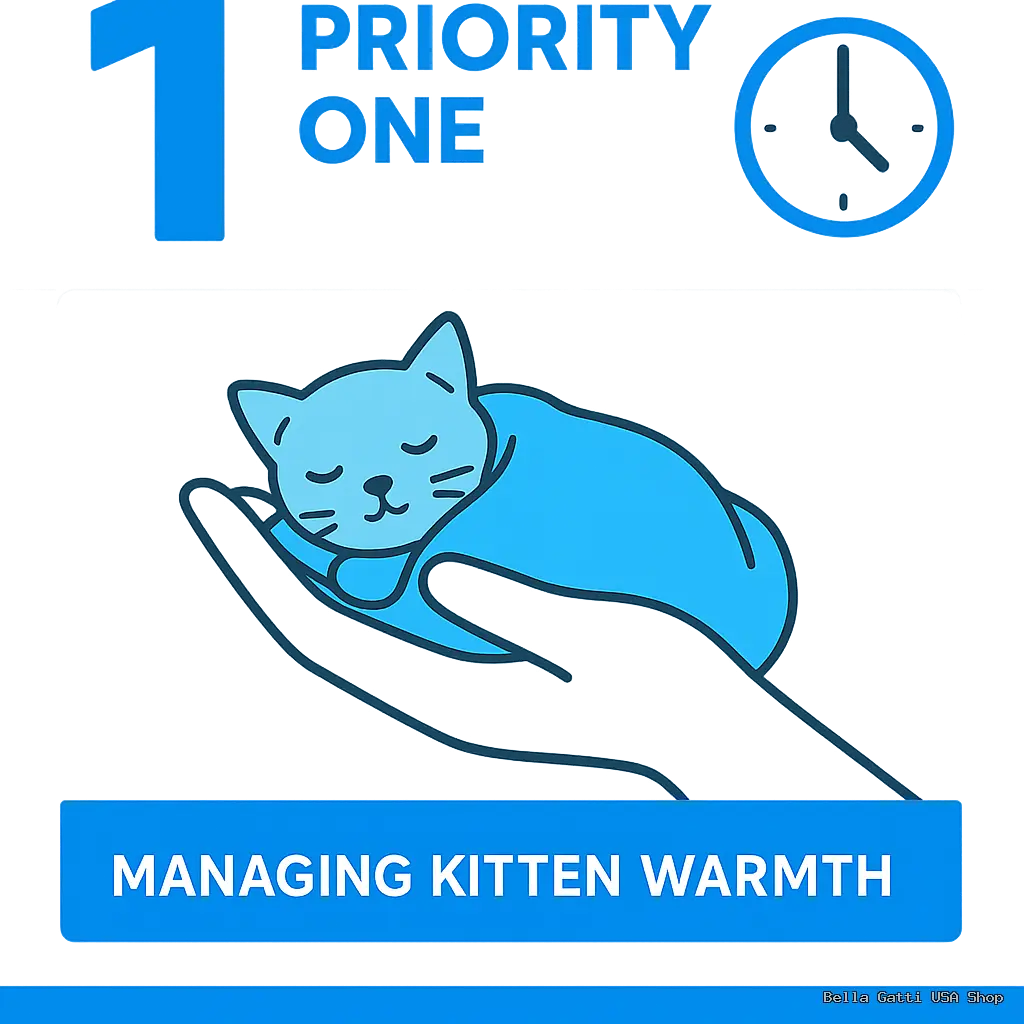
You’ve assessed the situation, and now the clock is ticking. For all orphaned kittens, the first rule is non-negotiable: they cannot regulate their own body temperature. If you skip this step, all other efforts fail.
A chilled kitten simply cannot digest food, period. Feeding a cold baby is a fast track to severe gastrointestinal distress and often proves fatal. Your immediate priority as a Foster Parent in this Kitten rescue scenario is achieving safe Kitten warmth before you even think about the Kitten formula.
Mastering Temperature Regulation for Newborn Kittens
Maintaining the right body temperature is crucial for newborn kittens. Unlike older cats, these tiny furballs have underdeveloped thermoregulatory systems, meaning they can’t generate adequate heat on their own. An ideal temperature should be between 97°F and 100°F.
When kittens are chilled, their metabolism slows down. This can lead to hypothermia and make it impossible for them to digest food properly. Consequently, always prioritize getting them warm before offering any food. Remember, a chilled kitten can face serious health issues.
To effectively warm your feline friends, gradual heating is essential. Sudden exposure to high heat can cause burns. Make use of heating pads or hot water bottles, ensuring they’re wrapped in towels to avoid direct contact.
If you find yourself in need of expert advice on kitten warmth, you can refer to resources from specialists like the Kitten Lady or your local veterinary partner. They often provide detailed guidance on effective warming techniques specific to neonatal care.
In case of severe hypothermia, immediate veterinary assistance may be necessary. Professionals have access to specialized equipment, like incubators, designed for safe and rapid warming of chilled kittens.
Always be vigilant. If your kitten shows signs of lethargy alongside low body temperature, it’s a sign of serious distress that needs urgent care.
Hypothermia Management: Warming the Chilled Kitten Safely
The goal is slow, steady warming. Do not use direct, high heat, as this can cause painful burns. This process is essential for newborn kittens.
-
- Use a certified pet Heating Pad set to low. Wrap it securely in several layers of towels. Crucially, the newborn kittens must have space to crawl off the heat source if they get too warm.
- If you don’t have a specific Heating Pad (get one ASAP!), use a sock filled with rice and microwaved for 30 seconds, or a securely capped Hot Water Bottle. These items must also be wrapped tightly in a towel to prevent burns.
- For severely chilled kittens showing signs of weakness, contact your Veterinarian or Kitten Rescue group immediately. They often have specialized warming devices, such as temperature-controlled Incubators (Medical Equipment), for safe, rapid warming.
A healthy newborn kitten should maintain a Body temperature between 97°F and 100°F (depending on age). Until they are about four weeks old, they are highly susceptible to Thermoregulation Failure (Body Temperature Control), making Kitten warmth management critical.
Emergency First Aid: Addressing Dangerous Low Blood Sugar
Once the Body temperature is stabilized, you need to check their energy levels. If the orphaned kittens are lethargic, weak, or unresponsive, they might be suffering from dangerously low blood sugar (hypoglycemia).
This requires critical First aid right after warming, and definitely before formula introduction. You can administer a tiny, tiny amount of Karo Syrup (Product) or plain Sugar water rubbed gently on the kitten’s gums. This provides a critical energy boost necessary for survival and prepares them for the Kitten feeding process later.
“Never attempt to feed liquid Kitten formula to a cold, weak kitten. Stabilize the temperature first, then address hydration and nutrition. Warming a chilled kitten is always the number one priority,” Veterinary Technician Handbook, 2026.
Kitten Feeding 101: Mastering Formula and Bottle Feeding for Orphaned Kittens
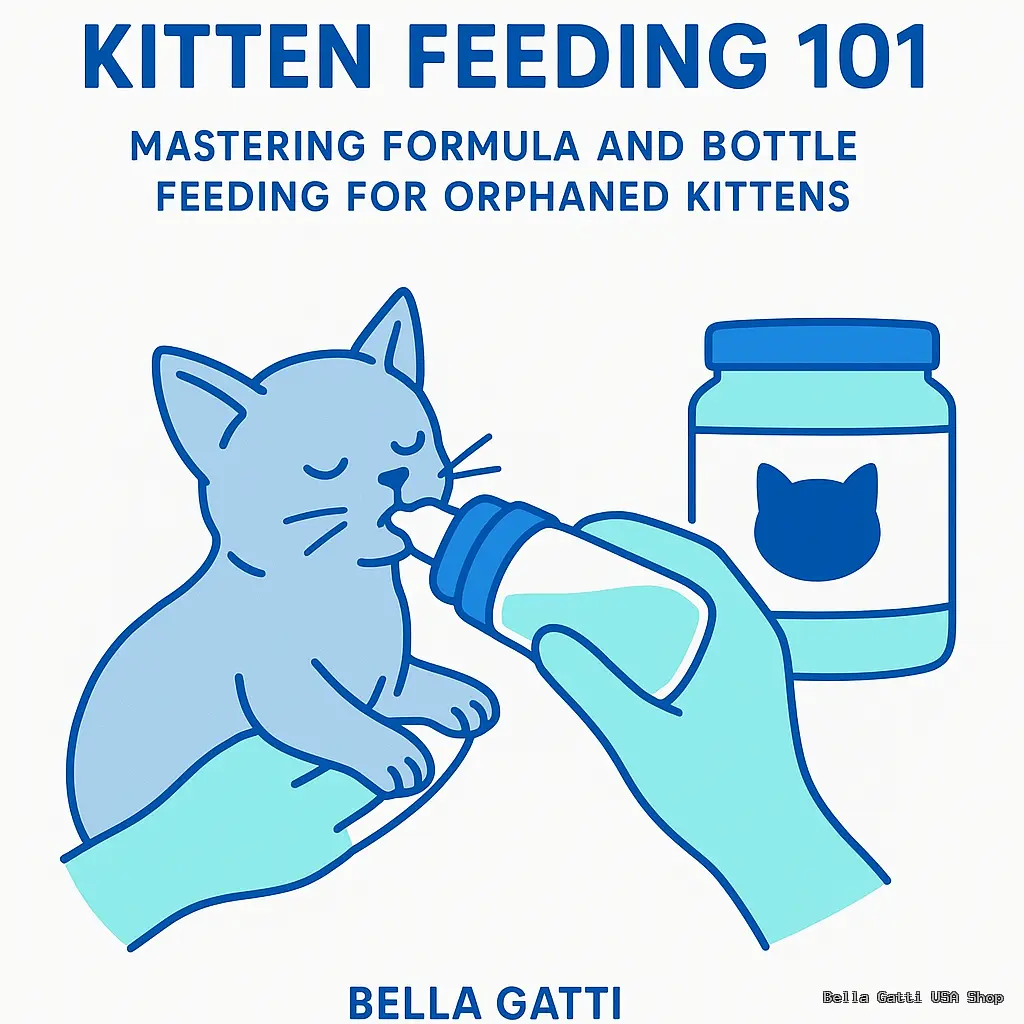
Now that your tiny charge has achieved optimal Kitten warmth, it’s time to tackle the marathon: the intense Kitten feeding routine. As dedicated Foster Parents, you must commit fully to this strict schedule.
First rule of Kitten care: Forget cow’s milk. It contains lactose that newborn kittens cannot process, guaranteeing severe diarrhea and dangerous Kitten dehydration. If you are handling abandoned kittens, their digestive systems are already fragile, so stick strictly to specialized formula.
Choosing the Right Kitten Formula (KMR vs. Just Born)
You need specialized commercial milk replacers designed specifically to mimic the nutritional profile of the mother cat’s milk. Trying to substitute this risks the life of your little patient.
The gold standards for Kitten formula are KMR (Kitten Formula Brand) or Just Born (Kitten Formula Brand). These products are lifesavers for any Kitten Rescue operation.
If you cannot find commercial formula instantly, you may temporarily use an approved Emergency formula solution (like a basic recipe involving evaporated milk and Karo syrup) for a few hours, but you must acquire the commercial product immediately. Always follow the mixing instructions exactly for proper Formula Concentration and Sterilization. Do not guess the proportions.
The Essential Pet Nursing Kit for Bottle Feeding
To successfully manage Bottle feeding, you need the correct tools. Do not attempt to use human baby bottles; the flow and nipple shape are incorrect and pose a severe aspiration risk to orphaned kittens.
-
- A dedicated Pet Nursing Kit is mandatory for proper Kitten feeding.
- You need a proper Kitten bottle, which is much smaller than standard baby bottles.
- Ensure you have several specialized Kitten nipples. Kittens can be incredibly picky about the size and flow rate.
If you find you have very weak nursers, consult your Veterinarian or local Rescue Group. Sometimes, alternatives like specialized feeders made by brands such as Catac (Kitten Feeder Brand) are required to ensure the kitten receives adequate calories.
Life-Saving Posture: The Kitten Nursing Position
This is where many new Foster Parents make a critical mistake. Never feed the kitten on its back, as you would a human baby. This is not the appropriate Kitten Nursing Posture and Bonding position.
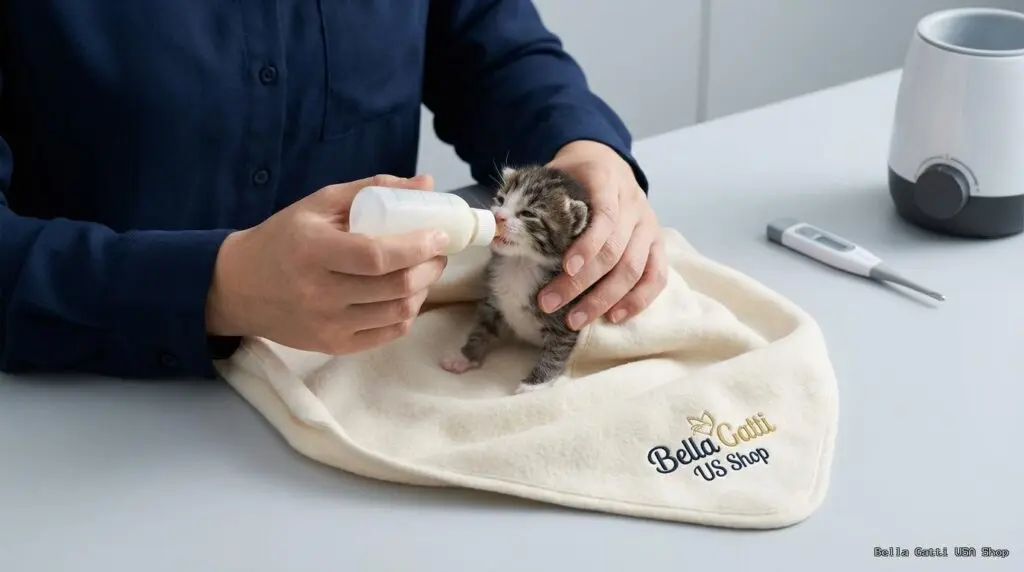
Feed the kitten on its stomach, with its head slightly elevated. This replicates the natural position they would take with their mother and drastically reduces the risk of aspiration pneumonia.
Feeding Orphaned Kittens: Essential Tips for Success
Feeding orphaned kittens is a delicate process that requires attention and care. Understanding their specific nutritional needs is crucial to promote healthy growth and development.
Start with specialized kitten formula, like KMR or Just Born. These formulas closely replicate a mother cat’s milk and provide essential nutrients. Regular cow’s milk is a big no-no due to lactose intolerance in kittens.
When feeding, always keep the kittens in a natural nursing position—on their stomachs with their heads slightly elevated. This mimics the way they would suckle from their mother and reduces the risk of aspiration.
It’s also essential to monitor their intake and ensure each kitten is getting enough food. Weigh them daily to track growth; aiming for a gain of about half an ounce daily is ideal.
Be vigilant for signs of dehydration, such as sticky gums or lack of urination. If you notice any alarming symptoms, consult your veterinarian or a local rescue group for immediate assistance.
For additional guidance, reach out to organizations like the Kitten Lady or your veterinary partner for expert tips. They can provide valuable insights into optimizing your orphaned kittens’ care and diet.
To encourage suckling, gently encourage the Stimulation of Suckling Instinct by lightly stroking the kitten’s forehead or cheek.
The formula should only drip out slowly when the bottle is inverted. If it pours out, the flow is too fast, and you need to adjust the hole size on the Kitten nipple immediately to prevent formula entering the lungs.
Preventing Kitten Dehydration During Feeding
If your newborn kittens are struggling to nurse, they are at high risk of Kitten dehydration. If you suspect dehydration or notice wrinkled skin, contact a Veterinary Technician immediately. They may recommend Subcutaneous Fluid Administration (Sub-q Hydration), which is essential to stabilizing abandoned kittens before they can fully transition to successful Kitten feeding.
Weight Tracking and the Non-Negotiable Feeding Schedule
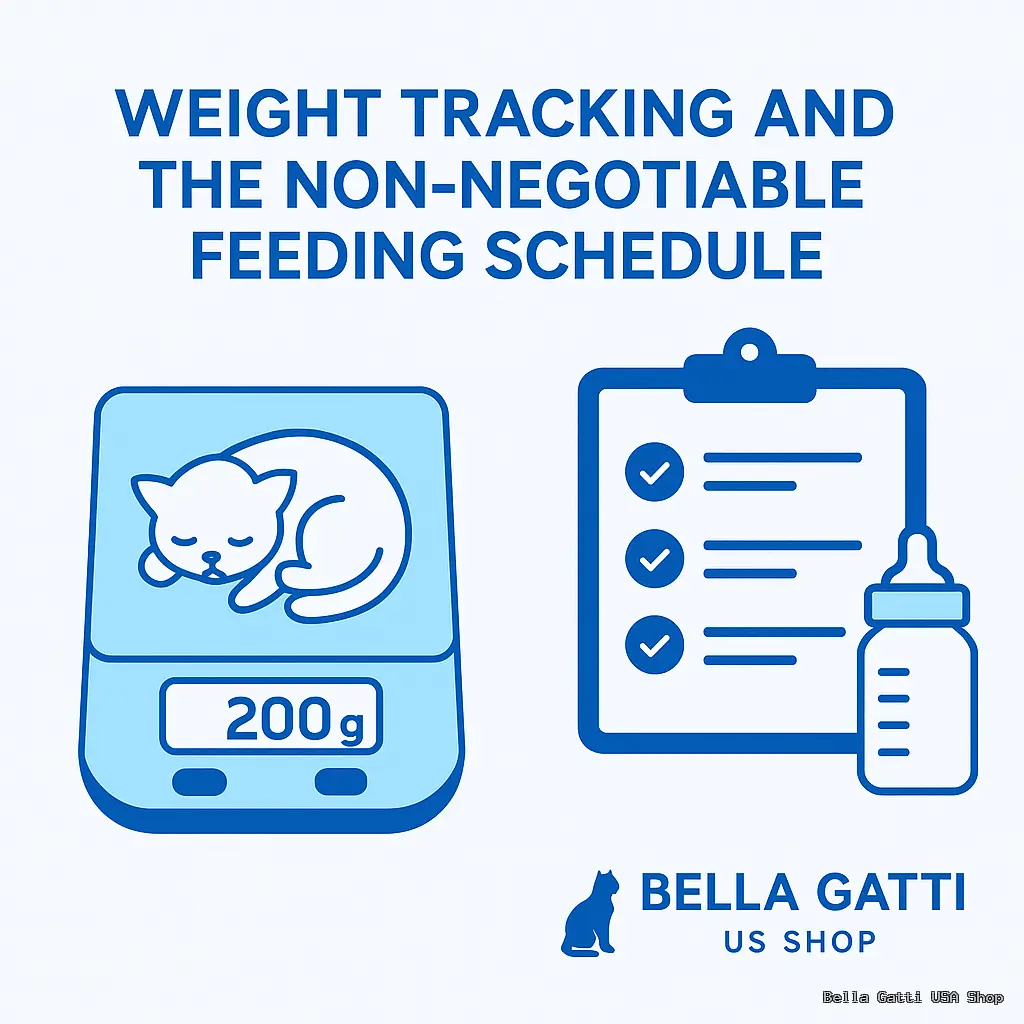
Parenthood for orphaned kittens is highly demanding, and it runs on a strict clock. To succeed in kitten rescue, you must commit fully to a rigid schedule, especially when dealing with fragile newborn kittens under two weeks old.
The primary, non-negotiable indicator of successful kitten care is consistent weight gain. If the scale isn’t moving up, the schedule isn’t working.
You absolutely need a small, accurate digital Kitchen Scale or Postal Scale. Weigh the kitten daily, preferably at the same time, to track their progress.
A healthy newborn kitten should gain roughly 1/2 ounce (or 14 grams) per day. If they fail to gain weight for 24 hours, contact your Veterinarian immediately.
Use the following table as your standard operating procedure for kitten feeding volumes:
| Kitten Age (Weeks) | Weight (Approx.) | Feeding Frequency (Hours) | Daily Formula Intake (Approx.) |
|---|---|---|---|
| 0 to 1 Week (Newborns) | 3 to 5 oz | Every 2 to 3 hours (Day and Night) | ~30 milliliters per 5 oz body weight |
| 2 Weeks | 7 to 10 oz | Every 3 to 4 hours | ~40 milliliters per 5 oz body weight |
| 3 Weeks | 10 to 14 oz | Every 4 to 6 hours | ~50 milliliters per 5 oz body weight |
| 4 Weeks (Weaning Starts) | 14 oz + | Offer formula 3 times daily, plus gruel | Varies based on solid intake |
These guidelines are averages, but they are critical for successful raising kittens. If you are struggling with intake volume or if the kittens are failing to thrive, consult your Veterinarian or Veterinary Technician immediately.
They can assist with precise Calculating Daily Caloric Intake (Formula volume based on weight) to ensure your tiny charges are getting adequate energy from their Kitten formula.
Hygiene, Stimulation, and Disease Prevention: The Messy Truth of Raising Kittens

You thought feeding was the hardest part? Think again. Tiny newborn kittens cannot manage their bathroom breaks until they are about three weeks old. The highly specialized job of “feline plumbing assistant” now falls squarely to you, the dedicated Foster Parent.
Encouraging Kittens to Use the Litter Box: A Gentle Approach
As your little furball grows, transitioning to using a litter box becomes an essential milestone. This process requires patience and gentle encouragement. Kittens typically begin to show interest around three weeks of age.
To start, place them in a litter box regularly, especially after feeding or stimulating elimination. Ensure the litter box is low enough for them to access easily. Using non-clumping, unscented litter is the best choice for kittens, as it’s gentle on their sensitive paws.
If they show signs of scratching or trying to dig, praise them enthusiastically. Positive reinforcement is key! This creates a positive association with the litter box, making them more likely to return.
During this phase, be patient. If accidents happen outside the box, don’t scold them. Instead, simply clean up and continue to guide them back to the litter box. Your consistency will pay off as they learn where to go.
For additional insights, resources from experts like Kitten Lady can provide further strategies and tips on litter box training. The goal is to make this a smooth transition to self-sufficient bathroom habits.
The Post-Meal Potty Dance: Stimulation 101
This is a non-negotiable step after every single Kitten feeding session, yes, even the 3 AM one. If you skip this, you risk serious health issues like constipation or bladder rupture.
Grab a warm, damp cotton ball, tissue, or soft cloth. Gently rub the kitten’s anal and genital area. You are mimicking the mother cat’s tongue action, so be gentle but persistent.
Continue this stimulation until they urinate or defecate. This technique is mandatory for all orphaned kittens under three weeks of age.
To ensure maximum cleanliness and the critical Prevention of Viral Cross-Contamination, always wear clean Latex Surgical Gloves when handling waste. This is essential for protecting your fragile charges.
Avoiding Chilled Kittens: Spot Cleaning and Temperature Control
Abandoned kittens can get messy fast, covered in spilled Kitten formula or stool. Spot clean them immediately if they soil themselves. Mess equals disease risk, and we want zero risks.
We strongly advise against full baths. The risk of triggering a severe drop in their fragile Body temperature is extremely high, leading to a potentially fatal condition known as hypothermia.
If a full, absolute emergency bath is necessary, use lukewarm water only. Dry them completely using a hair dryer on the lowest, safest setting, moving it constantly.
Critically, return them to the stable warmth of the Heating Pad instantly to prevent them from becoming a chilled kitten. Maintaining proper Kitten warmth is always the priority over perfect cleanliness.
Emergency Kitten Care: When to Call Your Veterinary Technician
You’ve nailed the bottle feeding and the post-meal potty dance. Congratulations! But even the most dedicated Foster Parents need professional backup. Raising newborn kittens is high-stakes Kitten care. Your first call should always be to a professional Veterinarian or a specialized Kitten Rescue or Rescue Group.
They are your absolute lifeline for complex medical issues, timely vaccinations, and navigating the perils of raising kittens.
Spotting the Trouble: Critical Red Flags in Orphaned Kittens
Watch for these symptoms that require immediate attention from a Veterinary Technician or Veterinarian. Time is critical when dealing with orphaned kittens.
-
- Lack of appetite or refusal of the Kitten bottle for two consecutive feedings.
- Continuous, distressed crying, excessive weakness, or refusal to move.
- Severe diarrhea, especially if bloody or very watery.
- Gums that feel sticky or dry, this is the major, terrifying sign of acute Kitten dehydration.
- A low Body temperature (below 97 degrees F) that you cannot raise within 30 minutes. This indicates a chilled kitten and is an immediate emergency. You must use a Heating Pad or Hot Water Bottle while contacting the vet.
Managing Dehydration and Hypothermia
Kitten dehydration is one of the biggest killers of abandoned kittens. Your Veterinarian or Veterinary Technician can teach you proper Dehydration Risk Assessment techniques before the crisis hits.
In severe cases, especially if you suspect the kitten is a chilled kitten or has persistent diarrhea, the kitten’s life depends on immediate intervention. A Veterinary Technician may need to administer Subcutaneous Fluid Administration (Sub-q Hydration) to save the life of the newborn kittens.
A final, crucial warning: Never, under any circumstances, administer human medication or antibiotics like Amoxicyllin (Antibiotic) without explicit, written direction from your licensed Veterinarian. Self-dosing can be fatal for tiny lives.
If you suspect severe illness, immediately reach out to your Local Animal Shelter or Rescue Group for guidance on transport and care.
The Great Transition: Socialization and Adoption Planning
You’ve successfully managed the intensive bottle feeding phase, which is a massive win for any team of dedicated Foster Parents. Once your orphaned kittens hit the three-to-four-week mark, they transform. They are mobile, opinionated, and ready for serious behavioral training.
This is when we start the crucial process of Feral Kitten Socialization (Taming). This isn’t just playtime; it’s vital Kitten care for their long-term future.
Put down the Kitten formula for a minute and pick up the kitten. Handle them frequently, but always gently, ensuring positive association with human contact. Introduce them to varied textures, soft toys, and the general noise of a busy home.
This early human interaction is absolutely vital. Your efforts determine whether these tiny survivors grow into friendly, well-adjusted, and ultimately, highly adoptable cats. You are building their entire personality profile right now.
If you decide you can’t officially adopt, it’s time to coordinate the next steps. Reach out to a reputable Local Animal Shelter or dedicated Rescue Group that specializes in Raising kittens and finding high-quality forever homes.
You have done the hardest, most heroic part: saving the lives of these abandoned kittens. Take a bow! And seriously, celebrate your success in Kitten rescue with a hilarious new graphic tee from Bella Gatti US Shop. You earned it.
Urgent Q&A: Troubleshooting for Dedicated Foster Parents
You’ve got the bottle, you’ve got the commitment, but the tiny fluffball just won’t cooperate. We know that raising orphaned kittens generates a million urgent questions. Here are the quick fixes and essential truths you need right now for successful Kitten care.
Can I use regular cow’s milk if I run out of KMR or Just Born formula?
Absolutely not, unless you enjoy dealing with explosive GI issues. Cow’s milk contains indigestible lactose, leading to severe diarrhea and rapid Kitten dehydration. If you face a true emergency and cannot find KMR or Just Born formula, call your Veterinarian immediately for advice on an approved Emergency formula substitute. Do not risk generic milk.
How do I know if the newborn kitten is getting enough formula?
The scale is your best friend. The single most crucial indicator for newborn kittens is consistent weight gain, about 1/2 ounce (or 14 grams) per day. You must use a precise Postal Scale or Kitchen Scale daily to track progress. If they aren’t gaining weight, you need to revisit your Kitten feeding schedule and adjust the formula volume based on expert guidance.
What if I find a large group of abandoned kittens?
Congratulations, you’ve found a whole squad of orphaned kittens! Contact your Local Animal Shelter, Kitten Rescue, or Rescue Group immediately. While you can stabilize them and provide Kitten warmth (via a Heating Pad or Hot Water Bottle), large litters require intense feeding schedules and diligent Prevention of Viral Cross-Contamination. Get professional backup fast.
Should I wake a sleeping kitten to feed it?
Yes, absolutely. For tiny newborn kittens under two weeks old, Bottle feeding rigidly every 2 to 3 hours is non-negotiable. They need consistent nutrition to maintain blood sugar and regulate their Body temperature, preventing issues like Thermoregulation Failure. If you skip a feeding, you risk a crash.
What if the kitten is severely dehydrated or appears chilled?
This situation requires critical, immediate action. Severe Kitten dehydration is a medical emergency requiring immediate attention from a Veterinarian. Check for skin tenting (the skin stays up when pinched) or sticky gums. If the kitten is also a chilled kitten (lethargic and cold), you must warm it first using a Heating Pad or Hot Water Bottle before attempting to feed or transport it.
The vet will likely administer Subcutaneous fluids (Sub-q Hydration) via a Veterinary Technician to stabilize the system. This is why daily weighing and Dehydration Risk Assessment are so vital for dedicated Foster Parents.