Summary
- Channel Instincts and Energy: Prevent destructive behavior by providing ample vertical space (sturdy Cat Trees) and ensuring sufficient energy outlets—aim for at least two 10-minute interactive play sessions daily.
- Master Training & Reinforcement: Set realistic expectations and use Positive Reinforcement only; never punish. Keep formal training sessions extremely short (under five minutes) to maximize engagement.
- Nail the Logistics: Maximize litter training success by using oversized, uncovered boxes with unscented litter in a quiet, accessible location. Thoroughly kitten-proof the home by securing cords and removing toxic plants.
- Secure Financial Health: Invest in Pet Insurance immediately while the kitten is young and healthy. This prevents future conditions from being excluded and manages the high costs of unexpected veterinary emergencies (,800 – ,500+).
Table of Contents
You did it. You’re officially a new pet parent, ready to welcome a tiny, fluffy chaos agent into your life. The excitement is palpable!
But hold the celebratory catnip. Before your new feline friends arrive, there’s a crucial step, preparation. Raising a kitten is a joy, but it’s also a minefield of common mistakes that rookie owners stumble into.
When you start training a kitten, unrealistic expectations can lead to stress for both of you. We’re not aiming for instant obedience; we’re aiming for survival.
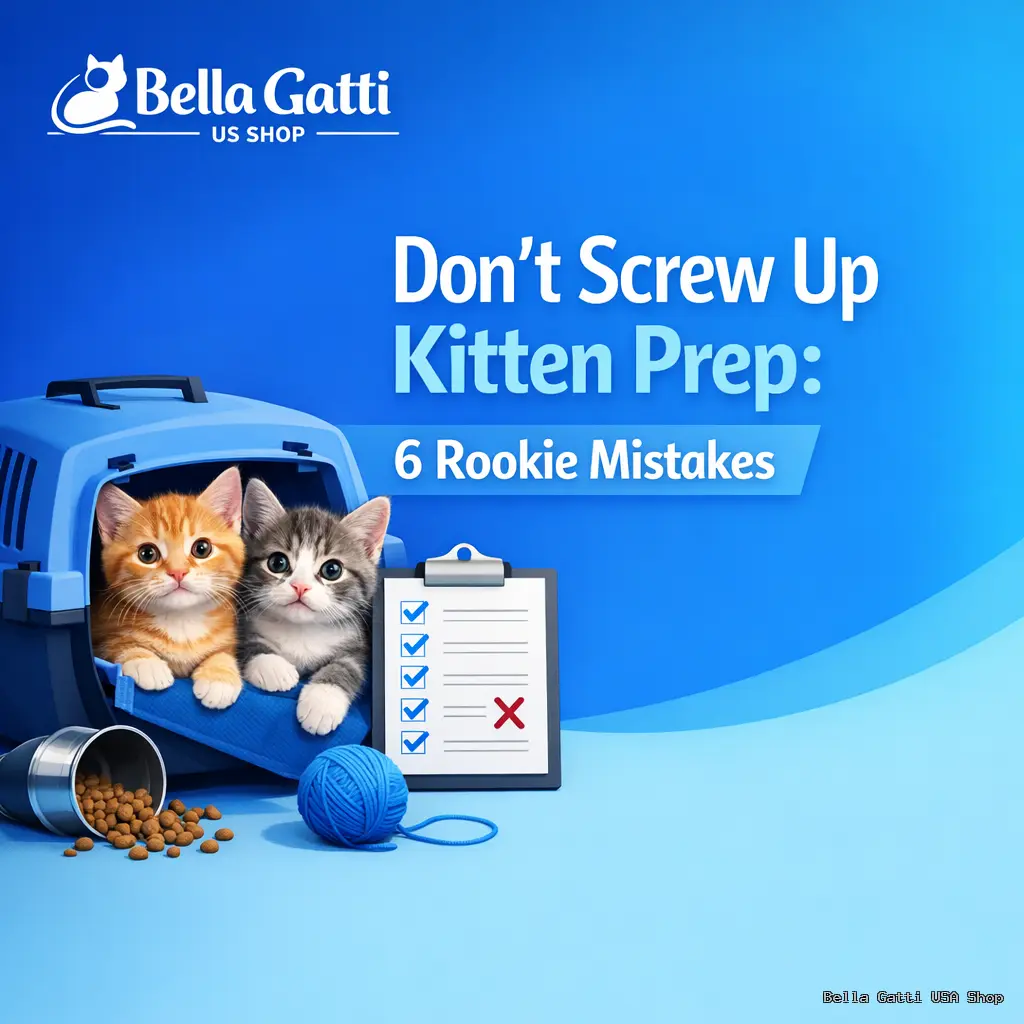
We’ve compiled the six most avoidable preparation errors, the ones that turn cute kitten behavior into full-blown behavioral issues. This is your definitive survival guide to prevent bad kitten habits before they start, ensuring your home is ready to channel those powerful natural instincts.
Setting Realistic Expectations: Patience is Your Best Friend
One of the biggest pet parenting pitfalls is expecting perfection immediately. Remember, kittens are not tiny, pre-programmed, well behaved cats. They are bundles of pure, chaotic natural instincts.
They need time to adjust to their new environment. Expect a significant adjustment period. Scratching, exploring, and the occasional midnight zoomies are normal kitten behavior. Your job is to manage and redirect these instincts through patience and positive reinforcement, not to expect instant obedience.
Embracing Feline Natural Instincts (Before They Destroy Your Sofa)
Your kitten needs to scratch, chew, and climb. If you don’t provide appropriate energy outlets, your furniture becomes the designated Scratching Post. This isn’t malicious; it’s just powerful feline natural instincts at work.
Invest early in high-quality items, think sturdy Cat Tree structures and durable sisal posts. Channeling these natural instincts early is key to preventing long-term behavioral issues and ensuring a happy home for both human and feline friends.
The Energy Crisis: Providing Sufficient Energy Outlets
Kittens have an almost limitless supply of kitten energy. If that energy isn’t sufficiently depleted, you risk destructive behavior, which often gets mistaken for bad kitten habits.
Experts at Veterinary Centers of America stress that kittens need at least 10 minutes of interactive play twice daily. Use wand toys and mimic prey to satisfy their hunting drive. Sufficient energy outlets are non-negotiable for raising a kitten properly and maintaining good behavior.
Mastering the Five-Minute Training Session Duration
Whether you are working on simple commands or Litter Training Maximization, keep your training sessions brief. Kitten attention spans are microscopic. Trying to force a 20-minute session is overwhelming and counterproductive.
Keep training sessions short, around five minutes, and frequent throughout the day. This avoids stress-induced behaviors and ensures positive reinforcement is effective. Short, positive sessions build good behavior faster than long, frustrating ones.
Litter Box Logistics: Size Matters
This is where many new pet parents fail. Choosing the wrong size Litter Box or location is a primary cause of inappropriate elimination and pet behavioral issues. A kitten needs an uncovered box that provides ample space for turning around and digging.
Countryside Veterinary Services recommends using fine, unscented, clumping litter and placing the box in a quiet, easily accessible area. Get a box much bigger than you think you need; maximizing the size and ensuring accessibility prevents common mistakes.
Positive Reinforcement: Ignore the Drama
One of the most crucial elements of kitten training is understanding attention economics. When your kitten engages in undesirable behavior, like crying loudly or climbing the curtains, giving them attention (even negative attention like shouting) reinforces the bad kitten habits.
Instead, focus entirely on positive reinforcement. Reward good behavior with treats and praise. If they start scratching the sofa, calmly redirect them to the Scratching Post, and then reward that action. Never punish kittens for acting on their natural instincts.
The Financial Reality: Don’t Skip Cat Insurance
Raising a kitten requires financial foresight. While we hope for the best, Veterinary Emergency Care Costs can be staggering. This is why early investment in Pet Insurance is non-negotiable for responsible pet parents.
Services like Pawlicy and VetStreet emphasize that signing up early, before any Pet Insurance Pre-existing Condition develops, is critical. Health issues like urinary blockages can easily cost $1,800 to $2,500 annually. Do your research now, it’s the smart preparation step for long-term health management.
Kitten-Proofing: Securing the Perimeter
Your home is a playground of hazards to a curious kitten. Preparing your home to be pet-safe is the first physical step in kitten prep. Think like a feline friend who wants to chew everything.
Secure all loose cords, remove toxic plants, and lock away hazardous cleaning supplies. Making the environment pet-friendly minimizes accidents and prevents serious injuries, allowing you to focus on socializing your kitten and enjoying your new companion.
So, You Adopted a Tiny Overlord
Congratulations, pet parents. You’ve officially signed up for a life of purrs, toe beans, and infinite joy. Bringing home a kitten is a magical, fluffy experience, but let’s be real: it’s also a high-stakes game of preparation.
That tiny fluffball is about to become your tiny overlord, and the journey to having a well behaved cat requires more than just enthusiasm. Many new owners stumble into common mistakes that turn the first few months into chaotic pet parenting pitfalls.
The biggest rookie error is setting unrealistic expectations. Remember, you are raising a kitten, not a robot. Kittens have powerful natural instincts, they need to scratch, climb, and chew. Understanding these feline friends and channeling their energy is the foundation of successful training a kitten.
We are here to help you avoid the drama. Proper gear and smart preparation are the only ways to minimize the inevitable midnight zoomies and prevent bad kitten habits from forming.
This is your official survival guide to navigating the six biggest kitten training mistakes without sacrificing your sanity or your sofa. Let’s get you prepped for victory.
The Six Kitten Training Mistakes That Cause Instant Chaos
You’ve got the fluff, now you need the finesse. Many new pet parents dive headfirst into raising a kitten without understanding that these tiny creatures operate purely on primal kitten instincts.
If you fail to provide appropriate outlets for their natural instincts, they will absolutely choose their own outlets. Spoiler alert: their choice usually involves your favorite antique rug or the curtains.
We see these six common mistakes happen all the time. Learn these pet parenting pitfalls, avoid them, and ensure your journey with your new feline friends is focused on joy, not disaster control.
1. Ignoring the Call of the Vertical Space
The Mistake: You assumed a cute, tiny, carpeted scratch post by the front door would satisfy a creature designed to scale mountains.
The Chaotic Outcome: Your curtains are now expensive rope ladders. Your refrigerator is a highly coveted perch. And your shoulders are frequently used as launch pads for the tiny terror.
The Fix: Cats are three-dimensional creatures. Ignoring their need for vertical space is one of the biggest Kitten Training Mistakes new owners make. They need height for security, observation, and critical exercise.
To respect your kitten’s natural instincts, you must invest in a robust, tall Cat Tree or sturdy wall shelves. Look for quality materials like sisal rope on the supporting posts. This channels their need to climb and shred away from your upholstery.
Remember, a cheap, wobbly Scratching Post will fail instantly. Invest in quality gear that can withstand intense kitten energy and provide a dedicated, appropriate outlet.
2. Choosing the Wrong Litter Box Setup
The Mistake: You bought the fanciest, covered Litter Box and filled it with strongly scented litter, then hid it in the terrifying, noisy washing machine closet for discretion.
The Chaotic Outcome: Your kitten decides the hallway rug or a pile of laundry is far superior for elimination. Congratulations, you’ve created a serious case of Pet Behavioral Issues.
Litter box aversion is one of the most common reasons cats end up in shelters, so getting this right is non-negotiable for raising a kitten.
The Fix: Proper setup is crucial for Litter Training Maximization. Cats prefer open spaces and despise strong odors, which overwhelm their sensitive noses.
Veterinary Centers of America and other experts advise prioritizing comfort over aesthetics. Here are the rules:
-
- Use unscented, fine, clumping litter.
-
- Use an uncovered box that provides ample space for the kitten to turn around comfortably.
-
- Place the box in a quiet, easily accessible area, far from food and water bowls.
The golden rule is one litter box per cat, plus one extra. For a tiny feline friend, start with a low-sided box they can easily climb into.
3. Forgetting Dedicated Energy Outlets
The Mistake: You assume that because the kitten sleeps eighteen hours a day, the brief period they are awake can be spent quietly observing dust bunnies.
The Chaotic Outcome: Your kitten uses your feet, hands, and exposed ankles as live prey, leading to painful scratches and aggressive play behavior. You’ll be left wondering why your sweet feline friend is suddenly attacking you.
The Fix: Kittens have abundant kitten energy that is non-negotiable and requires release. Providing Sufficient Energy Outlets is the key to preventing destructive behaviors and bad kitten habits.
Experts stress that successful training a kitten requires at least ten minutes of interactive play, twice daily, using wand toys that mimic prey. This satisfies their natural hunting drive, channeling their kitten instincts appropriately.
Interactive play is essential for socializing a kitten and building a strong bond. If you skip this critical step, expect the kitten to find their own, often inappropriate, ways to burn that boundless energy.
4. Setting Unrealistic Expectations and Punishing Kittens
The Mistake: You approach training a kitten with unrealistic expectations, assuming they should instantly understand that chewing on the expensive houseplant is forbidden.
The Chaotic Outcome: You resort to punishing kittens by yelling or using a spray bottle. The result is a feline friend who learns to fear you, leading to hiding, stress-induced inappropriate urination, and escalating behavioral issues.
The Fix: Setting realistic expectations for kitten behavior is essential. Remember, they are driven by natural instincts. If they scratch the sofa, it means you failed to provide an adequate Scratching Post, not that they are maliciously plotting your downfall.
Avoid punishing kittens entirely. Instead, use Positive Reinforcement. Reward good behavior with treats and praise, and calmly redirect bad kitten habits to an appropriate toy or scratcher.
Crucially, keep your training sessions short, this is the key to Training Session Duration success. Aim for about five minutes maximum, multiple times a day, to avoid overwhelming the kitten and ensure they stay engaged in learning good behavior.
5. Waiting to Invest in Veterinary Security
The Mistake: As a new pet parent, you figure veterinary care for a small creature is cheap, so you decide to worry about Pet Insurance later, maybe when the kitten is fully grown.
The Chaotic Outcome: Your kitten swallows a piece of string or develops a sudden, painful urinary blockage, landing you in the emergency room with a bill that rivals a small car payment. You realize too late that Pet Insurance Pre-existing Condition clauses prevent you from signing up now that the issue has arisen.
The Fix: Early investment in Cat Insurance is critical. Understanding the financial commitment of raising a kitten means budgeting for the unexpected.
Health issues like Feline Urinary Blockage Treatment can cost between $1,800 and $2,500 annually. Companies like Pawlicy emphasize that signing up while the kitten is young and healthy saves thousands in potential Veterinary Emergency Care Costs later on.
Here is a quick look at why early coverage is essential for prepared pet parents:
| Scenario |
Cost Without Pet Insurance |
Benefit of Early Enrollment |
| Emergency Overnight Stay |
$1,500 – $3,000 |
Covers 70-90% of eligible costs. |
| Feline Urinary Blockage Treatment |
$1,800 – $2,500 |
Immediate coverage for unexpected illness. |
| Coverage for Pre-existing Conditions |
Not Covered Later |
Secures coverage before any issues arise. |
6. Failing to Kitten-Proof the Habitat
The Mistake: You relied on simply telling the kitten, “No, don’t chew the electrical cord,” believing your voice command would override millennia of kitten instincts.
The Chaotic Outcome: The kitten, driven to explore and chew, finds the dangling cord, the toxic lily plant, or the tiny loose object that requires immediate, expensive surgery. This is one of the most common mistakes leading to emergency vet visits.
The Fix: You must prepare your home to be pet-safe before the kitten arrives. This process is similar to baby-proofing, but fuzzier, faster, and much higher stakes.
Secure all electrical cords, remove toxic plants (remember: lilies are highly toxic to cats!), and ensure all small, swallowable items are safely tucked away. VetStreet and other veterinary services stress that prevention is always cheaper than emergency surgery.
Part of this preparation involves managing visitor and household member expectations. Make sure everyone knows the rules: doors closed, no human food scraps, and consistent implementation of good behavior training to maintain a safe environment for your tiny overlord.
The Feline Survival Guide: Setting the Stage for Success
You’ve seen the chaos that results when you ignore primal kitten instincts. Now, let’s talk groundwork. Successfully raising a kitten isn’t about dominance; it’s about environmental management. If you want a well behaved cat, you need to understand that consistency is absolutely key.
You are tasked with channeling their predatory drives (hunting, scratching, climbing) into acceptable areas. If you provide the right gear and utilize Positive Reinforcement, the level of mayhem drops dramatically.
Rookie Mistake #0: Unrealistic Expectations
Many pet parents dive into kitten training expecting instant results. That’s a fast track to frustration. Remember, you are socializing a kitten, and they require time to adjust to your home and routine. Avoid the common mistakes of expecting immediate obedience.
Patience is the ultimate tool in training a kitten. They are new feline friends, not miniature robots. Embrace the adjustment period and stop setting unrealistic expectations that only lead to stress.
Channeling the Chaos: Respecting Feline Natural Instincts
Kittens are little, furry wrecking balls driven purely by kitten instincts. Behaviors like chewing, scratching, and climbing are completely normal. The fundamental lesson in raising a kitten is this: If you fail to provide a sturdy, tall Cat Tree or a reliable Scratching Post, your favorite antique chair becomes the acceptable outlet.
Understanding and respecting these natural instincts is critical to preventing serious behavioral issues down the road.
Sufficient Energy Outlets and Effective Training Session Duration
That legendary kitten energy is boundless. To prevent bad kitten habits and destructive tendencies, they need sufficient energy outlets. Experts at Veterinary Centers of America and VetStreet recommend at least two 10-minute sessions of interactive play daily, using toys that mimic prey (think wand toys and small rodents).
When conducting formal training sessions, keep them short, about five minutes, multiple times a day. This avoids overwhelming the kitten and maximizes the effectiveness of the lesson. Short, focused sessions are key to successful kitten training.
Essential Prep: Litter Box Logistics and Home Safety
The Litter Box setup is non-negotiable for maximizing litter training and avoiding pet parenting pitfalls. Use unscented, fine, clumping litter. Place the box in a quiet, accessible area, ensuring ample space for elimination. Crucially, use an uncovered box, as kittens often dislike enclosed spaces.
Simultaneously, you must prepare your home to be pet-safe. This means securing electrical cords, removing toxic plants, and keeping hazardous objects out of reach. Making the home kitten-friendly reduces accidents and injuries, saving you stress and potential emergency vet visits.
Protecting Your Investment: Why Pet Insurance Matters Now
We adore our feline friends, but the reality of veterinary emergency care costs can be shocking. Early investment in Pet Insurance is a critical step in responsible pet parenting. Studies cited by Pawlicy and Cat Insurance providers show that health issues, such as urinary blockages, can cost upwards of $1,800 to $2,500 annually.
Signing up for Pet Insurance early ensures that any future issues are not classed as a pre-existing condition. This financial safeguard allows you to focus on their health rather than the bill.
The Golden Rule: Positive Reinforcement
When addressing kitten behavior, avoid punishing kittens for their natural instincts. Punishment doesn’t work and only damages your relationship. Instead, focus entirely on Positive Reinforcement.
If they jump on the counter, calmly redirect them. When they use their designated Scratching Post, lavishly reward the good behavior with treats and praise. Reinforcing good choices is the fastest way to guide them toward becoming well behaved cats.
The Kitten Prep Deep Dive: Addressing Common Mistakes and Behavioral Issues
How long should I expect the adjustment period to last?
It’s easy for new pet parents to have unrealistic expectations when raising a kitten. Remember, training a kitten takes time, patience, and consistency. Don’t expect instant obedience or good behavior.
Kittens require a significant adjustment period, often spanning several weeks, to feel safe and comfortable in their new environment. Understanding these initial pet parenting pitfalls is key to managing early kitten behavior successfully.
What are the Feline Natural Instincts I need to address?
Your feline friends are wired to hunt, climb, and scratch. This isn’t a bad kitten habit; it’s survival! One of the most common mistakes is not providing adequate outlets for these Feline Natural Instincts.
You must provide a sturdy Cat Tree, preferably one that reaches vertical space, and multiple quality Scratching Post options. Channeling these natural instincts prevents frustration and destructive behavioral issues.
How much playtime does my kitten need to prevent behavioral issues?
Kittens are tiny chaos engines, and they have massive amounts of kitten energy. To avoid major behavioral issues, you must provide sufficient energy outlets.
Experts stress that kittens need at least 10 minutes of interactive play, twice daily. These short, intense training sessions mimic hunting and help tire out their endless energy. If you skip this, they will choose your furniture as their personal prey.
What is the optimal duration for effective kitten training sessions?
Keep it brief! Trying to train kittens for 30 minutes straight is a recipe for disaster. Competitors like VetStreet emphasize that optimal training session duration is only about five minutes, repeated several times throughout the day.
This approach keeps the experience positive and maximizes the impact of Positive Reinforcement. Long sessions lead to stress and can exacerbate bad kitten habits like hiding or inappropriate elimination.
What is the biggest mistake pet parents make regarding the Litter Box?
The Litter Box setup is surprisingly complex, and incorrect configuration leads to the most common cat training mistakes. The biggest common mistakes involve size and scent.
For Litter Training Maximization, use an uncovered box that is 1.5 times the length of the cat, and always use unscented, fine, clumping litter. Place it somewhere quiet and easily accessible, not tucked away in a noisy laundry room.
Should I punish my kitten for bad kitten habits?
Absolutely not. Never resort to punishing kittens for accidents or natural instincts. This is one of the worst pet parenting pitfalls you can fall into.
They won’t understand why, and it fosters fear, not obedience. If they exhibit undesirable behavior, immediately redirect them to an appropriate outlet (like a Scratching Post) and then reward them lavishly for good behavior using Positive Reinforcement.
Why is early investment in Pet Insurance so critical?
This is non-negotiable financial prep for all pet parents. Companies like Pawlicy and Countryside Veterinary Services stress that getting Cat Insurance or Pet Insurance when the kitten is young is vital.
Once a Pet Insurance Pre-existing Condition develops, coverage is often denied. Considering Veterinary Emergency Care Costs, such as a urinary blockage costing between $1,800 to $2,500 annually, early investment in Pet Insurance is the smartest long-term move for your feline friends.
Beyond obvious hazards, how do I pet-proof my home?
Pet parents often miss the small stuff when raising a kitten. Veterinary Centers of America advises looking beyond toxic plants and fragile items.
Secure dangling cords (they look exactly like prey!), check that cleaning supplies are locked up in high cabinets, and ensure small, swallowable items are completely gone. Making the home pet-safe minimizes accidents and allows you to focus on crucial tasks like socializing a kitten and consistent kitten training.
Troubleshooting Kitten Prep and Behavioral Issues: The Expert FAQs
Do I need hours every day for training a kitten?
Absolutely not. If you have unrealistic expectations about raising a kitten, you’re already setting yourself up for failure. Remember, these are tiny, chaotic beings! While consistency is key to effective kitten training, the actual training sessions should be lightning-fast.
Experts agree that keeping sessions to about five minutes, multiple times per day, maximizes engagement and prevents your feline friends from becoming stressed or overwhelmed. Short, frequent sessions focused on Positive Reinforcement are exponentially more effective than long, frustrating attempts. This is one of the most common cat training mistakes new pet parents make.
How long should I expect the adjustment period to last?
Setting realistic expectations for kitten behavior is crucial for new pet parents. Kittens require time to adjust, and their natural instincts like scratching and exploring must be understood and managed with patience. Don’t expect instant obedience or good behavior.
Expect a few weeks of chaos as you socialize your kitten and they settle into their new home. Understanding their kitten instincts helps you avoid punishing kittens for behaviors that are entirely normal. Patience is your most important tool in minimizing pet behavioral issues.
What are the biggest pet parenting pitfalls related to scratching?
The biggest mistake new pet parents make is failing to provide adequate scratching surfaces early on. Cats need to scratch to shed nail layers, mark territory, and stretch, it’s one of their core Feline Natural Instincts. The pitfall is assuming you can eliminate the scratching instinct, rather than channeling it.
If you don’t provide a tall, sturdy Scratching Post (ideally sisal or corrugated cardboard) or a suitable Cat Tree immediately, the kitten will use your sofa. Providing these outlets manages their kitten instincts and prevents destructive bad kitten habits.
How do I manage all that kitten energy?
Kittens have abundant kitten energy and require significant physical activity to satisfy their hunting drives. To provide Sufficient Energy Outlets and prevent destructive kitten behavior, aim for at least two interactive play sessions daily, each lasting about ten minutes.
Use wand toys to mimic the critical hunt, catch, kill cycle. Always end the session with a small treat to simulate consuming prey. This routine helps manage behavioral issues by tiring out your feline friends and reinforcing good behavior.
Are there common mistakes with the Litter Box setup?
Yes, and this is a major cause of inappropriate elimination. Proper Litter Box setup requires using unscented, fine, clumping litter, placing the box in a quiet, accessible area, and using an uncovered box. Many pet parents make the mistake of buying boxes that are too small or scented litter the kitten dislikes.
Ensuring the correct setup from day one maximizes Litter Training Maximization and prevents long-term problems. If you want well behaved cats, start with a pristine and accessible bathroom.
Should I give attention to bad kitten habits like counter surfing?
Absolutely not. One of the most common cat training mistakes is reinforcing undesirable actions. If you give attention (even negative attention like yelling) to undesirable behaviors (like crying or climbing on counters), you are reinforcing these habits.
Instead, reinforce good behavior with treats and praise, and calmly redirect bad behaviors. This Positive Reinforcement strategy is key to raising a kitten who is well behaved and minimizing future pet behavioral issues.
When should I sign up for Cat Insurance?
You should secure Pet Insurance as soon as possible, ideally within the first few weeks of bringing your kitten home. Organizations like Pawlicy emphasize that coverage is best secured before any accidents or illnesses occur. This early investment helps manage the high costs of Veterinary Emergency Care Costs.
If you wait until a condition develops, it will be considered a Pet Insurance Pre-existing Condition and will not be covered. Studies show that health issues like urinary blockages can cost upwards of $1,800 to $2,500 annually, so early enrollment is essential to managing the financial commitment of raising a kitten.
How do I properly pet-proof my home for a new kitten?
Preparing your home is non-negotiable. Pet-proofing means removing toxic plants (like lilies), securing loose electrical cords, and keeping hazardous objects and small items out of reach. Making the home pet-safe significantly reduces accidents and injuries.
This preparation allows your kitten to explore their new territory safely without the risk of serious injury requiring veterinary care. It’s a core component of responsible pet parenting.
The Bella Gatti Promise: Comfort in the Chaos
You’ve done the hard work. You mastered the kitten training basics, secured the proper Litter Box setup, and invested in that crucial Cat Tree. You’re officially one of the most prepared pet parents out there.
But let’s be honest: even with perfect preparation against common mistakes, raising a kitten is still a high-contact sport. There will be spilled water bowls, surprise litter box debris tracked across the floor, and inevitable moments when your perfectly clean shirt becomes a temporary fur brush for your new feline friends.
That is where we come in.
At Bella Gatti US Shop, we understand that kitten behavior means unpredictable chaos. Our selection of Adult Unisex Graphic T-shirts, specializing in witty Cat T-shirts and Funny Slogan T-shirts, are made from the softest, premium cotton.
When the inevitable disaster strikes (maybe a demonstration of poor good behavior or an explosion of unchecked kitten energy), at least you can look great and feel comfortable in a premium quality, soft cotton tee while cleaning up the mess.
Celebrate your journey of raising a kitten with apparel that matches your witty commitment to your new companion.