Summary
- Mandatory Medical Check: Always consult a veterinarian immediately to rule out underlying pain (e.g., Osteoarthritis, Dental Disease) before attempting behavioral modification, as pain often triggers aggressive behavior.
- Environmental Modification: Resolve territorial stress by implementing the “N+1 Rule” (N+1 resources for N cats) for food, water, and litter boxes, and provide ample vertical space (“Feline High Ground”) for safe retreat.
- Slow Reintroduction Protocol: For severe conflict, complete separation is necessary, followed by a slow, multi-week reintroduction using scent swapping, barrier feeding, and Positive Reinforcement (food treats) to build positive associations.
- Safety First: Never use physical punishment, as it increases fear. Only use sudden noise deterrents to safely interrupt active fights, and consult a Veterinary Behaviorist for complex or dangerous cases.
Table of Contents
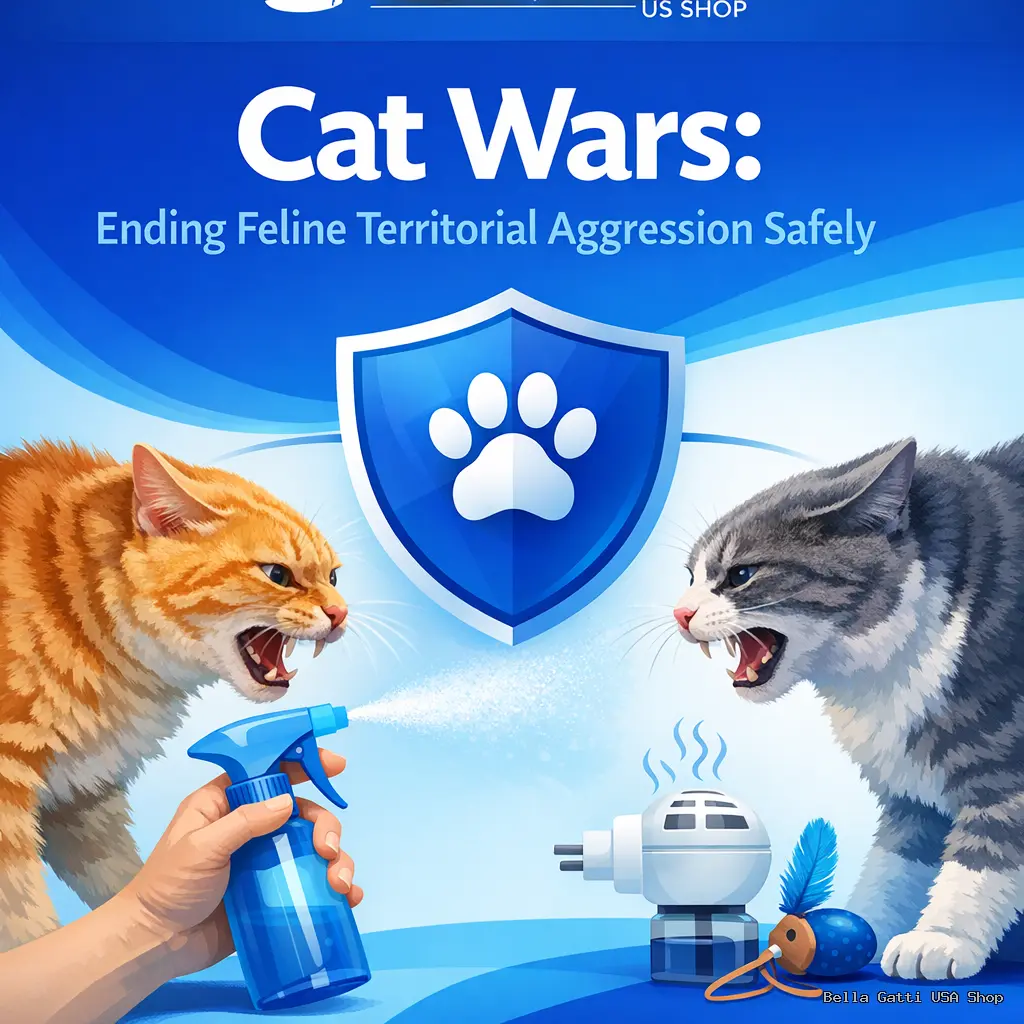
You know the sound. It starts as a low, rumbling growl, escalates into a guttural yowl, and suddenly, your living room is transformed into a tiny, furry version of the WWE Royal Rumble. Welcome to Kitty WWE.
If you are currently dealing with feline aggression, specifically the territorial kind, take a deep breath. You are not alone. This chaos is easily one of the most stressful cat behavioral problems that dedicated cat owners face.
When one cat decides the other is a trespasser, managing aggression becomes your full-time job. The good news is that domestic peace is achievable, but it requires commitment to structured behavioral modification and a willingness to overhaul your environment.
We are here to help you navigate the delicate art of Feline Aggression Management. We will move your household from constant conflict to cautious coexistence through three critical phases: Diagnosis (The Hissing Hierarchy), Resource Management (Dividing the Spoils), and the Slow-Motion Peace Treaties.
Phase 1: The Hissing Hierarchy: Diagnosis and Medical Clearance
Before you implement any environmental modification or positive reinforcement techniques, you must first answer the most crucial question: Is this psychological warfare, or is my cat just in pain?
Aggressive behavior is often a symptom, not the root problem. Many types of aggression, including territorial aggression, fear aggression, and redirected aggression, can be triggered or exacerbated by underlying health issues.
Consult a Veterinarian: Rule Out Physical Pain
This is your mandatory first step. You must consult a veterinarian immediately to rule out medical causes of aggression. If your cat is suddenly displaying new aggressive behavior, it might be due to discomfort.
Health problems like Hyperthyroidism, Osteoarthritis, and Dental Disease are common culprits. Even Central Nervous System Problems can manifest as unpredictable or uncharacteristic outbursts. Pain-induced aggression is real, and no amount of positive reinforcement will fix a toothache.
If your veterinarian rules out physical issues, you may be referred to a specialized Veterinary Behaviorist for complex cases of feline aggression and continued behavioral modification planning. This ensures the best possible early intervention.
Aggression or Just Dramatic Play?
Once medical issues are cleared, we move to identifying the types of aggression you are facing. Is it true territorial combat, or just overzealous play aggression? Recognizing the difference is key to successful early intervention.
True cat aggression involves intent to harm, often characterized by silent stalking, pinning, and biting aimed at the neck or throat. This is serious conflict requiring immediate separation to prevent cat injuries.
Play aggression, conversely, is often reciprocal, involves less noise, and features playful swatting with retracted claws, followed by a quick break and a return to the chase. It looks like a high-intensity wrestling match, but without the serious intent.
Reading the Signs of Aggression and Fear
If you are witnessing conflict, you need to become fluent in feline behavior. Recognizing the signs of fear or the impending attack can help you prevent escalation through early intervention.
Signs of aggression or high stress levels in an aggressive cat include:
- Flattened ears (airplane mode).
- Dilated pupils (saucer eyes).
- A low, deep growl or hiss.
- Piloerection (puffed-up fur).
- Rapid tail flicking or lashing.
If you see these cues, particularly when managing resource conflicts, separate the cats immediately. Never attempt to break up a fight by inserting your hands. Use a pillow barrier or a sudden, loud noise deterrent, like dropping a book, to disrupt the conflict safely.
Remember, avoidance of physical punishment is critical. Using methods like compressed air or water sprays only increases fear in the fearful cat, potentially escalating the aggression later on.
Phase 2: Dividing the Spoils: Resource Management and the N+1 Rule
Territorial aggression often occurs because cats are calculating survivalists. If resources are scarce, they fight. If resources are abundant and easily accessible, they relax. This is where Environmental Modification saves the day.
The golden rule for cat owners is the N+1 rule: You need one more of every essential resource than the number of cats (N) you own. This applies to litter boxes, food stations, and resting spots.
Creating Feline High Ground
Vertical space is paramount in reducing tension. Cats naturally seek the highest point to survey their domain, which reduces feelings of insecurity and competition. This is their ‘Feline High Ground.’
Install cat trees, wall shelves, and window perches in multiple rooms. This creates separate pathways and resting spots, minimizing unwanted encounters and reducing the intensity of territorial aggression.
Food and Water Stations
Never place food bowls side-by-side or near the litter box. Use multiple, separated feeding stations. Ideally, place them in different rooms or on different vertical levels. This ensures that one cat cannot guard all resources, a common trigger for conflict and aggressive behavior.
Litter Box Logistics
The N+1 rule is most critical for litter boxes. Place them in several low-traffic, easily accessible locations around the house. If one cat is cornered or ambushed while using the box, the area instantly becomes a high-stress zone, increasing feline aggression.
Phase 3: Slow-Motion Peace Treaties: The Reintroduction Protocol
If your cats have engaged in a serious conflict, they must be completely separated and reintroduced cautiously. This process of Gradual Desensitization requires patience, it can take weeks or even months.
Confinement and Scent Swapping
Confine the aggressive cat or the victim (whichever is less stable) to a separate room with all their resources. Use Feliway diffusers two weeks in advance throughout the home to help manage stress.
Start scent swapping by rubbing a towel on one cat and placing it in the other cat’s area. Feed them on opposite sides of the closed door. This introduces their presence without visual conflict, utilizing positive reinforcement (food treats) to create positive associations with the rival’s scent.
Controlled Visual Contact
Once they eat calmly near the door, introduce visual contact using a secure barrier like a screen door or baby gate. Continue feeding them while they can see each other but cannot physically interact. Ensure each step lasts several days to weeks, depending on the cats’ reactions.
Supervised Meetings and Positive Reinforcement
When they tolerate visual contact without hissing or flattened ears, allow short, supervised meetings. These meetings should only occur during a high-value activity, such as feeding or play, using food treats to reward calm behavior.
Keep these meetings brief, just a few minutes, and end them immediately on a positive note, before signs of aggression appear. Never attempt forced interactions. This slow reintroduction, combined with Positive Reinforcement Techniques, significantly reduces territorial aggression and promotes acceptance.
A Note on Redirected Aggression
If your cats suddenly fight after seeing an outdoor cat through the window, this is likely redirected aggression. The cat cannot attack the outdoor threat and redirects its frustration onto the nearest target. Management involves blocking window access or using window film to prevent visual stimulation, reducing this specific trigger for aggressive behavior.
Conclusion: Victory is Yours
Navigating Cat Wars requires the dedication of a five-star general and the patience of a saint. By prioritizing medical checks, implementing strict resource management, and following a cautious reintroduction protocol, you are providing the best possible environment for peace.
You have successfully mastered Feline Aggression Management. Now that the domestic conflict is resolved, you deserve a medal, or at least a new Unisex Soft Cotton Tee from Bella Gatti US Shop. Consider it a combat medal well earned.
Expert Insight
“Successful resolution of feline aggression depends on establishing environmental security, providing safe spaces and separated resources, followed by slow reintroduction reinforced by positive interactions.” Feline Behavior Specialist
The Hissing Hierarchy: Diagnosis Before Intervention
You survived the opening brawl, but now you need to know: Was that genuine, blood-curdling feline aggression, or just an overly dramatic round of Kitty WWE? Before you dive into any serious Intervention Strategies, you must first become a feline detective.
Diagnosis is the foundation of effective Feline Aggression Management. You need to determine if you are dealing with true Territorial Aggression, Fear Aggression, or simply vigorous Play Aggression.
Is It Aggression or Just Dramatic Play?
It is crucial for Cat Owners to recognize the difference, as missing the early Signs of Aggression means missing the window for effective Early Intervention in Behavior. Real aggressive behavior involves clear intent to harm or intimidate, stemming often from insecurity or resource scarcity.
Territorial Aggression, one of the most common Cat Behavioral Problems, often occurs when a cat feels its domain is being threatened, perhaps by a new cat introduction. This leads to clear aggressive behavior like swatting, chasing, and attacking.
| Behavior Indicator |
Play Aggression (The Mock Battle) |
True Feline Aggression (The Conflict) |
| Vocalizations |
Silent or soft chirps. |
Loud hissing, deep growling, guttural yowling. |
| Body Posture |
Reciprocal pouncing, soft claws, relaxed ears. Cats switch roles quickly. |
Arched back (the “Halloween Cat”), piloerection (fur standing up), stiff legs. |
| Facial Cues |
Normal pupils, forward whiskers. |
Signs of fear include dilated pupils, flattened ears pinned back, whiskers pressed against the face. |
| Outcome |
Ends quickly, often followed by mutual grooming. |
One Aggressive Cat stalks or chases the Fearful Cat, leading to potential Cat Injuries. |
If you observe the full-on “Halloween cat” posture or consistent stalking, you are definitely dealing with an Aggressive Cat requiring immediate intervention. Never assume they will ‘work it out’ on their own.
Early intervention is the key to preventing the escalation of chronic territorial conflict. We recommend immediate separation following any serious conflict.
Rule Out the Medical: When Aggression Means Pain
Before implementing any Behavioral Modification or Environmental Modification strategies for Managing Aggression, you must consult a Veterinarian. This step is non-negotiable.
Sometimes, what looks like Feline Aggression is actually pain-induced aggression. A cat might lash out because of underlying health problems that make them irritable, protective, or simply uncomfortable. This is a critical first step in addressing Cat Behavioral Problems safely.
Your Veterinarian should check for common medical causes of aggressive behavior, including Hyperthyroidism, Osteoarthritis (which makes movement painful), Dental Disease, or even Central Nervous System Problems. Addressing these physical ailments is often the quickest path to reducing conflict.
If the medical check comes back clean, you might be referred to a Veterinary Behaviorist, who specializes in complex Feline Behavior and can help tailor a specific intervention strategy using Positive Reinforcement Techniques.
We strongly advise Avoidance of Physical Punishment, such as using noise deterrents or compressed air, as these tactics only increase the cat’s anxiety and Signs of Fear, exacerbating the overall Aggressive Behavior.
Dividing the Spoils: Critical Environmental Modification
When you see escalating *aggressive behavior*, remember it usually stems from deep insecurity or perceived resource scarcity. Cats are, fundamentally, solitary hunters who view shared essentials as potential conflict zones.
To halt the escalating *cat wars*, the foundational step is comprehensive *Environmental Modification*. We must create a resource-rich environment where no *fearful cat* feels compelled to fight for the basics. This is *early intervention in behavior* at its most effective.
The N+1 Rule for Resource Management
The key to successful *Behavioral Modification* lies in the “N+1” rule. This tackles *territorial aggression* head-on by eliminating daily friction points.
If you have N number of cats, you must provide N+1 of every critical resource: food bowls, water stations, and litter boxes. For two cats, that means three litter boxes, three food stations, and so on.
Crucially, these resources must be spread far apart, ideally in different rooms or on different levels, to break up perceived territory. This simple adjustment removes chronic stress points and significantly reduces the triggers for *aggressive behavior* and chronic *cat behavioral problems*.
Securing the Feline High Ground: Vertical Space
Cats are three-dimensional creatures. When tensions are high, the ability to retreat vertically is a lifeline. Providing ‘Feline High Ground’ is essential for *managing aggression* effectively.
This means installing cat trees, shelves, and window perches. These *environmental modification* strategies allow an *aggressive cat* to survey its domain safely, or, more importantly, enable a *fearful cat* displaying *signs of fear* to escape confrontation without having to flee the entire house.
The ability to retreat and avoid conflict is a core component of *Feline Aggression Management*. When cats can share the same room without uncomfortable proximity, you dramatically reduce the likelihood of *cat injuries* and further escalation.
Chemical Diplomacy: Managing Stress Through Pheromones
If you are actively engaging in *feline aggression management*, you need every tool available to lower the ambient stress level. This is especially true when dealing with *territorial aggression* or *fear aggression*.
A highly recommended *Intervention Strategy* is the use of synthetic feline facial pheromone diffusers. These diffusers communicate safety and familiarity, helping to calm a highly stressed or *aggressive cat*.
For best results, start using these diffusers at least two weeks before any planned reintroduction protocol or when *signs of aggression* first appear. This step is critical in conjunction with physical *environmental modification* to ensure successful *behavioral modification* and long-term peace.
Expert Insight
“Because intercat tension often manifests through subtle behavioral changes in the majority of multi-cat households, effective feline aggression management necessitates a multi-modal intervention strategy, critically integrating environmental modification alongside chemical diplomacy, like synthetic pheromones, to reduce ambient stress and achieve long-term behavioral modification.” Board-Certified Veterinary Behaviorist, AAFP Task Force
Slow-Motion Peace Treaties: The Reintroduction Protocol
If your domestic Cat Wars have escalated to the point of outright violence, resulting in Cat injuries or severe trauma for you, the dedicated Cat owner, it’s time for a relationship reset. This specialized protocol is necessary when entrenched Feline aggression becomes sustained Aggressive behavior, particularly Territorial Aggression. You must separate the combatants entirely and begin a slow, controlled reintroduction using targeted Behavioral modification.
Before you start any long-term Behavioral modification plan, you must Consult a veterinarian. Sudden or severe Aggressive behavior can be a sign of underlying medical issues like Hyperthyroidism, Osteoarthritis, or even Dental Disease. Only after ruling out physical pain can we focus solely on the behavioral roots of the conflict. If the aggression persists despite your best efforts, seeking advice from a certified Veterinary Behaviorist is the next critical step in effective Feline Aggression Management.
Scent Diplomacy: The Power of Positive Reinforcement
The entire success of this process hinges on Gradual Desensitization and Positive Reinforcement Techniques. We need to rewire their brains so that the presence of the rival cat is linked only to good things, not conflict.
Start with complete separation, no visual or physical contact. Ensure both Fearful cats have access to their own resources, completing the Environmental modification we discussed in the previous section.
The first step is scent swapping, or “Scent Diplomacy.” Rub a soft cloth on one cat’s cheek and body, then leave it near the other cat’s primary resource, like their favorite sleeping spot or, crucially, their Food treats bowl. This allows them to process the rival’s scent in a positive, non-threatening context.
This phase is not fast. You must observe signs of relaxation and acceptance. If you see Behavioral Signs of Aggression and Stress, like dilated pupils, flattened ears, or hissing, you are moving too quickly. Each step must last several days to weeks, ensuring both cats are completely relaxed before progressing.
Visual Contact and Controlled Feeding
Once the scent swapping is tolerated, it’s time for controlled visual contact. Use a secure barrier, like a sturdy pet gate or a screen door, that prevents physical interaction but allows observation.
This is where we implement Positive Reinforcement. Feed both cats high-value meals or delicious Food treats on opposite sides of the barrier, starting far enough apart that neither cat reacts negatively. Over several days, slowly move the food bowls closer together.
By using this method of Gradual Desensitization, you tie the presence of the other cat directly to a positive outcome (dinner!). This slow reintroduction, combined with rewards during supervised meetings, significantly reduces Territorial Aggression and promotes acceptance.
Managing Stress and Intervention Strategies
Stress is the ultimate enemy of peace. A stressed cat is an Aggressive cat. We must proactively manage the environment to lower anxiety levels, ensuring the Feline behavior remains calm.
We recommend using pheromone diffusers (like Feliway) at least two weeks in advance, especially in the confinement areas. Provide stimulating environments like window views, puzzle toys, and plenty of vertical space (their ‘Feline High Ground’).
Avoid sudden movements or forced interactions during meetings. Keep initial supervised sessions extremely short, just a few minutes, and end them before either cat shows Signs of aggression or stress. This ensures the experience is always positive, facilitating Early intervention in behavior.
If a fight starts, immediate Intervention strategies are required. You must disrupt the conflict with a loud, startling Noise deterrent, like a sharp clap, a loud whistle, or tossing a soft pillow nearby. A controlled burst from a Compressed air can aimed *near* the cats (never directly at them) is an acceptable Intervention strategy to break focus without causing fear of the owner.
The Avoidance of Physical Punishment is absolutely critical for Feline Aggression Management. Any physical contact, yelling, or spray bottles aimed at the cat will only increase their fear and anxiety, inevitably worsening the Cat behavioral problems and eroding trust in the Cat owner.
The Mandatory Health Check: Is It Aggression or Just Pain?
You are ready to dive headfirst into intensive Behavioral modification and implement those complex reintroduction protocols. But hold on a second. Before you start managing severe Feline aggression with pheromones and high-value food treats, you must eliminate the most common, yet often overlooked, root cause.
Every responsible Cat owner must first Consult a veterinarian. Sometimes, what looks like pure, territorial hostility is actually a secondary symptom of pain or underlying illness.
The importance of this veterinary check cannot be overstated. A sudden onset of Aggressive behavior is often the only way a cat communicates that it is physically unwell.
When the Hissing is Actually a Cry for Help
Pain significantly lowers the threshold for any Aggressive cat. If your previously sweet, tolerant feline suddenly turns on a housemate it once adored, or if the aggression is severe and unpredictable, a medical evaluation is mandatory.
This is crucial because you cannot fix a behavioral problem with environmental modification or positive reinforcement if the underlying issue is physical distress.
A thorough veterinary examination must rule out the following medical causes that often trigger Pain-Induced Aggression:
- Hyperthyroidism: This hormonal imbalance causes high anxiety, nervousness, and extreme irritability, leading to unexpected outbursts of Aggressive behavior.
- Osteoarthritis: Joint pain can cause a cat to lash out defensively if approached or touched, especially by another cat during play or resting near a shared resource.
- Dental Disease: Chronic, severe pain from the mouth makes cats incredibly irritable and prone to lashing out when stressed or approached.
- Central Nervous System Problems: Neurological issues can cause bizarre, unpredictable bursts of aggression that seem completely unwarranted, making Managing aggression nearly impossible without medical intervention.
If your veterinarian rules out physical illness, do not despair. You haven’t failed. They will often refer you to a certified Veterinary Behaviorist, who specializes in complex Cat behavioral problems that require specialized Behavioral modification techniques.
Remember, Early intervention in behavior, backed by a clean bill of health, gives you the best chance of achieving peace in your domestic Cat Wars.
Expert Insight
“The first step in managing an aggressive cat is to ensure there is no underlying medical reason, such as hyperthyroidism, dental disease, or pain, driving the behavior, as a clean bill of health is foundational to successful behavioral modification.” Feline Behavior Specialist
Addressing Related Types of Feline Aggression
You have consulted a veterinarian and confirmed that underlying health issues like Hyperthyroidism or Osteoarthritis are not the root cause of the conflict. Great! Now we can focus entirely on Behavioral modification.
While Territorial Aggression is the focus of our Cat Wars guide, successful Feline Aggression Management requires you to identify the specific type of conflict you are witnessing. Not all aggressive behavior is created equal.
Redirected Aggression: The Frustration Transfer
Redirected Aggression is perhaps the most dangerous type because it is explosive and unexpected. This occurs when your cat is highly aroused by an external stimulus, say, a strange cat outside or a sudden noise, but cannot reach the target.
The resulting frustration is then immediately directed at the nearest available target, often a housemate or, unfortunately, you. This aggressive behavior is the cat equivalent of taking out the trash, but the trash is your arm.
Recognizing these triggers is essential for Environmental Modification. Close blinds or use frosting film on windows to prevent visual stimulation. You might even consider using Noise Deterrents or Compressed Air (sparingly, and only if recommended by a Veterinary Behaviorist) to interrupt the early stages of arousal.
Fear Aggression: The Retreat That Failed
A Fearful Cat displays classic Signs of Fear, dilated pupils, flattened ears, a tucked tail, and a defensive crouch. This cat does not want to fight; they only attack if they feel completely trapped and lack a safe retreat route.
The cardinal rule when dealing with a Fearful Cat is simple: Always give them space to retreat. Never corner or force interaction. Avoid Physical Punishment entirely, as this will only increase stress and escalate the aggressive behavior.
Play Aggression: The Untapped Energy
Play Aggression is common in young cats and those who lack sufficient stimulation. While less serious than other Types of Aggression, it still needs proactive Behavioral Modification.
If one cat consistently ambushes another, or uses your ankles as target practice, they likely have too much energy. Ensure your cats have plenty of scheduled, interactive play with you using wand toys, draining their energy and preventing them from using each other as targets.
This is where Positive Reinforcement Techniques are most effective. Reward appropriate play and ignore attempts at aggressive play toward you or their housemates.
Petting-Induced and Pain-Induced Aggression
Two other critical Types of Aggression must be ruled out.
Petting-Induced Aggression occurs when a cat suddenly snaps mid-petting session. This is usually due to overstimulation or miscommunication; the cat signals discomfort (tail flicking, skin twitching) but the owner misses the Signs of Aggression and keeps petting.
Pain-Induced Aggression is the reason we stress the Mandatory Health Check. If a cat is suffering from Dental Disease, Osteoarthritis, or Central Nervous System Problems, any attempt to touch them, or even the movement of another cat nearby, can trigger an attack. This is a medical issue, not a Cat Behavioral Problem.
Early Intervention in Behavior is key for all these Types of Aggression. If you suspect any of these behaviors, consult a Veterinarian immediately, who may then refer you to a Veterinary Behaviorist.
Conclusion: Your Combat Medal Awaits
You have survived the domestic conflict. Dealing with aggressive behavior requires the patience of a saint and the tactical planning of a five-star general. Give yourself a massive pat on the back for tackling the most stressful of cat behavioral problems: the dreaded Feline aggression.
Before launching your strategic intervention, you wisely chose to consult a veterinarian, ruling out critical medical triggers like Hyperthyroidism, Osteoarthritis, or Dental Disease. This early intervention step is crucial, as many types of aggression stem from underlying pain, not malice, making a full veterinary check mandatory before focusing on pure behavioral solutions.
Victory Through Strategy: Mastering Aggression Management
The key to ending the ‘Kitty WWE’ was consistent, targeted action. You mastered the art of Feline Aggression Management by deploying two essential pillars: Behavioral Modification and Environmental Modification. You successfully read the signs of aggression and signs of fear, the flattened ears, the dilated pupils, the low hissing, and intervened before conflicts escalated into serious cat injuries.
By implementing the slow-motion reintroduction protocol, you utilized Positive Reinforcement Techniques and Gradual Desensitization. Every food treat given during a supervised meeting was a tiny peace treaty signed. This approach is vital, especially when mitigating intense Territorial Aggression or even subtle Play Aggression that can quickly spiral out of control among cat owners.
Remember, true success involves creating a secure environment. Providing ample vertical space (the ‘Feline High Ground’) and minimizing resource scarcity ensured you reduced tension. You recognized that Physical Punishment is never an answer and only increases fear and dangerous responses from an aggressive cat or a fearful cat. If conflicts persist, seeking guidance from a certified Veterinary Behaviorist is always the next best step.
Your Reward: The Spoils of War
You are now equipped with the knowledge required to handle future conflicts, whether it involves Redirected Aggression or managing resource disputes. Commend yourself for fighting the good fight and committing to long-term peace for your feline family.
Now that peace is returning to the kingdom, you deserve a medal. Or, better yet, you deserve that ridiculously witty Bella Gatti Unisex Soft Cotton Tee you have been eyeing.
It is the perfect reward for the dedicated cat owner who successfully mastered the art of managing aggression and survived the Cat Wars. Wear your new Unisex Soft Cotton Tee with pride, it’s a symbol of your tactical victory in 2026.
Your Tactical Debrief: Frequently Asked Questions on Cat Aggression
You’ve consulted the general (your veterinarian) and secured the perimeter. Now, it’s time for the ground assault: the actual behavioral modification. Here are the most common questions cat owners face when implementing their strategic plan for Feline Aggression Management.
Why is a Medical Check Essential Before Any Behavioral Modification?
The first rule of Cat Wars is: Never assume malice when it could be pain. It is critical to consult a veterinarian immediately to rule out underlying medical causes of aggression.
Conditions like Hyperthyroidism, Osteoarthritis (which makes movement painful), and chronic Dental Disease cause extreme discomfort. This pain significantly increases irritability, leading to defensive aggressive behavior or Pain-Induced Aggression.
In rare but serious cases, Central Nervous System Problems can also trigger sudden, uncharacteristic aggressive outbursts. Addressing the pain or illness may resolve the Cat aggression entirely, making your Behavioral Modification plan far more effective.
Is it Aggression, Fear, or Just Overly Dramatic Play?
Recognizing the difference between roughhousing and genuine conflict is crucial for Early Intervention. True Feline aggression often involves signs of fear and stress, not just batting.
Look for these telltale Signs of Aggression and Signs of Fear: flattened ears (airplane ears), dilated pupils, a stiffly held body posture, piloerection (fluffed fur), hissing, or a deep, guttural yowl. Territorial Aggression often results in one cat chasing and ambushing the other, leading to swatting and potential Cat injuries.
If the conflict involves reciprocal chasing, frequent breaks, and no actual injuries, you are likely dealing with Play Aggression, which is managed differently than serious Types of Aggression like Fear Aggression or Territorial Aggression.
Can I Resolve Severe Feline Aggression Myself?
For mild to moderate cases, where the cats are still eating and no severe Cat injuries have occurred, yes, you can use strict Environmental Modification and Gradual Desensitization techniques.
However, if the Aggressive Cat is causing frequent, deep wounds, or if the Aggressive Behavior is sudden and intense, you must consult a veterinarian immediately. They may recommend referral to a Veterinary Behaviorist. These specialists are trained to handle complex Cat Behavioral Problems and can prescribe medication if necessary.
How Long Does the Reintroduction Protocol Take?
Patience is your most important weapon. Managing aggression takes time. A complete reintroduction protocol using Positive Reinforcement Techniques can take anywhere from four weeks to six months, depending on the severity of the initial conflict and the history between the cats.
Consistency is key. You must ensure all controlled interactions, like feeding Food Treats on opposite sides of a closed door, are always positive. This Gradual Desensitization process is the heart of Proper Cat Reintroduction Techniques and slowly teaches the cats that the presence of the other leads to good things.
How Do I Manage Stress and Prevent Conflict Escalation?
Environmental Modification is vital for reducing stress. Ensure you have plenty of Feline High Ground (vertical space) and hiding spots, especially for the Fearful Cat.
Many Cat Owners find success with Pheromone Diffusers, which can help calm the atmosphere during the Reintroduction Protocol. Remember to avoid sudden movements, loud noises, or forced interactions, as these increase stress and trigger Redirected Aggression.
Additionally, if one cat is being stalked, a lightweight Breakaway Collar with a bell can provide an Early Intervention signal, alerting the victim that the aggressor is nearby, giving them time to retreat safely.
Should I Use Noise Deterrents to Break Up a Fight?
Yes, Intervention Strategies like a compressed air can or a loud, sharp clap can be effective Noise Deterrents to break up a fight without physical contact.
Crucially, these tools should only be used to interrupt the fight, never to punish the cat. If the cat associates the noise with you, it increases fear and can worsen future Aggressive Behavior. Avoidance of Physical Punishment is paramount in all Feline Behavior modification.