Table of Contents
You are a dedicated cat parent. You provide the gourmet kibble, the finest sunbeams, and enough expensive, high-tech cat toys to launch a small startup (which, naturally, your feline companion ignores in favor of a dusty sock).
But when your cat vanishes for hours, retreating into the dusty abyss beneath the sofa, it’s easy to feel that twinge of frustration. Is she punishing you? Is this defiance?
The hard truth is that we often misread critical feline stress signs. We assume our cat is being moody or defiant when, in reality, they are experiencing deep cat stress or acute cat discomfort.
This common misinterpretation is the root of most problems. Your anxious cat behavior persists because you might be accidentally reinforcing the need for them to stay hidden. For a stressed cat, persistent cat hiding behavior isn’t defiance; it’s a pure survival mechanism rooted in their ancient Predator and Prey Instincts.
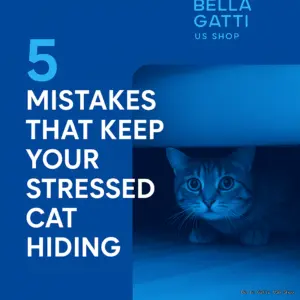
Understanding this crucial difference is the first step toward improving their overall cat well-being. Let’s break down the five most common mistakes loving owners make that reinforce the need for your cat to hide.
Expert Insight
“Your cat’s brain is wired for safety first, not obedience. When they are stressed, their survival brain takes the wheel, meaning persistent hiding is not defiance, it is a critical, instinctual survival mechanism.”, Dr. Jill A. Goldman, Certified Applied Animal Behaviorist
Why Your Stressed Cat Hides: Mastering the Art of the Vanishing Act
You’re trying your best, but sometimes figuring out Cat Behavior is like trying to decipher ancient hieroglyphs written in laser pointers. Before we dive into the five major mistakes that keep your feline companion stressed, we need to understand the fundamental mechanics of the disappearing act.
Predator and Prey Instincts: Why Hiding is Survival
Your beautiful, lazy house panther is still wired like a creature of the wild. They possess powerful Predator and Prey Instincts.
In the wild, a sick or threatened cat hides. It’s a survival mechanism designed to avoid being spotted by a larger predator. This means that if your cat feels threatened, stressed, or unwell, they retreat.
Understanding this core reason for Cat Hiding Behavior is crucial. They are not being defiant; they are attempting to self-soothe or mask vulnerability.
Normal Hiding Versus Red Flag Feline Stress Signs
Occasional hiding is totally normal. Every cat needs a time-out from the chaos of human life. However, when the hiding becomes constant, it shifts from normal behavior to a warning sign of Anxious Cat Behavior.
As experts like those at Austin’s Pets Alive often note, excessive hiding signals potential serious Feline Stress Signs, especially when it interferes with daily necessities.
If your cat is hiding so much that they skip meals (leading to Changes in Appetite) or stop using the Litter Box Use, you have moved past a simple case of shyness and into the territory of serious Cat Stress.
When Hiding Signals Medical Discomfort
One of the most dangerous myths about cats is that they complain when they hurt. The opposite is true. Cats excel at the Internalization of Discomfort (in Cats). They do not outwardly display their pain or fear until the issue is severe, making hiding a critical first clue.
If your Stressed Cat is suddenly retreating, it is often a sign of Underlying Medical Concerns or Medical Discomfort. Issues like joint pain, digestive trouble, or even severe Cat Dental Discomfort can cause a cat to seek isolation to conserve energy and mask their Cat Pain.
This is why a thorough Physical Exam (Veterinary) is mandatory for a sudden increase in hiding. Early Intervention in Feline Behavioral Issues often starts with ruling out Cat Illness during a Veterinary Wellness Visit.
Environmental Factors That Trigger Distress
Sometimes, the problem isn’t internal; it’s the Home Environment. Cats thrive on routine and predictability. Any disruption can trigger a spike in Hiding Behavior.
Common Environmental Factors include new pets or people, home renovations, or persistent Loud Noises (hello, fireworks season). These changes break the cat’s sense of control, forcing them into survival mode.
Beyond the Blanket: Other Signs of Feline Stress
Hiding is just one of the Signs of Distress. If you suspect your cat is stressed, observe their whole routine. According to sources like PetMD, other key indicators of stress or anxiety include:
- Overgrooming (licking patches bare).
- Pacing or excessive vocalization.
- Unusual Cat Aggression toward people or other pets.
- Avoidance of previously enjoyed interactions.
A full assessment of these behaviors, along with the hiding, is necessary to ensure the overall Cat Well-being of your beloved Feline Companion.
Designing the Perfect Safe Space
Since hiding is a natural coping mechanism, you must provide safe, appropriate options. Ideal hiding spots should be quiet, dark, and often elevated. Think high perches or covered beds separate from high-traffic areas.
Crucially, ensure these safe spots are not near appliances or dangerous areas, preventing injury while allowing your cat the peace they need to manage their stress.
Expert Insight
“Because cats are masters of disguise, hiding weakness as a survival mechanism, we cannot rely on obvious symptoms; by the time a cat shows he is sick, the condition is often severe, making subtle observation and preventive medicine essential.”, say Veterinary Experts
The Five Fatal Flubs of Feline Parenting
You’ve mastered the art of recognizing the Cat Hiding Behavior, the swift, silent retreat into the void. Now, we tackle the hard part: realizing that sometimes, *we* are the problem.
When you spot the Feline stress signs, your gut reaction might be to pull your Feline companion out for forced comfort. Don’t. That only confirms the world is scary. Resisting that urge is the first step toward reducing Cat stress.
Here are the five fatal flubs that keep your Stressed cat practicing their vanishing act.
-
Mistake 1: Punishing Litter Box Accidents or Cat Aggression
You walk in, step on something wet, and immediately associate the Cat Hiding Behavior under the laundry pile with the crime. You might yell or drag them out for a stern talking-to, assuming the mess was an act of defiance.
The Misinterpretation: You assume the accident was spiteful or a failure of training, interpreting the hiding as guilt.
The Cat’s Actual Need: Accidents or sudden Cat aggression are often desperate Signs of distress related to severe Cat pain or fear. If your cat suddenly changes their Litter box use, they likely associate the box with pain, often from a Urinary Tract Infection (UTI), bladder stones, or joint issues that make squatting uncomfortable.
Punishment does nothing but increase their fear of you, driving the Anxious cat behavior deeper underground. Address the Underlying medical concerns first; hiding that interferes with daily activities like elimination is a red flag signaling abnormal behavior.
-
Mistake 2: Ignoring Changes in Routine and Loud Noises
You decide to host a loud party, rearrange the entire living room furniture, or adopt a new, barking puppy. Then you wonder why your Feline companion has vanished into the darkest corner of the basement.
The Misinterpretation: You think the cat is resilient and will “just get used to it,” dismissing their need for structure.
The Cat’s Actual Need: Predictability. Cats thrive on routine. Changes in routine, new people, new pets, or consistent Loud noises (like construction, fireworks, or even loud TV) are major Environmental factors that trigger intense stress.
Studies have shown that environmental disruptions significantly increase Hiding behavior. The solution is to provide a consistent schedule for feeding and play, and to ensure their Home environment maintains areas of quiet sanctity that are off-limits to disruption.
-
Mistake 3: Forcing Social Interaction When They Are Overwhelmed
A new visitor comes over and insists on finding the cat. You corner your cat and hold them, trying to show them that the visitor is “safe.”
The Misinterpretation: You believe socializing them will reduce their fear, confusing forced exposure with positive acclimation.
The Cat’s Actual Need: Boundaries and control. When a cat is hiding, they are operating on primal Predator and Prey Instincts, seeking safety. Forcing interaction validates their fear that the world is unsafe and that their owner cannot be trusted to protect them.
The experts at PetMD suggest that when introducing new elements, you must let the cat approach on its own terms. Respecting the hideaway is the fastest way to encourage them to emerge later when they feel secure.
You can try leaving a visitor’s worn shirt near the cat’s safe space so they can process the scent without physical threat, utilizing their sensitive Feline Scent Glands for gradual acclimation. Never invade their safe space.
-
Mistake 4: Dismissing Subtle Physical Symptoms as “Just Stress”
Your cat is hiding a lot, but they still eat a little and seem mostly fine. You assume it’s simply anxiety from the neighbor’s new dog, delaying a veterinary visit.
The Misinterpretation: You overlook physical symptoms, thinking the issue is purely behavioral or emotional.
The Cat’s Actual Need: Immediate medical investigation. Cats are masters of Internalization of Discomfort (in Cats), meaning they mask Cat pain. Hiding is often the clearest signal of Underlying medical concerns or significant Medical discomfort.
If you notice Changes in appetite, increased Overgrooming (licking patches raw), weight loss, or changes in sleep patterns alongside the persistent Hiding behavior, this is a medical emergency signal. This is especially true if the cat is not emerging to eat or drink, a major red flag.
Veterinarians, including those at West Greenwich Animal Hospital, West Greenwich, RI, stress the need for prompt Veterinary Wellness Visits and a thorough Physical Exam (Veterinary) when stress signs escalate. Early Intervention in Feline Behavioral Issues is key to ruling out Cat illness or severe Cat dental discomfort before the problem becomes critical.
-
Mistake 5: Providing Only One (or Zero) Designated Safe Spaces
You assume your cat will be happy with the one tower you bought five years ago, or that the space under your bed is sufficient for their every mood.
The Misinterpretation: You think safe spaces are optional accessories, failing to recognize them as essential resources for Cat well-being.
The Cat’s Actual Need: Multiple, strategically placed, secure enclosures. Hiding is a normal behavior, but the cat needs *acceptable* places to hide that satisfy their instinctual need for safety and observation.
A safe space should be quiet, high up, covered, and separate from their food and litter box areas. They need options in every room, especially if the Home environment is prone to Loud noises.
Providing multiple safe spots helps reduce territorial Feline stress signs, especially in multi-cat households, promoting better overall Cat behavior and giving your Feline companion the security they crave.
Whew. That was a lot of heavy lifting, wasn’t it? Managing Feline stress requires patience, observation, and sometimes, the wisdom of ancient cat gods. If you’ve spent the last hour meticulously adjusting your cat’s safe spaces and scheduling that much-needed veterinary consult, you deserve a break. Reward your dedication to Cat well-being with something comfortable, like a super soft Bella Gatti Unisex Soft Cotton Tee. You’ve earned it.
Expert Insight
“Indoor-only cats are often assumed to be the safest, but it is more challenging to meet their needs, impacting their physical and emotional health and resulting in more caregiver concerns about behavior.”, notes Dr. Ilona Rodan, Chair of the FelineVMA Feline Welfare Committee
Mistake #1 (The Critical One): Assuming It’s Just Attitude When It’s Actually Cat Pain
You’ve mastered the art of recognizing the Cat Hiding Behavior, the swift, silent retreat into the void. Now, we tackle the hard part: realizing that sometimes, we are the problem.
If your normally social Feline companion suddenly transforms into a dust bunny under the bed, that’s a massive Feline stress sign. The biggest mistake a devoted cat parent can make is delaying the necessary Physical Exam (Veterinary).
We often assume this extreme withdrawal is just defiance or a sign that the Stressed cat is moody. In reality, hiding is rooted deeply in their Predator and Prey Instincts: a sick or injured animal hides to avoid becoming a target.
A cat experiencing significant Medical discomfort doesn’t want pity; they want to retreat and conserve energy. This Hiding behavior is often the only way they communicate Cat pain to us.
Experts, like those at West Greenwich Animal Hospital in West Greenwich, RI, consistently remind us that Cat illness often manifests as withdrawal and isolation. This is the Internalization of Discomfort (in Cats).
This isn’t defiance; it’s survival. Conditions ranging from kidney disease to severe Cat dental discomfort, or even simple joint pain (arthritis) in older cats, make movement agonizing. They retreat to avoid showing weakness, confirming the need to address underlying medical concerns.
The key difference between normal and abnormal hiding is persistence and interaction. If the Cat hiding behavior is persistent, interfering with Changes in appetite, Changes in routine, or Litter box use, you need to schedule those crucial Veterinary Wellness Visits immediately.
Remember: You can’t solve Anxious cat behavior with better toys if the root cause is Cat pain. Early Intervention in Feline Behavioral Issues requires ruling out the physical causes first.
Once you rule out Cat illness, you can move on to the environmental stressors that keep your Feline companion worried.
When Is Hiding a Red Flag? Distinguishing Cozy Instincts from Anxious Cat Behavior
You’ve successfully identified that your Feline companion might be dealing with Cat discomfort, but how do you know if that deep dive under the sofa is just a quest for quiet solitude or a serious Feline Stress Sign? This distinction is crucial for your cat’s well-being.
To truly understand Cat Hiding Behavior, we have to look back at their DNA. Cats operate under powerful Predator and Prey Instincts. Even though your pampered house cat is definitely a tiny, adorable predator in your living room, they are biologically programmed to hide when they feel weak, threatened, or unwell.
This Internalization of Discomfort (in Cats) is how they survive in the wild, they retreat to conserve energy and mask vulnerability. If they are sick or experiencing Cat pain, hiding is the first line of defense. Therefore, ignoring persistent Hiding behavior is a major mistake.
The Key Difference: Duration, Appetite, and Litter Box Use
If your cat pops out after an hour or two for dinner, a quick cuddle, and some enthusiastic play, that’s just normal Cat behavior, they are seeking quiet refuge. Occasional hiding is normal, providing them with safe spaces.
However, if the Hiding behavior becomes persistent (lasting six or more hours) and they refuse to emerge even for their absolute favorite treats, you are likely looking at serious Signs of distress. According to experts at PetMD and resources like Austin’s Pets Alive, this excessive withdrawal is a massive red flag.
The most critical red flags involve bodily functions. If you notice Changes in appetite, Changes in Litter Box Use (accidents, or not using it at all), or vomiting while they are hidden, this strongly suggests Underlying medical concerns or significant Cat stress. Early Intervention in Feline Behavioral Issues is vital.
Beyond the Blanket: Physical Signs of Medical Discomfort
A stressed cat doesn’t just hide; they also exhibit physical manifestations of anxiety or Cat illness. Look closely at their body language when they are forced to emerge. Are their pupils dilated? Is their posture tense? Are they excessively silent, or perhaps engaging in excessive vocalization? These are all Feline Stress Signs.
Keep an eye out for associated symptoms like Overgrooming (licking patches bare), pacing, or sudden Cat aggression directed toward other pets or people. Remember, when a cat hides due to Medical discomfort, it’s often because they are experiencing issues like Cat dental discomfort, joint pain, or digestive problems. Hiding is their attempt to manage pain.
Environmental Stressors: When the Home Environment Becomes Too Much
Sometimes, the cause of Anxious cat behavior isn’t internal but external. The Home environment might be the source of their stress. Changes in routine, new pets or people, Loud noises (like construction or fireworks), or even the rearrangement of furniture can trigger severe Cat stress.
Studies show that environmental disruptions drastically increase Hiding behavior. Vets often recommend careful environmental modifications to reduce stress, focusing on predictable routines and enrichment. Ensuring your Feline companion has multiple safe, quiet, and covered hiding spots, separate from their food and litter, is essential for their Cat well-being.
The Need for Veterinary Wellness Visits
Because cats are masters of pain-masking, persistent Hiding behavior is often the only obvious indicator of serious Cat illness or chronic Cat pain. This is why a prompt Physical Exam (Veterinary) is non-negotiable.
Veterinary Wellness Visits, like those recommended by clinics such as West Greenwich Animal Hospital in West Greenwich, RI, can catch issues early. Never assume hiding is just “attitude,” it’s a plea for help, signaling the need to investigate potential Underlying medical concerns.
Tuning the Home Environment: Reducing Feline Stress Signs
So, you’ve ruled out underlying medical concerns and potential Cat pain with a thorough veterinary wellness visit. If your Feline companion is still displaying persistent Cat Hiding Behavior, it’s time to look closely at the Home environment itself.
The truth is, cats are control freaks (in the best way). Managing a Stressed cat means providing the predictability and stability they crave to combat Anxious Cat Behavior.
Creating a Sanctuary: Essential Environmental Factors
If environmental factors are driving your Feline Stress Signs, small adjustments can make a huge difference in reducing Cat stress. Think less ‘home decor’ and more ‘Feline Fortress’ when optimizing the space.
- The Vertical Advantage: Cats feel exponentially safer when they can survey their domain from above. Install multiple cat shelves or tall towers near windows. These vertical spaces are crucial for their Predator and Prey Instincts, offering both a safe retreat and a good vantage point.
- Resource Dispersion: In multi-cat households, resource guarding is a major stressor leading to Cat discomfort. Provide multiple, separated stations for food, water, and litter box use (ideally N+1 boxes). This prevents competition and reduces Hiding behavior stemming from fear.
- Routine is King: Changes in routine are a massive trigger for Cat stress. Maintain feeding, playtime, and cuddle sessions at the exact same times every day. Predictability is the ultimate antidote to Anxious Cat Behavior.
- Safe, Quiet Retreats: Every Stressed cat needs an ideal hiding spot. Ensure these spots are quiet, dark, and covered, providing genuine enclosure safety. Make sure these sanctuaries are away from loud noises (like vacuums or construction) that contribute to Signs of distress.
We understand that being a detective for your Feline companion and managing Cat behavior is hard work. It takes serious dedication to Cat well-being to analyze every subtle Feline Stress Sign.
After optimizing the home environment and ensuring your cat feels safe, you deserve a victory lap. Why not celebrate your commitment to peace by slipping into something supremely comfortable, like a buttery-soft Bella Gatti Unisex Soft Cotton Tee? It’s the perfect reward for the human who finally figured out why the cat keeps staring at the wall.
Conclusion: The Power of Observation and Patience
We’ve covered the five biggest blunders that turn your sofa-loving feline companion into a ghost. It’s easy to feel personally rejected when your cat vanishes, but remember: persistent hiding behavior is usually just your stressed cat communicating in the only way they know how.
The key to reducing this persistent behavior isn’t complicated, but it requires dedication: sharp observation, endless patience, and swift action when you suspect cat illness or severe cat pain.
If your cat is showing severe anxious cat behavior alongside other critical feline stress signs, like overgrooming, changes in appetite, or inappropriate litter box use, you must schedule a Veterinary Wellness Visit immediately. Hiding often masks underlying medical concerns or serious cat discomfort.
By focusing on stability and predictability in the home environment, you prove to your cat that their world is safe. This transition from misinterpreting a survival mechanism to understanding true cat behavior is the ultimate win for both of you.
Do the hard work of managing cat stress and focusing on stability, creating that quiet fortress, free from sudden loud noises or jarring changes in routine. You’ll find your furry friend emerging from the shadows, ready to reclaim their throne (and probably judge your shirt choices).
Focus on creating a stable, predictable, and resourceful home environment, and you will see your furry friend emerge from the shadows, ready for their rightful place on the sofa.
Frequently Asked Questions: Decoding the Hiding Game
Why Do Cats Hide in the First Place? It’s Not Personal, It’s Instinct.
If you feel like your cat is treating your designer apartment like a survival bunker, you’re not wrong. At its core, Cat Hiding Behavior is deeply rooted in their Predator and Prey Instincts. They hide to feel safe.
Hiding is a survival mechanism. When your Feline Companion perceives a threat, feels ill, or is simply overwhelmed, the first response is to vanish. This is normal Cat behavior, but when it becomes excessive, it signals significant Cat stress.
When Does Hiding Go From “Quirky” to “Red Flag”?
Occasional hiding, especially after Loud noises or a quick visit from a stranger, is standard operating procedure for a cat. The concern arises when the hiding interferes with daily life. According to experts like those at Austin’s Pets Alive, persistent or excessive Hiding Behavior indicates a serious lapse in Cat well-being.
A major red flag is when your cat refuses to emerge even for high-value food, or if you notice severe Changes in Appetite or unusual Litter box use. If your Stressed cat isn’t eating, drinking, or eliminating normally, you need to act fast.
What is the Most Common Reason for Sudden, Persistent Hiding?
Here is where observation saves lives: the most common and critical reason for a sudden surge in Cat Hiding Behavior is not stress, but Cat pain or Underlying medical concerns. Cats are masters of masking pain, a trait known as the Internalization of Discomfort (in Cats), which stems from their wild ancestry.
If your cat suddenly becomes a ghost, schedule a Veterinary Wellness Visit immediately. Vets, including specialists at the West Greenwich Animal Hospital in West Greenwich, RI, emphasize that conditions like joint pain, urinary tract issues, or severe Cat dental discomfort often manifest as profound hiding. This is their only way of signaling Medical discomfort.
A thorough Physical Exam (Veterinary) is essential to rule out Cat illness before you treat the issue solely as behavioral anxiety.
Beyond Hiding: How Do I Spot Other Feline Stress Signs?
Hiding is just one piece of the puzzle. If you have an Anxious cat behavior issue, you will likely see a cluster of other Feline Stress Signs. These can be subtle but are crucial indicators of poor Cat well-being.
- Overgrooming: Excessive licking, often leading to bald patches or skin irritation, is a common stress coping mechanism.
- Changes in Litter Box Use: Urinating outside the box, frequently associated with stress or urinary pain.
- Cat Aggression: Increased irritability, hissing, or swiping at owners or other pets.
- Scent Marking: Inappropriate spraying or rubbing (using their Feline Scent Glands) in unusual places.
How Can I Stress-Proof My Home Environment?
Managing Anxious cat behavior often comes down to minimizing Environmental factors and maximizing safety. According to PetMD guidelines, predictability is paramount. Drastic Changes in routine, like moving furniture, adopting a new pet, or hosting parties, are prime stressors.
You need to provide numerous safe spaces. These ideal hiding spots should be quiet, high up (cats love vertical space!), covered, and separate from high-traffic areas. Critically, ensure these safe enclosures are far away from potential hazards, avoiding areas like behind hot appliances.
Consistency, pheromone diffusers, and ensuring that essential resources (food, water, litter) are separated and plentiful will drastically reduce the need for your Stressed cat to vanish completely.
Is It Ever Okay to Force a Cat Out of a Hiding Spot?
Absolutely not. Forcing a cat out of its sanctuary instantly shatters trust and dramatically increases its fear and Cat stress. This reinforces the learned behavior that your home is unsafe, making the Hiding Behavior worse next time.
If your cat is experiencing Cat discomfort or fear, respect the space. Focus on Early Intervention in Feline Behavioral Issues by treating the underlying cause, not the symptom. Instead of pulling them out, use high-value treats, toys, or gentle verbal encouragement to coax them out when the immediate stressful event has passed. Patience is your most powerful tool in rebuilding trust with your Feline companion.